
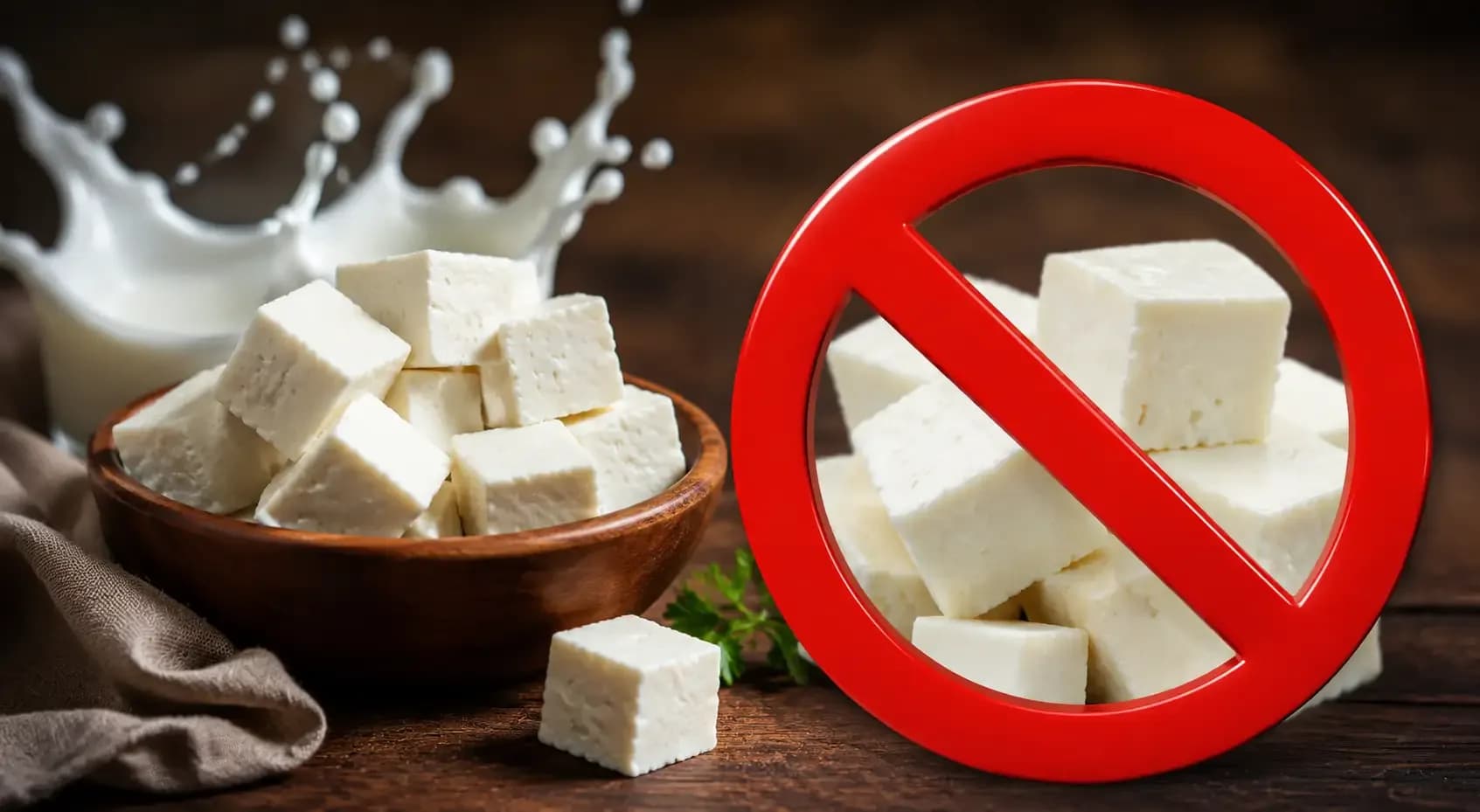
In a landmark move aimed at protecting consumers from food fraud, the Maharashtra government has cracked down on the manufacture and sale of misleading non-dairy or analogue paneer. Businesses found violating the new rules could face up to six months in prison and a fine of ₹1 lakh.
The decision makes Maharashtra the second Indian state after Chhattisgarh to introduce such stringent action against the sale of analogue paneer marketed as real dairy paneer.
Why Has Maharashtra Taken This Step?
Paneer is one of India's most consumed dairy products, widely used in homes, restaurants, and the food service industry. However, food safety authorities have raised concerns over the growing use of analogue paneer—a cheaper substitute made using vegetable oils, starches, emulsifiers, and food additives—in place of traditional milk paneer.
The concern isn't merely the existence of analogue paneer but the practice of selling it as genuine dairy paneer without informing consumers. Officials say this misleads customers, who often pay premium prices expecting authentic milk-based paneer.
What Is Analogue or Non-Dairy Paneer?
Unlike traditional paneer, which is made by curdling milk, analogue paneer is manufactured using ingredients such as:
Vegetable oils (including palm oil)
Food-grade starches
Emulsifiers
Stabilizers
Permitted food additives
These products are designed to resemble real paneer in appearance and texture while being significantly cheaper to manufacture.
Importantly, analogue paneer itself is not illegal. It can be sold legally if it complies with food safety standards and is clearly labelled as "Analogue Paneer" or a similar non-dairy product. The violation occurs when businesses market or serve it as real paneer without disclosure.
What Are the New Rules?
Under the new enforcement measures, businesses found manufacturing, selling, storing, distributing, or misrepresenting analogue paneer as genuine dairy paneer may face:
Up to 6 months of imprisonment
A fine of up to ₹1 lakh
Additional action under the Food Safety and Standards Act, 2006
The crackdown is expected to cover restaurants, hotels, caterers, street food vendors, manufacturers, suppliers, and distributors operating across Maharashtra.
Restaurants Must Inform Customers
Food businesses are now expected to clearly disclose when analogue paneer is being used in dishes. The information should be visible to consumers through menus, display boards, bills, or digital ordering systems, ensuring customers know exactly what they are purchasing.
The move aims to increase transparency and eliminate misleading food practices.
Why Is This Issue So Serious?
According to Maharashtra's Food and Drug Administration (FDA), inspections have revealed widespread misuse of analogue paneer in the food service sector. FDA Commissioner Tukaram Mundhe recently stated that a significant number of analogue paneer samples collected during inspections were found unsafe, prompting stricter enforcement.
Officials believe stronger penalties will discourage businesses from compromising consumer trust for higher profits.
Is Analogue Paneer Unsafe?
Not necessarily.
When manufactured according to approved food safety standards, analogue paneer is not automatically harmful. However, it differs nutritionally from traditional paneer because it contains vegetable fats instead of milk fat and generally offers lower dairy protein.
The primary issue addressed by the government is misrepresentation, where consumers are unknowingly served a substitute while believing they are consuming authentic paneer.
How Can Consumers Identify Genuine Paneer?
Experts recommend a few simple precautions:
Always read product labels carefully.
Look for terms such as "Analogue Paneer" or "Cheese Analogue."
Purchase paneer from trusted dairy brands or reliable retailers.
Be cautious if paneer is being sold at unusually low prices.
Ask restaurants whether the paneer served is dairy-based if the information isn't displayed.
What Does This Mean for the Food Industry?
The new rules are expected to significantly impact restaurants, cloud kitchens, caterers, and food manufacturers across Maharashtra. Businesses will need to strengthen sourcing practices, maintain proper documentation, and ensure accurate product labelling to remain compliant.
For consumers, the decision represents a major step towards greater transparency and stronger food safety enforcement.