
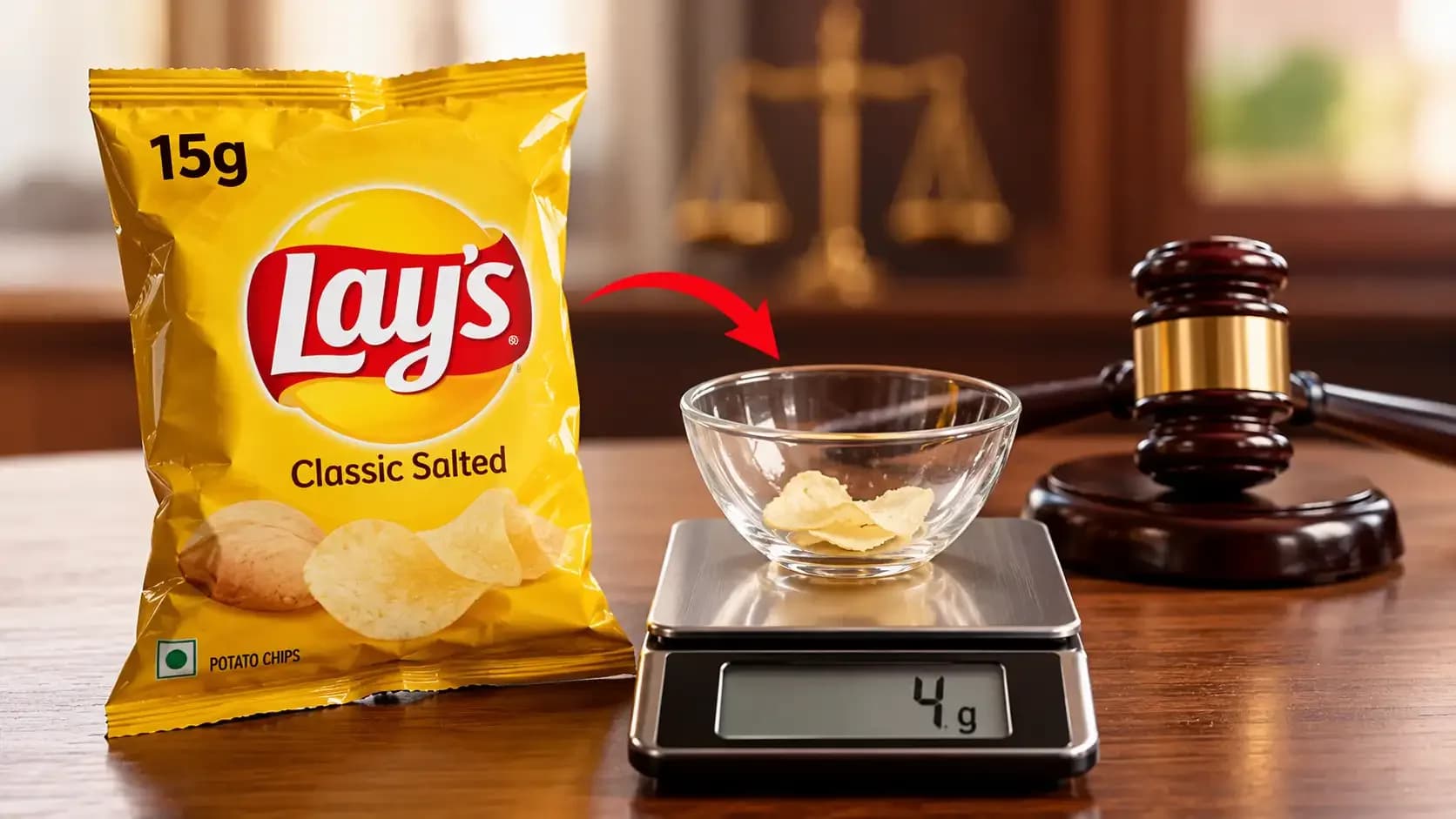
A consumer commission in Jaipur has directed PepsiCo India Holdings Pvt. Ltd., the manufacturer of Lay’s potato chips, to pay ₹8,000 in compensation and litigation costs after a consumer alleged that a packet labelled as containing 15 grams of chips had only 4 grams inside. The commission also ordered the company to refund the packet’s ₹5 purchase price with interest. The complaint against retailer Metro Cash & Carry India Pvt. Ltd. was dismissed.
The District Consumer Disputes Redressal Commission-II, Jaipur, passed the order on September 17, 2026, in a complaint filed by Chandraman Jalan, proprietor of M/s Jalan Building and Hardware Store. The case, registered as Consumer Complaint No. 160/2022, concerned an alleged discrepancy between the net weight declared on the packet and the quantity of chips found inside.
How the Dispute Started
According to the complaint, Jalan purchased several food items from Metro Cash & Carry India Pvt. Ltd. on November 10, 2020, to serve guests at his residence. The items included a ₹5 packet of Lay’s potato chips manufactured by PepsiCo. An invoice was issued for the purchase on the same day.
While serving the chips to his guests, Jalan reportedly noticed that the packet felt unusually light. He subsequently weighed its contents and alleged that the packet contained only 4 grams of chips, despite carrying a declared net weight of 15 grams.
The alleged difference amounted to 11 grams, meaning the packet contained approximately 73.3% less than its declared weight, if the reported measurements were accurate.
Jalan said he approached the retailer over the shortage but was dissatisfied with the response. He subsequently filed a consumer complaint on April 6, 2022, alleging deficiency in service and unfair trade practices.
What Did the Retailer and Manufacturer Say?
Metro Cash & Carry contested the complaint, arguing that any shortage in the quantity of chips could have occurred during the manufacturing or packaging process. It maintained that responsibility for such a defect should lie with the manufacturer.
PepsiCo India Holdings Pvt. Ltd. did not appear before the commission despite being served notice. Consequently, the proceedings against the company continued ex parte, meaning the case proceeded in its absence.
After considering the complainant’s evidence, including the purchase invoice, the commission dismissed the complaint against Metro Cash & Carry and allowed it against PepsiCo.
The ruling relates to the specific packet and complaint before the commission. The reported proceedings do not establish that other Lay’s packets contained similar shortages or that underweight packaging was a widespread practice.
How Much Must PepsiCo Pay?
The commission directed PepsiCo to provide the following relief to the complainant:
₹5,000 as compensation: For mental harassment suffered by the complainant.
₹3,000 towards litigation costs: To cover the expenses of pursuing the consumer complaint.
₹5 as a refund: The purchase price of the disputed packet, carrying interest at 6% per annum from April 6, 2022, until payment.
The compensation and litigation costs total ₹8,000, taking the total principal amount ordered to ₹8,005, excluding interest.
PepsiCo was given one month from the date of the order to pay the ₹8,000 compensation and litigation costs. If the company fails to pay within the stipulated period, that amount will attract interest at 6% per annum from the date of the order until payment, according to the reported decision.
The reports do not establish whether the company has paid the amount or challenged the order.
Why the Case Matters for Consumer Rights
The case highlights the importance of accurate net-weight declarations on packaged consumer goods. Consumers purchase sealed products based on the quantity stated on their packaging and generally cannot verify the contents before opening them.
The reported order treats the alleged supply of goods below the declared weight as a serious deficiency and an unfair trade practice. It also highlights the potential accountability of manufacturers when a complaint concerns a shortage allegedly originating during production or packaging.
India has a legal framework governing consumer protection, packaged commodities and food labelling. The Consumer Protection Act, 2019, the Legal Metrology Act, 2009, and the Legal Metrology (Packaged Commodities) Rules, 2011, are among the laws relevant to such issues, depending on the facts and applicable provisions.
However, the ruling should not be interpreted as a finding that every Lay’s packet is underweight. The dispute concerns one reported purchase, and the available coverage does not establish a broader manufacturing problem, a nationwide investigation or a separate regulatory penalty.
What Consumers Can Do If They Receive an Underweight Product
Consumers who suspect that a sealed food packet contains less than its declared net weight can preserve the packaging, purchase invoice, batch number and manufacturing details. Photographs and reliable weighing records may also help document the complaint.
Consumers can seek assistance through the National Consumer Helpline by calling 1915 or visiting consumerhelpline.gov.in.
The Jaipur case demonstrates how a relatively small purchase can lead to a formal consumer dispute when the buyer believes the product does not match its declared quantity. It also underscores the importance of examining complaints against the evidence and the findings recorded in the relevant order.