
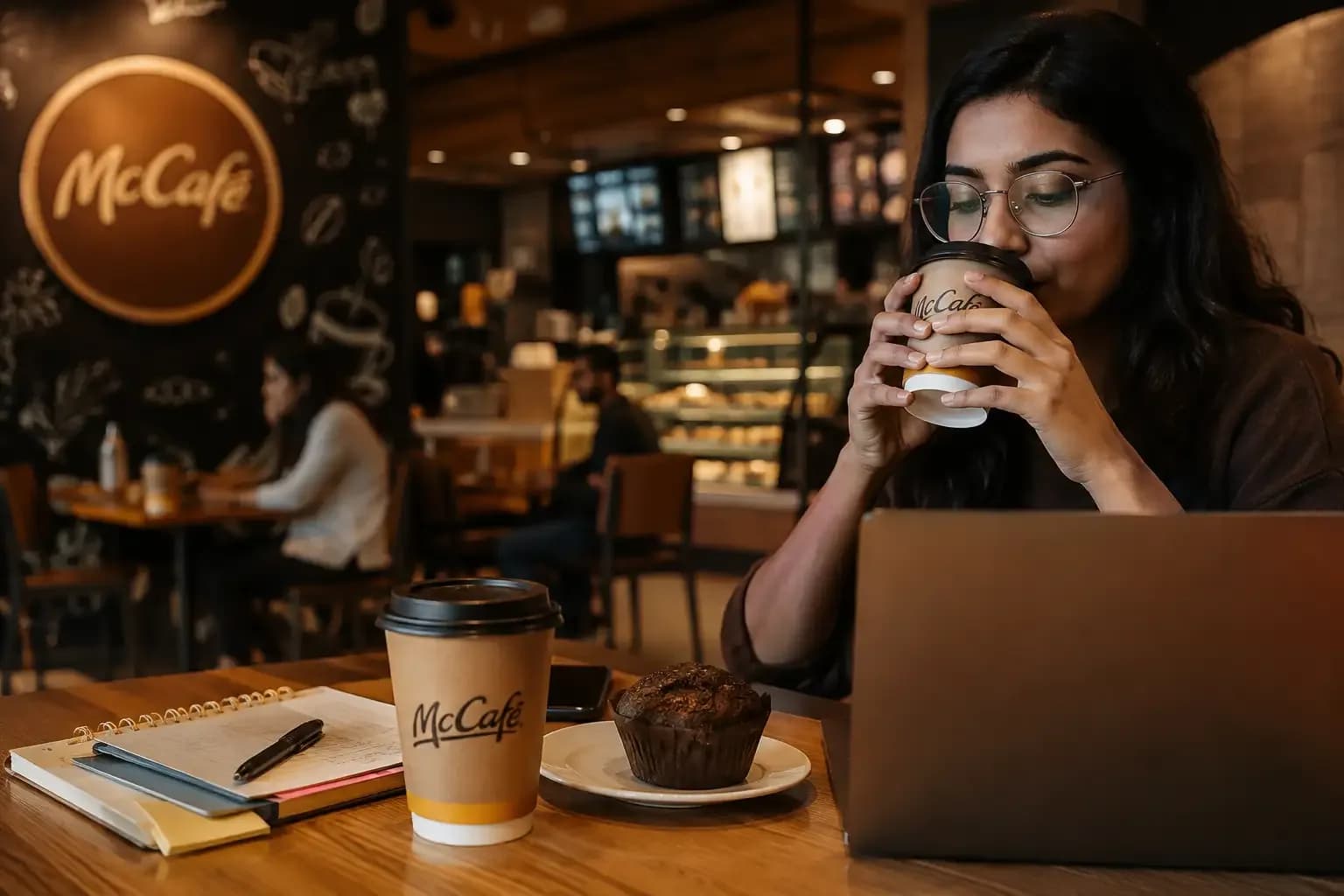
For a long time, coffee in India occupied an interesting middle ground.
It was a morning drink at home, a quick caffeine fix at work, or an occasional café indulgence. For younger urban consumers, cafés gradually became places to meet friends, work, study or simply spend a few hours. But something bigger is now happening.
Coffee is increasingly becoming an everyday habit.
The shift is not only visible in India's growing specialty coffee scene. It is also showing up in more affordable formats, café subscriptions, loyalty programmes, delivery orders and the expansion of coffee chains beyond the country's biggest metros.
And perhaps the most interesting part is that young consumers are not necessarily choosing between affordability and quality anymore. Increasingly, they want both.
From an occasional treat to a daily ritual
India's relationship with coffee has changed significantly over the past decade.
The growth of café chains introduced a new generation to beverages beyond traditional instant coffee. Specialty coffee companies then pushed consumers to think about beans, brewing methods, origins and flavour profiles.
But the next stage of the market may be less about discovering coffee and more about making coffee part of everyday life.
A recent industry report by BDA Partners estimates that India's coffee market is growing at around 8% year-on-year, putting the country on a very different adoption curve from more mature coffee markets.
At the same time, recent reporting has highlighted how premium coffee is moving beyond high-end cafés into neighbourhood outlets, offices, co-working spaces and other everyday environments.
That distinction matters.
The future of India's coffee culture may not simply be about consumers visiting more premium cafés. It could be about more consumers drinking café-style coffee more frequently.
Young India is changing what a café means
For younger consumers, a café is increasingly more than a place to buy a beverage.
It can be a workspace between meetings, a place to catch up with friends, a study environment, a date spot, or simply somewhere to spend time away from home.
This has helped coffee become intertwined with lifestyle.
Social media has accelerated the phenomenon. Coffee beverages are highly visual, cafés provide social settings that are easy to share online, and new formats such as cold coffees, iced lattes and flavoured beverages have made coffee accessible to consumers who may not traditionally have considered themselves coffee drinkers.
The result is a broader definition of a coffee consumer.
You don't necessarily need to be a specialty-coffee enthusiast to participate in India's coffee culture anymore.
The biggest opportunity may be outside India's biggest cities
Perhaps one of the most significant changes is happening beyond Mumbai, Delhi and Bengaluru.
Specialty coffee businesses are increasingly finding opportunities in India's secondary cities. A recent report on the country's smaller-city café market highlighted growth in cities such as Lucknow and Jaipur, where café operators are finding lower rents, less competition and growing consumer demand.
This matters because India's next wave of coffee consumption cannot be built entirely around metropolitan consumers.
The country has a huge young population spread across hundreds of cities and towns. As café formats become more accessible and consumers become more familiar with coffee, the addressable market expands considerably.
And brands are beginning to respond.
McCafé is betting on repeat coffee consumption
One interesting example comes from McCafé.
McCafé has recently crossed the 200-store milestone across North and East India, reflecting how coffee-led formats are expanding beyond India's traditional metropolitan café markets.
The expansion also comes as the brand is positioning its cafés around a broader role in consumers' everyday lives. Through its recent “Good Vibes Start with McCafé” campaign, McCafé has framed coffee as more than simply a daily beverage, connecting it with moments to pause, meet people and spend time together.
That positioning reflects a broader change taking place across India's café culture.
For younger consumers, a café can be a place to work, meet friends, study, have a conversation or simply take a break from the day. The coffee becomes part of the experience rather than the sole reason for the visit.
McCafé has also been experimenting with ways to encourage more frequent consumption.
Its current subscription offering gives customers 8 coffees for ₹525, designed to encourage repeat visits rather than a one-off coffee purchase. McCafé has also previously promoted a monthly subscription offering of 10 coffees for ₹549, showing how the brand has been experimenting with subscription-led consumption.
The significance of the model is bigger than the discount itself.
At roughly ₹66 per coffee, an eight-coffee subscription changes the way consumers can think about café coffee. Instead of asking, "Should I spend money on a coffee today?", the consumer has already committed to a set number of visits.
McCafé says it is seeing encouraging repeat consumption following the introduction of the subscription, suggesting that accessible pricing can play a role in turning café coffee into a more regular habit.
That is an interesting signal for the wider industry.
And McCafé isn't the only brand experimenting with the idea
The subscription trend is not limited to McCafé.
Jaipur-based Nothing Before Coffee (NBC) has launched a "Super Coffee Pass" that offers customers 30 coffees over 30 days. The company has also attributed its growth to demand from Gen Z consumers in smaller cities, describing coffee increasingly as a lifestyle choice rather than simply a functional beverage.
This is particularly interesting because NBC operates in a very different part of the market from McCafé.
One is a large QSR network, while the other has built its identity around a younger, coffee-focused consumer.
Yet both are responding to the same underlying behaviour:
Consumers are becoming more comfortable with the idea of having coffee regularly.
Third Wave Coffee is taking another route. Rather than a ready-to-drink café subscription, it offers subscriptions for coffee beans, reflecting the growing interest among consumers who want to bring a more premium coffee experience into their homes.
Together, these examples show that "coffee subscription" is not one single business model.
It can mean prepaid café visits, recurring coffee purchases, or regular access to premium beans at home.
The common denominator is frequency.
Coffee is becoming more accessible without losing its premium appeal
One of the more interesting contradictions in India's coffee market is that consumers appear to be moving in two directions simultaneously.
On one side, specialty coffee is becoming more sophisticated.
Consumers are learning about single-origin beans, brewing methods and roasting profiles. International brands are also showing greater interest in India's growing coffee market.
On the other side, consumers are looking for affordable ways to drink coffee more frequently.
This is where the next phase of India's coffee opportunity could emerge.
Premiumisation doesn't necessarily mean consumers want the most expensive cup available.
It can also mean they want better coffee at a price that fits into their everyday routine.
That distinction could become particularly important as coffee moves deeper into Tier 2 and Tier 3 markets.
The subscription economy is changing the psychology of consumption
There is another reason coffee subscriptions are interesting.
Subscriptions work because they remove the decision-making process from individual purchases.
A consumer who has already paid for eight coffees has a reason to return. The coffee becomes part of a routine rather than an impulse purchase.
The same principle has worked across entertainment, food delivery, fitness and other consumer categories.
Coffee may now be entering a similar phase.
The objective isn't necessarily to get consumers to drink more coffee simply for the sake of consumption. It is about making the purchase feel predictable, accessible and habitual.
And for café operators, higher frequency can potentially create a much stronger customer relationship than occasional visits.
India's coffee industry still has a long way to go
Despite India's growing café culture, the country remains a relatively low per-capita coffee consumption market.
One recent analysis estimates India's per-capita consumption at under 0.1 kg, significantly below markets such as Indonesia, Thailand and the United States.
That gap also represents the opportunity.
India is already one of the world's important coffee-producing countries. Yet domestic consumption has considerable room to expand.
The Coffee Board of India is now even considering a more organised approach to stimulating domestic coffee consumption, potentially borrowing elements from the model used by the National Egg Coordination Committee to build demand for eggs.
That is an unusual but telling development.
The conversation around Indian coffee is moving from simply how much coffee India produces to how much coffee Indians themselves consume.
The next coffee consumer may not call themselves a coffee enthusiast
This could be the most important change of all.
India's next coffee consumer may not know the difference between a washed and natural process bean.
They may not care about the origin of their espresso.
They may simply want a good coffee before class, during a work break, while meeting friends or on the way home.
And that consumer could be far more important to the industry's long-term growth than the traditional specialty-coffee enthusiast.
The opportunity for brands is therefore not just to sell better coffee.
It is to make good coffee easy enough, affordable enough and accessible enough to become part of everyday life.
McCafé's expansion and subscription experiment, Nothing Before Coffee's Super Coffee Pass, the expansion of specialty cafés into smaller cities and the growth of at-home premium coffee are all different expressions of the same broader shift.
India's coffee culture is moving from experience to habit.
And if that continues, the country's biggest coffee opportunity may not be selling one more premium cup.
It may be getting millions of young Indians to ask a much simpler question every day:
"Where's my coffee?"