
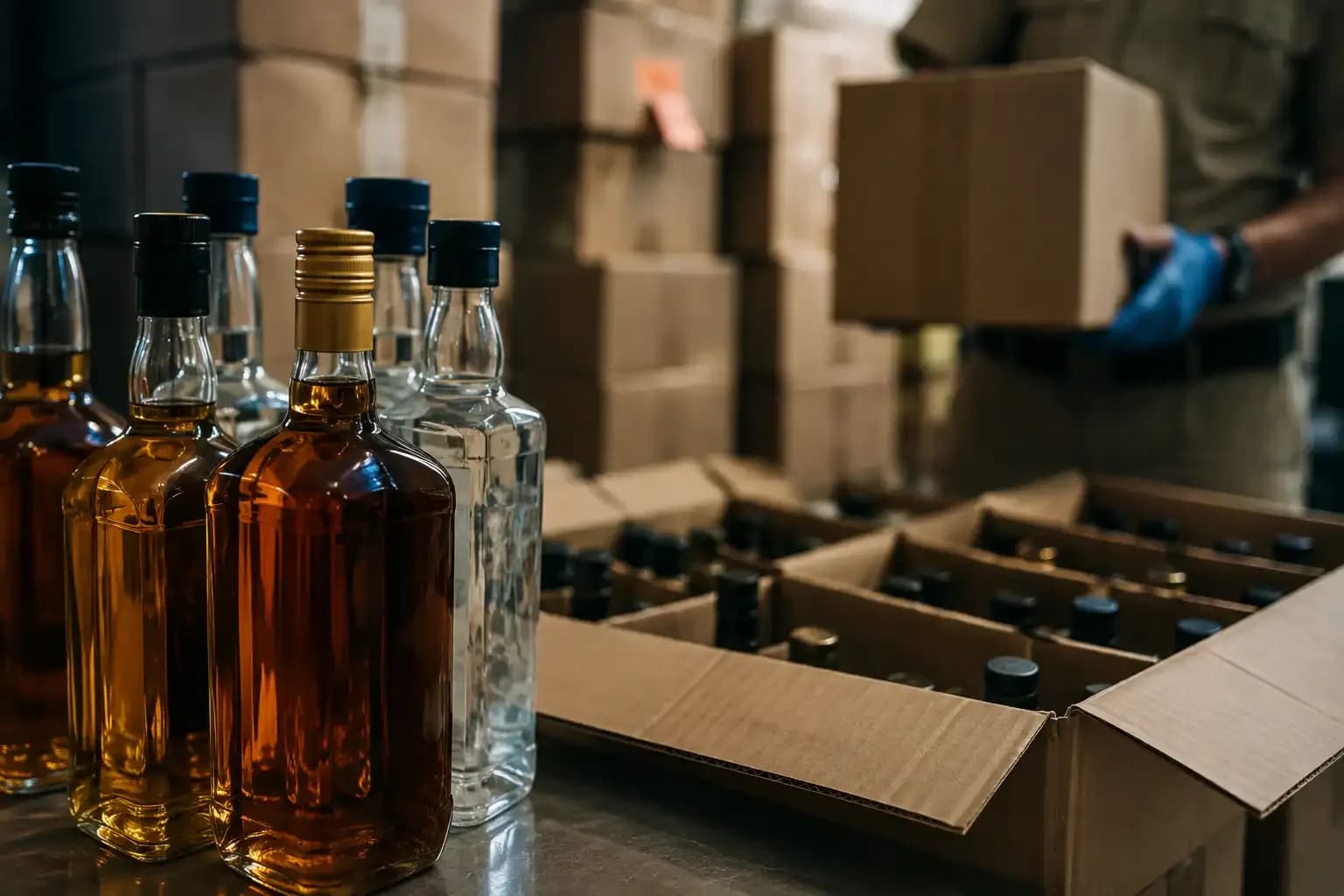
India's food-safety regulator has seized nearly 18,000 boxes of liquor products manufactured by Diageo India's United Spirits Ltd. after inspectors found that certain plastic bottles did not carry the prescribed marking indicating compliance with recycled-PET requirements for food-contact packaging.
The seizure, carried out at a United Spirits facility in Bengaluru, involves liquor products worth approximately $1.6 million, according to government documents reviewed by Reuters. The action adds another layer of regulatory scrutiny for Diageo in India, where the company's brands have recently faced questions over labelling, product claims and compliance.
However, the latest action should not be interpreted as a finding that the whisky or vodka itself has been proven unsafe for consumption. Diageo India has said the products are safe, that the bottles were sourced from an FSSAI-approved recycler and that mandatory tests had been conducted.
Why Did FSSAI Seize the Diageo Products?
The regulatory action centres on the plastic packaging, particularly smaller PET bottles used for certain liquor products.
During an inspection of the United Spirits facility, officials reportedly found that the bottles did not carry the required marking associated with recycled PET intended for food-contact applications.
The issue is significant because India's food-safety framework places specific requirements on recycled polyethylene terephthalate, or rPET, when it is used in packaging that comes into contact with food or beverages.
FSSAI's guidelines for recycled PET, notified in May 2025, establish requirements covering the acceptance, safety and use of recycled PET as a food-contact material.
The regulator also maintains a list of manufacturers authorised to produce food-grade recycled PET resin for food-contact applications.
Nearly 18,000 Boxes Seized at Bengaluru Facility
The seizure reportedly covers approximately 18,000 boxes, rather than 18,000 individual bottles.
The products are estimated to be worth around $1.6 million, making the action financially significant for one of India's largest spirits companies.
The affected products were reportedly packed in smaller 180-ml plastic bottles, with more than six brands involved.
Among the brands identified in reports are:
DSP Black Deluxe Whisky
Smirnoff Zesty Lime Triple Distilled Flavoured Vodka
VAT 69 Blended Scotch Whisky
The complete SKU-wise list of products covered by the seizure has not been publicly disclosed in the available regulatory reporting, so the action should not be described as a seizure involving Diageo's entire portfolio.
What Is the Recycled-PET Marking Requirement?
The controversy revolves around food-contact recycled PET, commonly referred to as FCM-rPET.
PET is widely used for beverage and food packaging because it is lightweight, durable and recyclable. However, recycled PET intended to come into direct contact with food or beverages must meet specific safety requirements.
FSSAI's Guidelines for Acceptance of Recycled Polyethylene Terephthalate (PET) as Food Contact Material were notified on May 23, 2025. The framework covers the recycling process and acceptance criteria for recycled PET resin used to make food-contact materials.
The regulatory framework is designed to ensure that recycled material used for food-contact packaging is appropriately processed, evaluated and suitable for its intended application.
FSSAI's packaging regulations and related amendments also provide the framework governing the use of recycled plastics in food packaging.
In the Diageo case, inspectors reportedly found that the required marking was absent from the relevant bottles.
Diageo Says the Products Are Safe
Diageo India has disputed any suggestion that the affected liquor products pose a safety risk.
The company said the bottles were sourced from a recycler approved by FSSAI, while suppliers had conducted the mandatory tests.
Diageo also said it is engaging with FSSAI to obtain further directions and that some bottles have been quarantined by authorities pending further instructions.
The company's position is therefore fundamentally different from an allegation that the liquor itself was contaminated.
The issue currently reported is primarily one of packaging compliance and mandatory marking.
No Evidence So Far That the Whisky or Vodka Was Contaminated
This distinction is crucial.
The publicly reported regulatory action does not establish that laboratory testing found the whisky or vodka itself to contain a harmful substance.
Instead, the concern relates to the absence of the prescribed marking on recycled-PET packaging and the resulting food-safety, labelling and misbranding questions raised by inspectors.
Therefore, the latest action should not be described as:
“FSSAI finds unsafe whisky or vodka.”
A more accurate description is:
“FSSAI seizes Diageo liquor products over alleged recycled-PET packaging and marking violations.”
Which Diageo Brands Are Affected?
The products reportedly include multiple brands from Diageo's India portfolio, particularly products sold in smaller plastic bottles.
The identified brands include DSP Black Deluxe Whisky, Smirnoff Zesty Lime Vodka and VAT 69.
The presence of multiple brands makes the action more significant than an isolated product-level labelling issue.
At the same time, there is currently no evidence of a blanket ban on Smirnoff, VAT 69, DSP Black or Diageo's entire product portfolio in India.
The seizure relates to specific products and packaging covered by the regulatory inspection.
Why Small 180-ml Bottles Are at the Centre of the Issue
The latest action reportedly focuses primarily on 180-ml PET bottles.
Smaller liquor formats are commonly sold in plastic packaging, while larger bottles across many spirits portfolios are more commonly packaged in glass.
That distinction matters because the regulatory issue is connected specifically to the packaging material and its required marking.
As a result, the action does not mean that all Diageo products packaged in glass have been affected.
The Bigger Regulatory Problem for Diageo
The latest seizure comes at a particularly sensitive time for Diageo India.
The company has already faced recent scrutiny from FSSAI over other aspects of its liquor portfolio.
In another regulatory development, FSSAI warned Diageo over the labelling of a whisky described as “matured in American oak casks”, with the regulator reportedly questioning whether the claim could mislead consumers because most of the spirit was not matured as implied by the label.
Earlier, FSSAI also barred the sale of certain Diageo and Inbrew alcoholic beverages over alleged issues involving artificial flavouring and related compliance requirements.
The latest recycled-PET action therefore adds to a growing period of regulatory attention around one of India's largest spirits businesses.
Why the Packaging Issue Matters Beyond Diageo
At first glance, the absence of a symbol on a bottle may appear to be a technical labelling matter.
But the issue has wider implications.
When recycled plastic is used in direct contact with food or beverages, regulators need to establish that the material has been properly processed, tested and approved for that application.
The marking and documentation requirements provide a mechanism for traceability and compliance.
FSSAI's framework specifically addresses the acceptance of recycled PET for food-contact applications, while the regulator maintains a list of approved food-grade rPET manufacturers.
The Diageo case could therefore become an important test of how strictly India's newer recycled-plastic requirements are enforced across the beverage industry.
Diageo's Sustainability Push Adds Another Dimension
There is also an interesting sustainability angle to the dispute.
Diageo India has been increasing its use of recycled and other sustainable packaging materials as part of its environmental commitments.
The company's ESG disclosures report the use of recycled inputs across its packaging portfolio, including recycled PET.
That creates a broader industry challenge: how can beverage companies increase recycled-plastic usage while ensuring every recycled material used in food-contact packaging meets increasingly detailed safety, testing, traceability and labelling requirements?
The answer will become increasingly important as brands across India's food and beverage industry move towards circular packaging.
Is This a Recall of Diageo Products?
Not based on the information currently available.
The reported action involves seizure and quarantine of products by authorities.
There is no publicly reported nationwide consumer recall covering all affected Diageo brands at this stage.
Consumers should therefore not interpret the seizure as an announcement that every bottle of Smirnoff, VAT 69 or DSP Black sold in India has been recalled.
Any broader recall or consumer advisory would need to come through an appropriate regulatory or company announcement.
The immediate focus will be on the discussions between United Spirits/Diageo India and FSSAI.
Several questions remain unanswered:
Will FSSAI release the complete list of affected products?
Will the seized products remain quarantined?
Will Diageo be required to relabel or repackage the affected stock?
Will the regulator order destruction or release of the seized products?
Will additional United Spirits facilities be inspected?
Will other alcohol manufacturers using recycled PET face similar action?
Will FSSAI issue further clarification on the recycled-PET marking requirements?
The answers could determine whether this remains an isolated compliance dispute or develops into a wider packaging crackdown across India's alcohol and beverage industry.
A Regulatory Test for India's Recycled-Plastic Rules
The Diageo seizure comes at a time when India is trying to balance two competing priorities: greater use of recycled materials and stronger food-safety safeguards.
FSSAI's recycled-PET framework is intended to make food-contact recycled plastic safer and more traceable. The regulator's official records show that the framework has been incorporated into the broader packaging regulatory system.
For manufacturers, however, compliance now extends beyond simply sourcing recycled material.
They must also ensure that the material, manufacturing process, testing, documentation and required consumer-facing markings all satisfy the applicable rules.
For Diageo, the latest seizure puts that compliance chain under the spotlight.
India's food-safety authorities have seized nearly 18,000 boxes of Diageo liquor products from a United Spirits facility in Bengaluru, reportedly worth around $1.6 million, after finding missing markings on certain recycled-PET bottles used for small-format whisky and vodka products.
The products reportedly include DSP Black Deluxe Whisky, Smirnoff Zesty Lime Vodka and VAT 69, among more than six brands.
Diageo India maintains that the products are safe for consumption, saying the bottles were sourced from an FSSAI-approved recycler and had undergone mandatory testing.
For now, the case is best understood as a regulatory dispute over recycled-PET packaging compliance and labelling—not a confirmed finding that the liquor itself is unsafe.
But with Diageo already facing other recent FSSAI scrutiny over product labelling and formulation-related issues, the latest action could mark another important chapter in India's tightening oversight of the alcoholic-beverage industry.
Indian Food Times will continue to track the FSSAI action and Diageo India's response as further details emerge.