
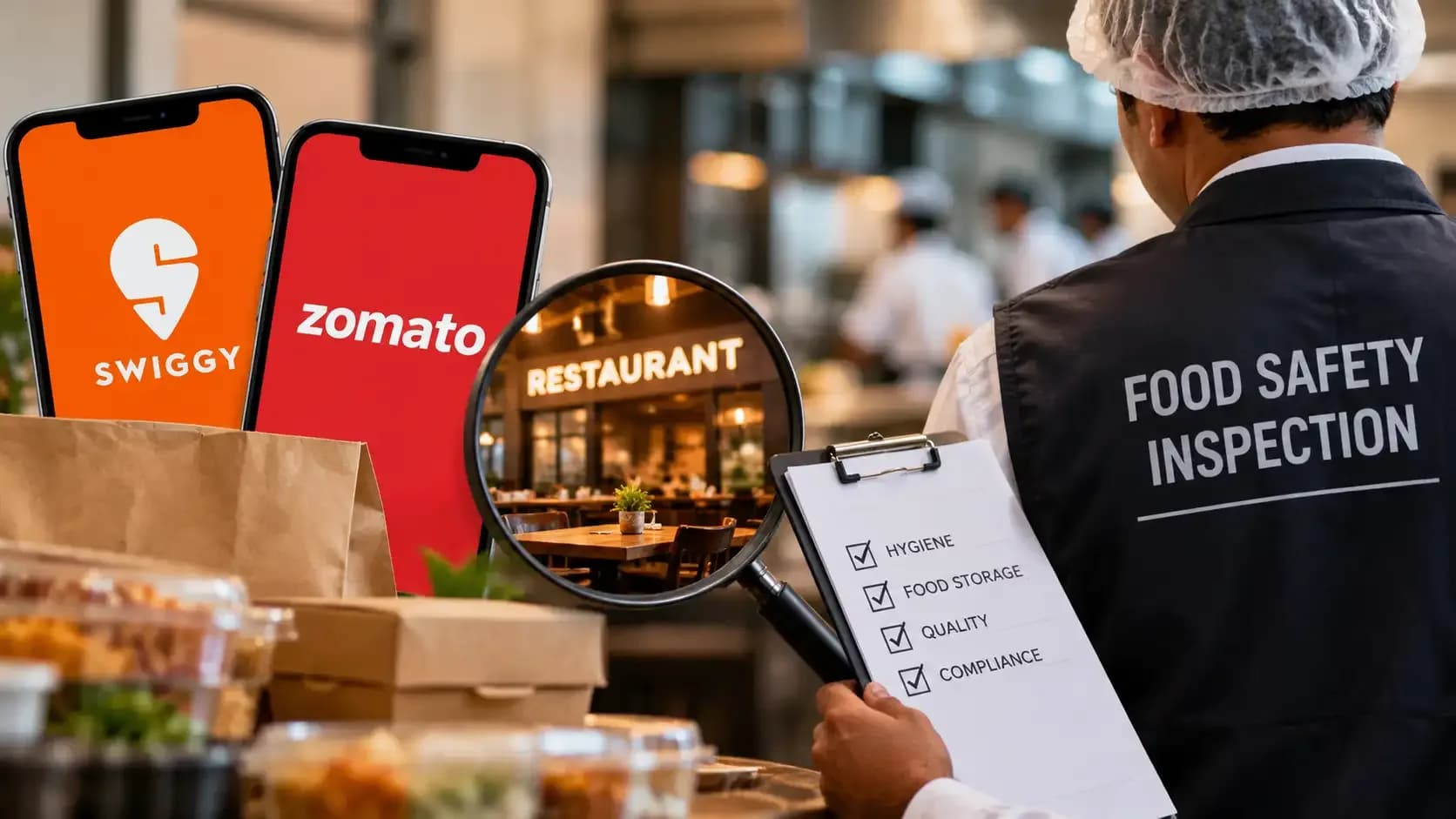
Madhya Pradesh is taking a new approach to food-safety enforcement by turning to an unlikely source of regulatory intelligence: online food-delivery platforms.
The state's Food and Drug Administration (FDA) has begun using information from platforms such as Swiggy and Zomato to help identify food establishments that should be prioritised for inspection. The move is part of a statewide food-safety drive launched on September 12 and scheduled to continue until September 26, ahead of the festive season.
The campaign covers hotels, restaurants, resorts, clubs, dhabas and other food establishments across Madhya Pradesh, with hundreds of businesses being brought under the inspection programme.
What makes the initiative notable is not simply the scale of the inspections, but the way authorities are deciding where to focus their resources.
From random checks to data-led targeting
Traditionally, food-safety inspections can be triggered by routine schedules, complaints, suspected violations or other regulatory intelligence. Madhya Pradesh is now adding another layer to that process by examining information available through digital food marketplaces.
According to reports, authorities are looking at indicators such as online ratings, customer reviews and order or footfall-related data to identify establishments with significant consumer activity.
The objective, however, is not to treat a poor online rating as evidence that a restaurant is unsafe.
Instead, the data is being used as a screening and prioritisation mechanism — helping inspectors identify establishments where a food-safety inspection could potentially have a greater consumer impact.
That distinction is important. Being selected for inspection does not mean that a restaurant has been found guilty of a food-safety violation.
A statewide drive ahead of the festive season
The inspection campaign began on September 12 and is expected to run through September 26, covering food businesses across the state.
Reports indicate that approximately 350–400 establishments have been identified for the drive. Multiple inspection teams have been deployed in major cities, with authorities beginning with prominent hospitality establishments before expanding the exercise to other high-footfall food businesses.
The campaign comes at a critical time for the food-service industry. As the festive season approaches, restaurant, hotel, catering and food-delivery activity typically increases, exposing a larger number of consumers to food businesses.
For regulators, this makes the period particularly important for ensuring compliance with food-safety requirements.
Even premium hotels are under scrutiny
The campaign is not limited to small restaurants or street-food operators.
Reports indicate that inspections have included prominent five-star hotels and other established hospitality businesses. In Bhopal, establishments reported to have been inspected include Taj Hotel, Sayaji Hotel, Jehan Numa Retreat, Tortoise Hospitality and other hospitality and food-service businesses.
The approach sends a clear message to the industry: size, reputation or premium positioning does not place an establishment outside the regulator's focus.
For restaurant and hotel operators, that could make consistent compliance increasingly important as opposed to preparing only when an inspection is expected.
What are inspectors checking?
The inspections go beyond simply collecting food samples.
Officials are examining areas including kitchen hygiene, food storage, sanitation and other food-safety compliance requirements. Where necessary, food samples can be collected for laboratory testing.
Potential violations involving adulteration, expired products, improper storage, hygiene deficiencies or other breaches can lead to regulatory action under applicable food-safety laws.
Recent reports from Bhopal have highlighted some of the problems uncovered during inspections, including allegations involving expired food products, poor storage conditions and hygiene concerns at certain establishments.
These findings reinforce the importance of the campaign, although individual inspection findings should not be conflated with the criteria used to initially select businesses for inspection.
Why food-delivery data matters
The development reflects a broader change in the way the restaurant industry is being measured.
For years, platforms such as Swiggy and Zomato have primarily been viewed by restaurants as commercial channels — generating orders, customer reviews, ratings and sales data.
The Madhya Pradesh initiative introduces another possibility: digital marketplace data can also become a source of regulatory intelligence.
A restaurant with a large online customer base potentially serves a much larger number of consumers. From a public-health perspective, identifying such businesses for inspection can allow regulators to deploy limited inspection resources where the potential consumer impact is higher.
In that sense, the move is less about judging restaurants by their online reputation and more about using available digital signals to determine where regulatory attention could have the greatest reach.
What it means for restaurant operators
For the restaurant industry, the development could have implications beyond Madhya Pradesh.
Online reputation has traditionally been associated with customer acquisition and brand building. If digital activity increasingly becomes part of regulatory intelligence, restaurants may need to view their online footprint differently.
High order volumes, customer feedback and platform visibility could potentially bring greater attention from regulators.
That does not mean restaurants should be concerned about being successful online. Rather, it reinforces the need for operators to ensure that the operational standards behind their digital reputation are equally strong.
Restaurants should maintain proper documentation and processes covering areas such as food storage, hygiene, pest control, staff practices, supplier records, expiry management, food labelling and other applicable food-safety requirements.
Could this become a model for other states?
This may ultimately be the most important question arising from Madhya Pradesh's experiment.
India's food-service sector is becoming increasingly digitised. Millions of orders pass through food-delivery platforms, generating a real-time picture of where consumers are ordering food and which establishments are attracting significant demand.
If regulators can use such information responsibly, it could potentially complement conventional food-safety inspection systems.
The challenge will be ensuring that digital data is used to prioritise inspections rather than prejudge businesses.
Ratings can be subjective. Reviews can be inaccurate or manipulated. High order volumes do not necessarily indicate poor food safety, just as a low digital footprint does not guarantee compliance.
Therefore, platform data should remain an input into regulatory decision-making — not a substitute for actual inspection, sampling and evidence.
A potentially significant shift in food-safety enforcement
Madhya Pradesh's latest initiative represents an interesting intersection between food technology, consumer data and regulation.
The restaurant industry has spent years adapting to a world where online ratings and delivery platforms can determine visibility and customer demand. The latest development suggests that the same digital ecosystem could increasingly influence how regulators decide where to look.
If the approach continues beyond the current September 12–26 campaign, Madhya Pradesh could provide an early example of how India's food-safety authorities use digital data to make inspections more targeted and potentially more efficient.
For restaurants, the message is straightforward: the digital storefront and the physical kitchen are becoming increasingly connected.
And going forward, what happens on the food-delivery app may matter not only to customers — but potentially to the regulator as well.