

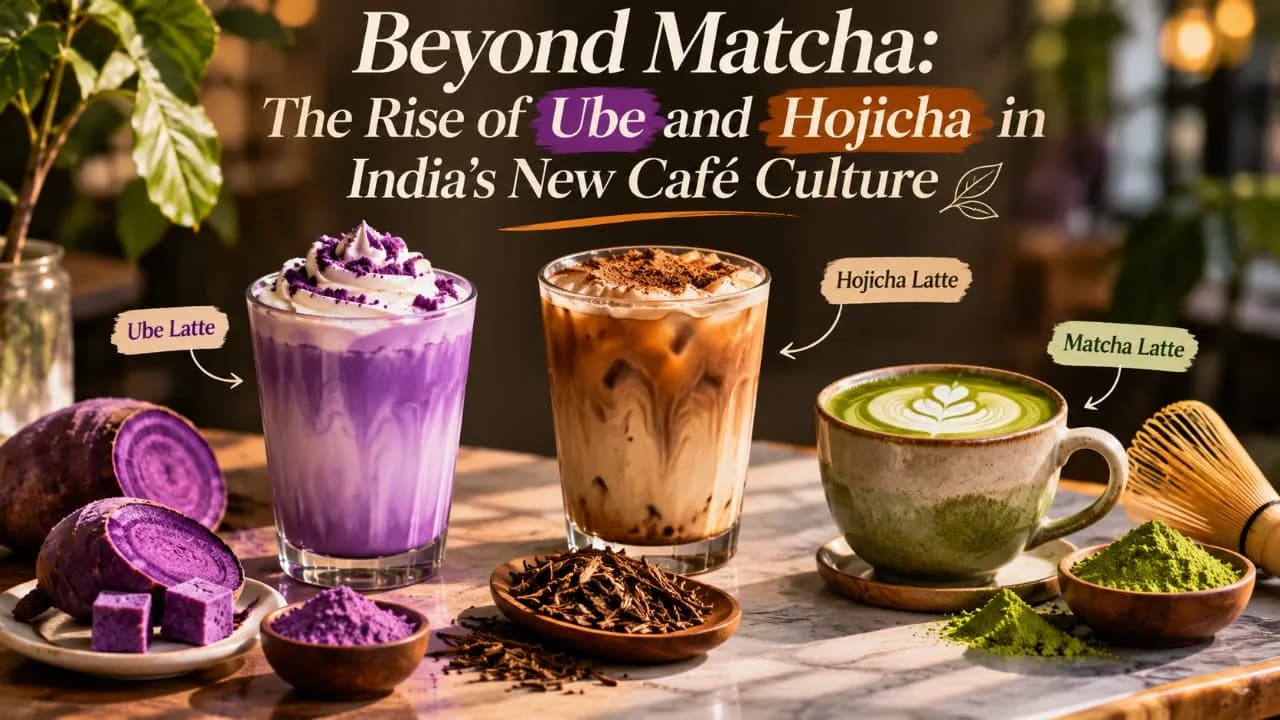
Have you noticed how one unusual food or drink can suddenly take over Instagram? A few years ago, matcha was relatively unfamiliar to many Indian consumers. Today, green matcha lattes, matcha desserts and homemade matcha recipes are appearing across social media.
But the world of trendy drinks is moving forward. Two new flavours are attracting attention: Ube and Hojicha.
One brings a beautiful purple colour, while the other offers a roasted tea flavour with a warm, earthy character. Both are becoming part of conversations around modern café culture and experimental beverages.
So, what exactly are these drinks, and why are people suddenly interested in trying them?
What Is Ube? The Purple Ingredient Creating Curiosity
Ube is a purple yam traditionally used in Filipino cuisine. It is known for its naturally vibrant purple colour and mildly sweet, earthy flavour.
It is commonly used in cakes, ice creams, pastries, milkshakes and other desserts. Its attractive appearance also makes it popular in food photography and social media content.
Today, cafés and dessert creators are experimenting with ube lattes, ube milkshakes and combinations such as ube matcha.
According to Google India's September 2026 report, searches for ube reached an all-time high in August 2026. This shows growing curiosity among Indian consumers about unfamiliar international flavours.
Hojicha: Japan's Roasted Tea Experience
While matcha is known for its vibrant green colour, hojicha offers something completely different.
Hojicha is a Japanese green tea that is roasted, giving it a distinctive brown colour and a warm, roasted flavour. It is commonly enjoyed as a traditional tea and is also finding its way into modern café drinks.
Hojicha lattes, iced hojicha and hojicha desserts are interesting alternatives for people who want to explore flavours beyond regular coffee and matcha.
Its roasted flavour profile makes it particularly interesting for people who enjoy coffee-like and nutty taste experiences.
Why Is Everyone Talking About These New Flavours?
One major reason behind the popularity of unusual food and beverage trends is social media.
Instagram reels, food photography, café reviews and influencer recommendations help introduce unfamiliar ingredients to wider audiences.
A colourful purple drink or an unusual green tea latte can quickly attract attention online. People become curious, search for the product and visit cafés to experience it themselves.
Google India's September 2026 report also highlights the growing interest in matcha experimentation. Searches for "how to make matcha" increased by 1,300% over the past year.
This reflects a wider shift towards experimenting with international flavours at home.
Matcha vs Ube vs Hojicha: What's the Difference?
Although these three ingredients are often seen together in modern cafés, they are quite different.
Matcha: A finely powdered Japanese green tea with a distinctive vegetal flavour and vibrant green appearance.
Ube: A naturally purple yam used in Filipino desserts and modern beverages. It has a mildly sweet, earthy taste.
Hojicha: A roasted Japanese green tea with a brown colour and warm, toasted flavour.
Each offers a different taste and experience, which makes them interesting ingredients for creative café menus.
How Indian Cafés Can Make These Trends Their Own
India has a diverse food culture and a long history of experimenting with flavours. From masala chai to cold coffee, Indian consumers have always adapted beverages to local preferences.
The same creativity can be seen in the introduction of international flavours.
Cafés can experiment with:
- Ube-flavoured milkshakes and desserts.
- Hojicha iced lattes and tea-based beverages.
- Matcha and mango combinations.
- Ube and coconut-based desserts.
- Indian-inspired fusion drinks using familiar ingredients.
However, the success of these products will depend on taste, affordability, quality and consumer interest, not just their appearance.
Are These Drinks Really Healthier?
A colourful drink does not automatically mean it is healthy.
Matcha and hojicha are tea-based beverages, while ube is a food ingredient. However, the nutritional value of the final drink depends on its preparation.
Added sugar, flavoured syrups, cream, condensed milk and toppings can significantly change the nutritional profile.
Consumers should therefore look beyond attractive colours and health-related marketing claims. Understanding ingredients and nutritional information remains important.
The Future of India's Experimental Café Culture
The growing interest in ube, hojicha and matcha reflects a larger change in how people discover food.
Consumers are increasingly interested in trying something new, exploring international cuisines and sharing unique food experiences online.
For café owners, these trends create opportunities to experiment with new menus and connect with younger audiences.
At the same time, not every viral flavour becomes a permanent favourite. Long-term popularity will depend on whether people genuinely enjoy the taste and find the products worth purchasing again.
Conclusion: The Next Favourite Flavour Could Be Purple
Food trends are constantly evolving. Yesterday it was one viral dessert, today it is matcha, and tomorrow it could be ube or hojicha.
What makes these ingredients interesting is not just their appearance, but the different food cultures and experiences they introduce to Indian consumers.
As India's café culture continues to experiment, one thing is clear: people are becoming more curious about what is in their cups.
So, the next time you visit a café, perhaps it is time to look beyond your regular coffee and explore something purple or roasted.