

Millions of Indians reach for biscuits without giving them a second thought. They accompany morning tea, fill children's lunchboxes and sit on shop shelves as affordable everyday snacks.
But what happens when the raw material entering a biscuit factory raises questions about whether it was meant for human consumption in the first place?
That is the uncomfortable question emerging from a food safety enforcement action involving PriyaGold biscuits.
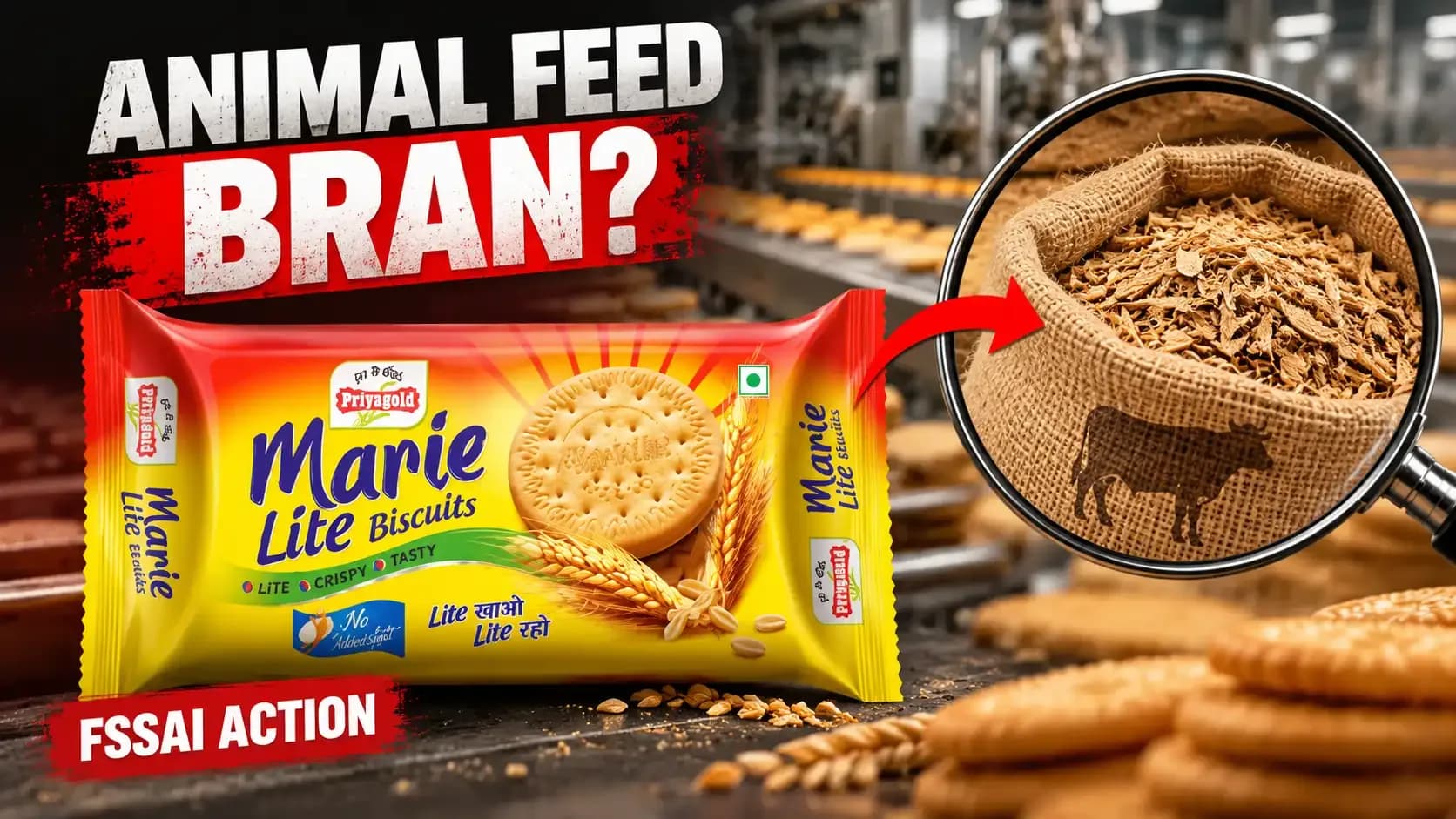
According to findings reported by the Food Safety and Standards Authority of India (FSSAI), bran intended for cattle feed was being used as a source of fibre in biscuit manufacturing at a facility associated with Surya Food & Agro Ltd., the manufacturer behind PriyaGold.
The reported inspection did not stop at the raw material. It also identified deficiencies involving factory hygiene, pest control, storage and segregation of ingredients, employee hygiene and the handling of intermediate formulations.
The regulator subsequently suspended the manufacturer's licence and initiated prosecution proceedings, according to reports published on October 17, 2026.
For a packaged-food industry built on consumer trust, these are serious questions that deserve clear answers.
Cattle-Feed Bran in Biscuits: The Finding at the Centre of the Case
The most striking detail in the reported inspection concerns the type of bran found in the manufacturing process.
Bran is the outer layer of a grain and can be used in human food when it meets the applicable food-safety requirements. The concern in this case is different: the material reportedly identified by FSSAI was intended for cattle feed and was considered unsuitable for human consumption.
Reports state that the material was stored in bags marked for cattle-feed use.
This raises an immediate question: How did material intended for animal feed enter a process used to manufacture food for human consumption?
The available reports do not establish exactly how the material entered the production chain, how much was used or which finished-product batches, if any, were affected. Those details are essential to understanding the full extent of the incident.
The distinction matters. The reported finding raises a serious food-safety concern, but it does not establish that every PriyaGold biscuit packet contains the material or that every product sold under the brand is unsafe.
The Ingredient Was Not the Only Concern
The inspection reportedly identified other shortcomings at the manufacturing facility, making this more than a question about one raw material.
Factory hygiene: Deficiencies were reported in the maintenance of hygienic manufacturing conditions.
Pest control: The regulator flagged shortcomings in pest-management measures, which are important for preventing contamination.
Storage and segregation: Concerns were raised about how raw materials were stored and separated.
Employee hygiene: Personnel hygiene was among the areas identified for improvement.
Premises maintenance: The inspection also reported deficiencies in the upkeep of the manufacturing premises.
Intermediate formulations: The handling of intermediate formulations was another area of concern.
These findings raise a broader issue: were the controls designed to prevent unsuitable materials and contamination from entering food production working effectively?
The reported observations do not, by themselves, establish that every product was contaminated. However, they make transparent answers from the manufacturer and regulator particularly important.
FSSAI Suspends Licence, Initiates Prosecution
The regulatory response is a significant part of this story.
According to published reports, FSSAI's inspection followed a consumer complaint. Serious non-compliances were identified, the manufacturer's licence was suspended and prosecution proceedings were initiated.
This is more than a routine consumer complaint: it is a reported enforcement action involving the regulator's findings at a food manufacturing facility.
However, prosecution proceedings must be distinguished from a final judicial verdict. The initiation of prosecution does not, by itself, establish a final court conviction.
The current status of the licence, the subsequent legal proceedings and any additional regulatory directions should be verified against official records before drawing further conclusions.
The Questions Consumers Should Not Have to Ask
When people buy a packet of biscuits, they reasonably expect the ingredients to comply with food-safety requirements. They should not have to investigate whether the raw materials were intended for animal feed.
The reported findings leave several important questions unanswered:
How did cattle-feed bran enter the biscuit manufacturing process?
How much material was used, and over what period?
Which batches, if any, were affected?
Were any finished products withdrawn or recalled?
What corrective steps have been taken at the facility?
What is the current status of the manufacturer's licence?
These are not allegations of additional wrongdoing. They are the questions that need documented answers to establish the incident's scope and protect consumers.
Should Consumers Stop Buying PriyaGold Biscuits?
The available reports do not establish that every PriyaGold product is unsafe, nor do they provide enough verified batch-level information to determine the extent of any affected products.
Consumers should avoid treating the reported findings as proof that every packet is contaminated. At the same time, the manufacturer and regulator should provide clear, timely information about any affected batches, recalls or consumer advisories.
Consumers can consult the FSSAI website and its Food Recall Portal for official updates.
Until batch-specific information is confirmed, a blanket claim that all PriyaGold products are unsafe would go beyond the available evidence.
A Wake-Up Call for the Packaged-Food Industry?
The PriyaGold case raises a question that extends beyond one company: how effectively are food manufacturers verifying every ingredient that enters their production lines?
Food safety cannot depend on packaging, brand recognition or consumer trust alone. It requires documented supplier checks, appropriate raw-material specifications, traceability, hygienic storage and effective manufacturing controls.
The reported findings also underline the importance of transparent enforcement. When serious deficiencies are identified, consumers need to know what happened, which products were affected, what action was taken and whether the problem has been corrected.
For the industry, the message is clear: raw-material controls and hygiene standards are fundamental responsibilities, not optional safeguards.
The reported FSSAI action against Surya Food & Agro has put PriyaGold biscuit manufacturing under scrutiny over the use of bran intended for cattle feed and multiple reported hygiene deficiencies.
The biggest unanswered question is not simply what inspectors found. It is how the material entered production, whether any finished products were affected and what steps have been taken to address the reported failures.
Consumers deserve traceability, accountability and evidence-backed answers about the food they buy every day.
Editorial disclaimer: This report is based on published coverage of FSSAI's reported enforcement findings. The allegations and prosecution proceedings should not be treated as a final judicial determination. The extent of any affected products has not been independently established in the reports reviewed.