

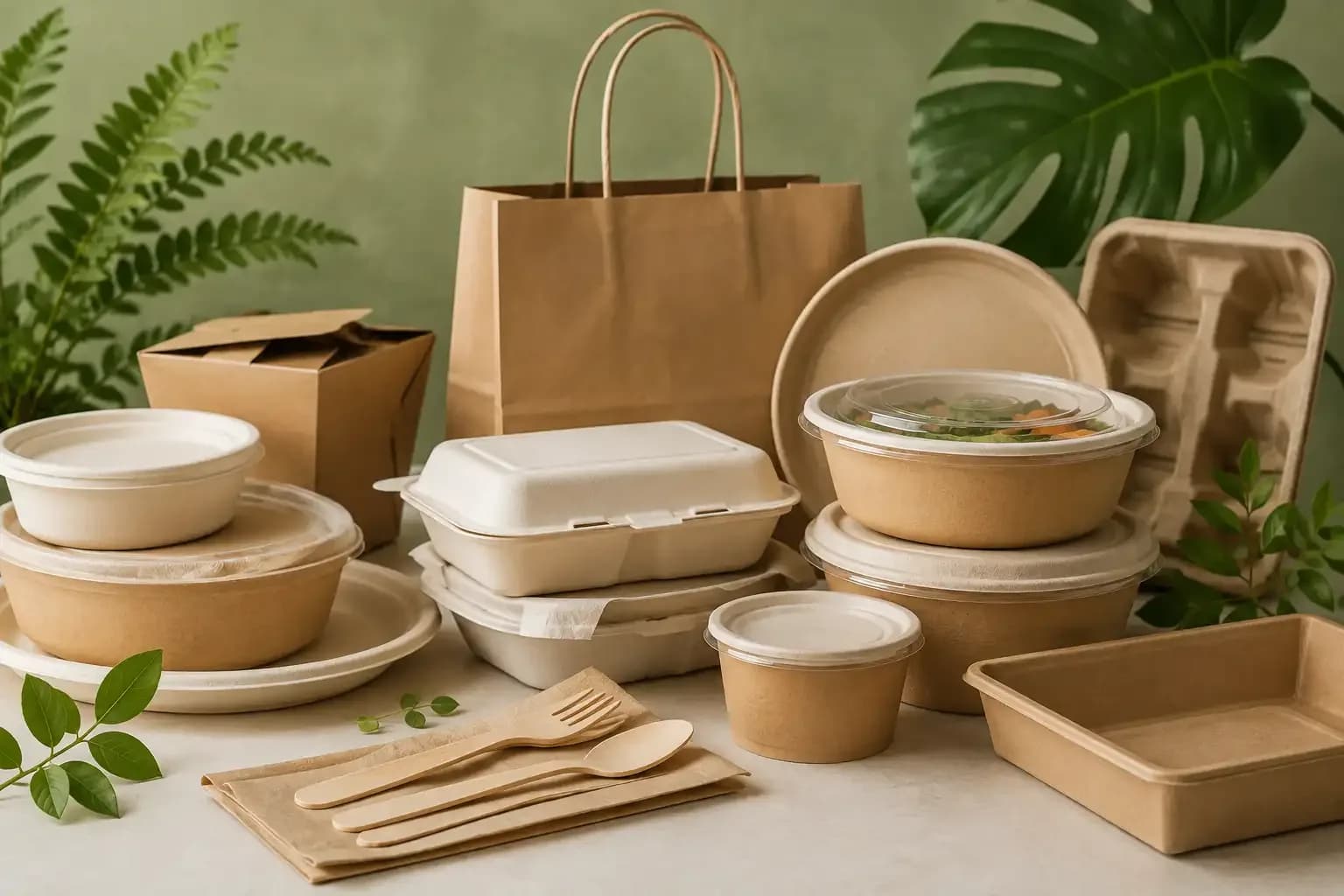
Zomato has launched PackSwitch, an interactive digital platform designed to help restaurants identify and adopt sustainable packaging solutions suited to different food items. The initiative, launched in Bengaluru on August 18, aims to address one of the biggest practical hurdles in reducing plastic use in food delivery: finding packaging that is sustainable without compromising functionality, commercial viability or supply.
Rather than promoting a single alternative to plastic, PackSwitch takes a dish-specific approach. Restaurants can select the food item they want to package, explore materials suited to that category and then find relevant suppliers through a directory of more than 100 verified sustainable packaging suppliers across India.
From Plastic Replacement to Packaging Choice
For restaurants, replacing plastic packaging is not as straightforward as simply switching from one material to another. Different foods create different packaging requirements during preparation, transport and delivery.
A biryani container, for example, needs to handle steam and moisture. Curry packaging needs to minimise the risk of leakage, while pizza packaging needs to allow heat to escape without making the crust soggy. Desserts require packaging that can protect both the food and its presentation during transit.
Zomato says PackSwitch has been designed around this problem. The platform provides information on how different sustainable materials perform for various food categories, while also highlighting the trade-offs restaurants need to consider.
The three-step process is straightforward: choose the dish, explore suitable packaging materials and connect with verified suppliers.
Cost, Functionality and Availability at the Centre
The initiative comes as restaurants increasingly explore alternatives to conventional plastic but continue to face practical challenges around cost, functionality, availability and disposal.
According to industry coverage, these considerations can determine whether a restaurant can realistically make the switch. Sustainable packaging may need to withstand heat, moisture, grease and transportation while remaining commercially viable for the restaurant.
PackSwitch therefore evaluates packaging options across three broad dimensions: functionality, commercial viability and environmental considerations. The objective is to help restaurants make informed decisions rather than treating sustainability as a one-size-fits-all replacement exercise.
More Than 100 Verified Suppliers
One of the platform's key features is its supplier directory, which includes more than 100 verified sustainable packaging suppliers across India.
This addresses another challenge for restaurants: even when an operator identifies a suitable packaging material, finding a reliable supplier at the required scale can be difficult.
The PackSwitch directory is intended to bring those two sides closer together by connecting restaurant packaging requirements with suppliers offering alternative materials.
The directory also includes sustainable packaging solutions available through Hyperpure, Eternal's B2B supply platform, which serves more than 100,000 restaurant outlets across India.
Building on Zomato's Plastic-Free Future Programme
PackSwitch is not Zomato's first effort to reduce plastic use in food delivery.
The platform builds on the company's Plastic-Free Future programme, which recognises restaurants that move away from plastic packaging for their main menu items.
According to Zomato, the programme has recognised more than 10,000 restaurants across 500-plus cities. As of March 31, 2026, participating restaurants had collectively delivered more than 100 million orders using low-plastic packaging.
Restaurants participating in the programme can receive a "low plastic packaging" tag on Zomato. Customers can also use the corresponding filter to discover restaurants adopting lower-plastic packaging practices.
This creates a consumer-facing component alongside PackSwitch's restaurant-focused approach.
Zomato's Larger Packaging Ecosystem
The launch also brought together stakeholders from across the food and packaging ecosystem, including restaurant operators, packaging manufacturers, sustainability professionals and investors.
The Bengaluru launch featured an exhibition showcasing eight sustainable packaging materials and a range of coatings used in food packaging. Discussions focused on how different materials perform in real delivery conditions, their commercial feasibility and their environmental trade-offs.
Prashanth Prakash, Founding Partner at Accel India, said sustainable food-delivery packaging adoption can stall when knowledge, awareness and available products do not align. He said PackSwitch could simplify decision-making for restaurants looking to move away from plastic.
Anjalli Ravi Kumar, Chief Sustainability Officer at Eternal, said the company's Plastic-Free Future programme had focused on building consumer awareness, while PackSwitch is intended to take the effort further by helping restaurants make packaging decisions based on individual dishes.
Why PackSwitch Matters to Restaurants
For large restaurant chains, packaging decisions can be handled through dedicated procurement and sustainability teams. Smaller restaurants and cloud kitchens, however, may not have the same resources to evaluate packaging manufacturers, materials and performance.
PackSwitch attempts to reduce that information gap.
Instead of starting with a material and asking where it can be used, restaurants can start with the food they are selling and work backwards towards an appropriate packaging solution.
That distinction could prove important for sustainable packaging adoption because the operational requirements of food delivery often determine whether an alternative material is actually practical.
The Economics Remain a Key Challenge
While PackSwitch could simplify the process of identifying sustainable packaging, the initiative does not eliminate one of the industry's biggest challenges: cost.
Sustainable alternatives can involve different material, manufacturing and supply-chain economics compared with conventional plastic. The final cost can vary considerably depending on the material, packaging format, supplier, order volumes and food application.
Recent industry reporting has highlighted estimates that switching to some sustainable packaging options could increase delivery-related costs by 10% to 30% in certain cases. That figure should not be interpreted as a universal increase for every restaurant or order, but it illustrates the economic challenge involved in making sustainable packaging mainstream.
For restaurants operating on tight margins, the ability to identify a sustainable solution is only one part of the equation. The packaging must also be affordable, consistently available and capable of protecting the food throughout the delivery journey.
A Shift From Awareness to Adoption
The significance of PackSwitch lies in the way Zomato is approaching the problem.
The company's earlier Plastic-Free Future programme focused partly on recognising restaurants that had already adopted lower-plastic packaging and making those choices visible to consumers.
PackSwitch moves further upstream.
It addresses the question restaurants face before making the switch:
What should I actually use for my food?
By combining dish-specific information, packaging comparisons and supplier discovery, Zomato is attempting to turn sustainable packaging from a broad environmental objective into a practical procurement decision.
What Comes Next
The success of PackSwitch will ultimately depend on whether restaurants use the information to make actual packaging changes and whether sustainable packaging suppliers can meet demand at competitive prices and consistent quality.
The initiative also places Zomato in a potentially influential position within India's restaurant packaging ecosystem. Its food-delivery platform provides access to restaurants, while Hyperpure provides an existing B2B procurement network and the Plastic-Free Future programme provides a consumer-facing sustainability layer.
If adoption grows, PackSwitch could help create stronger links between restaurants, packaging manufacturers, sustainable-material innovators and customers.
For now, however, the platform's immediate role is more straightforward: make it easier for restaurants to find the right sustainable packaging for the food they serve.
And that may be the critical step between wanting to reduce plastic and actually being able to do it at scale.
Source: Zomato's official announcement and industry reporting on the PackSwitch launch.