

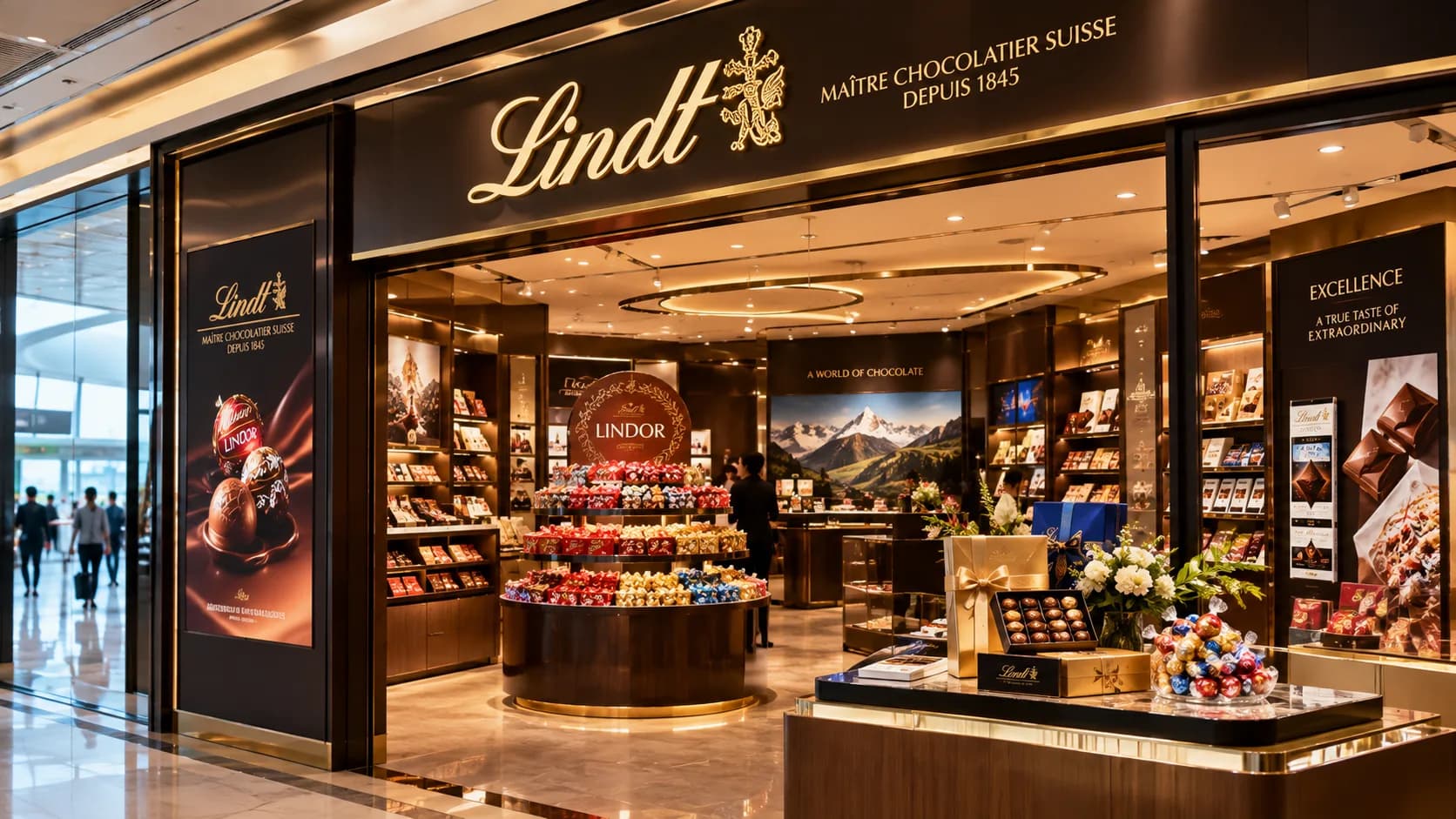
Lindt & Sprüngli has opened its first dedicated retail boutique in India, at World St. in Worldmark, Aerocity a wall of LINDOR truffles, a live chocolatier station, and a menu that runs from the brand's Excellence dark chocolate bars to its Extra Creamy milk range. Several reports covering the launch this week have called it Lindt "entering India." That's not quite right, and the more accurate version of the story is also the more interesting one.
Lindt chocolate has been sold in India for years through gourmet retailers, specialty grocers and import platforms, the way most Indians have actually tasted it. Trade coverage going back to 2015 already described Lindt gaining ground in premium Indian stores. What opened this month isn't Lindt's arrival in the country; it's Lindt's first attempt to control the retail experience itself, rather than sit on someone else's shelf.
That distinction matters more than it sounds, because a very similar experiment just failed for a comparable brand.
What's actually inside the store
The Aerocity boutique, reported at roughly 1,100 sq ft, is built around the LINDOR Pick & Mix wall a floor-to-ceiling display where shoppers fill bags by weight from more than 25 flavours, some exclusive to this location, including milk chocolate, sea salt, hazelnut and coconut. Alongside it sits the Excellence range, Lindt's high-cocoa dark chocolate line running from 70% to 90%, and Extra Creamy, its smoother milk chocolate line. The store also runs live chocolatier demonstrations and guided tastings retail theatre, not just a checkout counter. Lindt & Sprüngli Group CEO Dr. Adalbert Lechner called the opening "an important milestone," while Bharti Real Estate's S.K. Sayal framed it as reinforcing World St.'s pitch as Aerocity's "social and cultural heart."
Why Aerocity, and not a luxury mall
The location choice is itself worth pausing on. Delhi's established premium-retail addresses DLF Emporio, The Chanakya sit in South Delhi, built around old-money and new-money shoppers who go there specifically to browse luxury. Aerocity is different: it's an airport-adjacent business district of hotels, offices and transiting travellers, with Worldmark's retail strip built more for footfall convenience than destination shopping. Lindt choosing a walkable business-district promenade over a traditional luxury mall suggests it's betting on daily visibility to professionals and travellers rather than occasional pilgrimage by dedicated luxury shoppers a different customer bet than the one its closest rival made.
The rival that tried this first
That rival is Läderach, another family-owned Swiss chocolate brand, which entered India in August 2023 through an exclusive partnership with FMCG conglomerate DS Group. Läderach's first store also opened in Delhi, at DLF Emporio, with plans to open five to seven boutiques within two years. It expanded to three stores DLF Emporio, Mumbai's Jio World Drive and Delhi's DLF The Chanakya built on the same premise now underpinning Lindt's launch: that Indian consumers would pay for an experience-led, standalone Swiss chocolate boutique rather than a supermarket shelf.
In January 2026, DS Group ended that partnership. The company said the decision followed "a strategic review" and that the arrangement "no longer aligns with the core values and long-term vision of DS Group," without detailing what specifically changed. Läderach itself continued expanding rapidly elsewhere in the world, opening its 250th global store in Toronto in 2025 so the split reads as India-specific, not a sign of trouble for the brand globally. Still, it means one of the two Swiss chocolate names that tried building standalone India retail has already unwound its India presence within roughly three years.
A market that's real, but not agreed upon
The broader premium chocolate opportunity in India is genuine, though the numbers attached to it vary depending on what's being measured. Industry research firm IMARC put the India premium chocolate market at USD 1,245.53 million in 2025, projecting it to reach USD 2,240.11 million by 20 a 6.74% annual growth rate specific to the premium segment. Separate estimates covering the broader chocolate category (premium and mass-market combined) put India's total chocolate market at USD 2.74 billion in 2023, projected to nearly double by 2030. These aren't contradictory so much as measuring different things the premium slice specifically, versus chocolate as a whole and conflating them tends to inflate whichever number sounds more impressive. What both data sets agree on is the same underlying driver: gifting culture around festivals like Diwali and Raksha Bandhan, growing willingness among urban Indians to trade up, and expanding quick-commerce access putting imported chocolate a delivery order away rather than a duty-free trip.
Where that leaves Lindt
None of this means Lindt's Aerocity boutique is destined to repeat Läderach's trajectory the two brands, partnership structures and locations aren't identical, and DS Group hasn't said its India exit was about the category itself rather than its own partnership specifics. But the timing puts Lindt's launch in useful context that pure excitement about a new chocolate wall misses: India's premium chocolate demand is real and growing, but building a profitable standalone retail business around it — rather than just selling into existing gourmet channels is a harder, less proven bet than the market-size headlines suggest. Lindt has just made that bet in public, eight months after a comparable one didn't survive.