
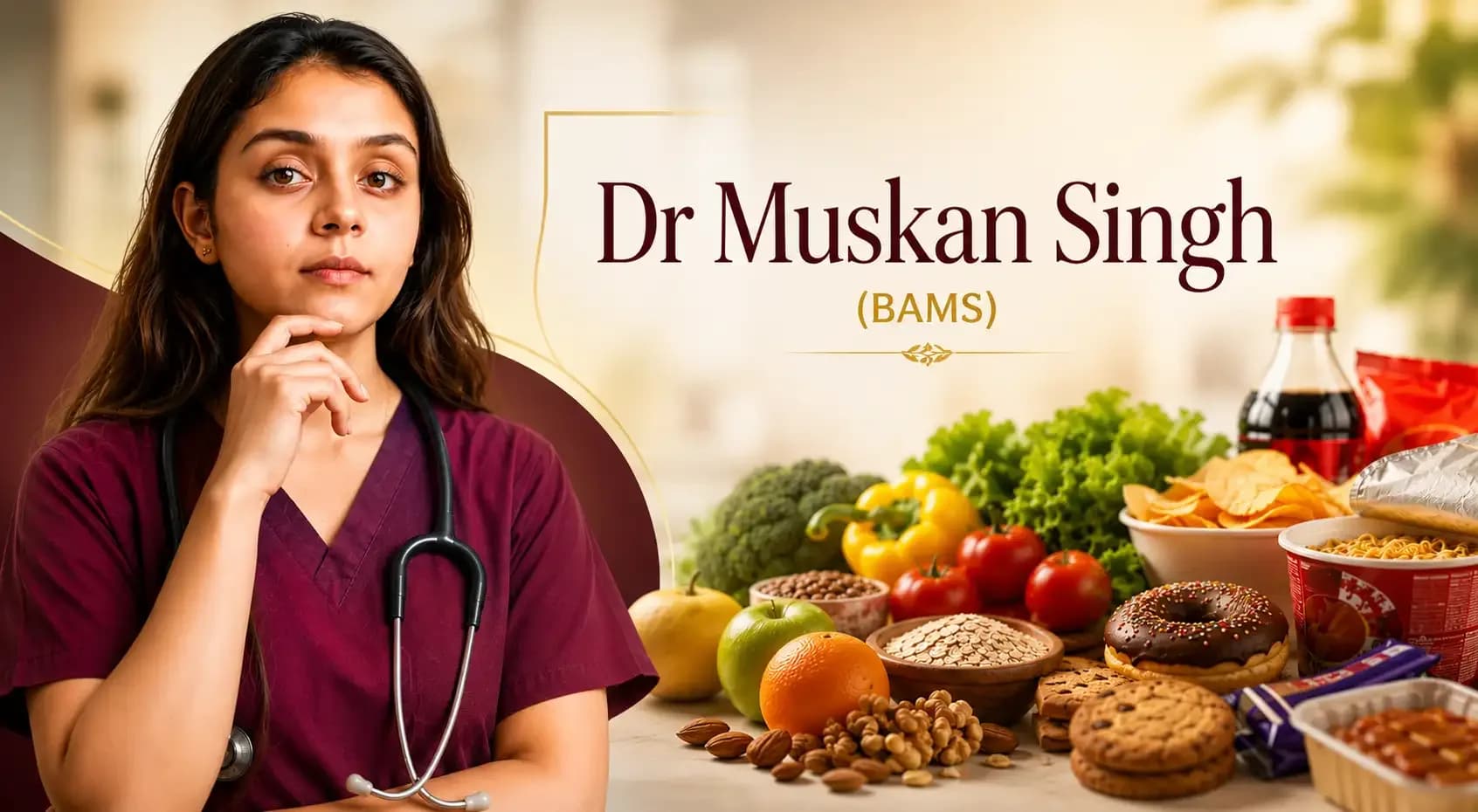
Walk into any supermarket today and you will find an entire aisle built around convenience.
Breakfast cereals. Packaged bread. Instant noodles. Biscuits. Protein bars. Flavoured yoghurt. Ready-to-eat meals. Packaged snacks. Soft drinks. Frozen foods.
And increasingly, consumers are asking a simple question:
Are these foods actually bad for us?
The term “ultra-processed food” (UPF) has quickly moved from nutrition research into everyday conversations on Instagram, YouTube and health podcasts. Some experts and studies have linked diets high in UPF with a range of health concerns, while social media has sometimes reduced the conversation to a much simpler message:
“Stop eating processed food.”
But food processing is not that black and white.
Not every packaged food is ultra-processed. Not every processed food is nutritionally poor. And eating one packaged snack does not suddenly make a person's diet unhealthy.
So what exactly is an ultra-processed food? How is it different from ordinary processed food? And does a healthy lifestyle really require eliminating UPFs completely?
To understand where the science ends and social-media hype begins, Indian Food Times spoke with Dr. Muskan Singh, who shares her perspective on what consumers should actually know.
First, What Does “Processed Food” Actually Mean?
The word processed can sound alarming, but processing itself is not necessarily bad.
Food processing can include simple things such as washing, cutting, drying, milling, freezing, pasteurising or cooking.
In fact, many everyday foods we consider perfectly normal are processed in some way.
Milk can be pasteurised.
Wheat can be milled into flour.
Vegetables can be frozen.
Fruit can be dried.
These processes can improve food safety, shelf life, convenience and availability.
The real conversation becomes more complicated when foods undergo multiple industrial processes and are formulated with ingredients and additives designed to change their taste, texture, appearance or shelf life.
That is where the term ultra-processed food enters the discussion.
So, What Is an Ultra-Processed Food?
The term is commonly associated with the NOVA food classification system, which categorises foods according to the extent and purpose of processing.
A simplified way to understand the categories is:
1. Minimally Processed Foods
These are foods that have undergone relatively little processing while remaining recognisable as the original food.
Examples include:
Fresh fruits and vegetables
Eggs
Milk
Plain yoghurt
Nuts and seeds
Rice
Pulses
Fresh meat and fish
Processing may involve cleaning, drying, chilling, freezing or other basic methods.
2. Processed Foods
These are foods that have been altered from their original form, often using ingredients such as salt, sugar or oil.
Examples can include:
Traditional pickles
Some cheeses
Canned vegetables
Canned fish
Freshly baked bread with a relatively simple ingredient list
Certain traditionally preserved foods
Processing in this category is not automatically synonymous with “unhealthy.”
3. Ultra-Processed Foods
Ultra-processed foods generally involve more extensive industrial formulation and may contain ingredients or additives that are uncommon in a typical home kitchen.
Examples can include:
Some packaged biscuits and cookies
Instant noodles
Sugary breakfast cereals
Packaged cakes and pastries
Some confectionery
Certain ready-to-eat meals
Some processed meat products
Sugary soft drinks
Some packaged snack foods
However, classification can be complicated, and not every food that comes in a packet belongs automatically in the ultra-processed category.
That distinction matters.
The Biggest Mistake: Assuming “Packaged” Means “Ultra-Processed”
This is perhaps one of the most important points consumers should understand.
A packet is not a nutrition classification.
A packet of plain oats and a packet of chocolate-flavoured cereal may both sit on the same supermarket shelf, but they are not nutritionally equivalent.
Similarly, frozen vegetables may be packaged but require very little additional processing beyond freezing.
This is why consumers should look beyond the front of a package and understand what is actually inside it.
“One of the biggest misconceptions is that anything that comes in a packet is automatically unhealthy. That is not the right way to look at food. We need to understand what the product contains, how it has been processed, its nutritional profile, and how frequently we are consuming it. A packaged food and an ultra-processed food are not necessarily the same thing.”
— Dr. Muskan Singh
Why Has Ultra-Processed Food Become Such a Big Concern?
The concern is not based on one viral Instagram post.
A growing body of research has investigated associations between higher consumption of ultra-processed foods and various health outcomes.
A 2024 umbrella review published in The BMJ analysed 45 pooled analyses covering almost 9.9 million participants. It found that greater exposure to ultra-processed foods was associated with higher risks across several health outcomes, particularly cardiometabolic conditions, some mental-health outcomes and mortality-related measures.
But there is an important qualification.
The review primarily examined observational epidemiological evidence. Association does not automatically prove that ultra-processed food itself directly caused a particular disease. The researchers also rated much of the evidence as low or very low certainty.
That means the responsible message is not:
“Eat one UPF and you will get sick.”
Nor is it:
“All ultra-processed food is harmless.”
The reality is considerably more nuanced.
Why Might High UPF Consumption Be a Problem?
There are several possible explanations being investigated.
Many ultra-processed foods can be:
High in added sugars
High in sodium
High in saturated fat
Energy-dense
Low in fibre
Highly palatable
Easy to consume quickly
Convenient enough to replace more nutrient-dense foods
Some are also specifically formulated to make them highly appealing, which may make portion control more difficult.
But researchers are still investigating exactly how much of the observed health risk comes from the processing itself and how much comes from the nutritional composition, eating patterns and lifestyle factors associated with high UPF consumption.
This distinction is important.
For example, someone who consumes large amounts of sugary drinks, packaged snacks and fast food may also consume fewer fruits, vegetables, pulses and whole foods and may have other lifestyle factors that affect health.
So researchers have to separate these factors when interpreting the evidence.
Does That Mean We Should Stop Eating Ultra-Processed Food Completely?
Not necessarily.
For most people, the more practical question is not:
“Can I eliminate every ultra-processed food from my diet?”
It is:
“How much of my overall diet is coming from ultra-processed foods, and what are they replacing?”
A person who occasionally eats a packet of biscuits while otherwise maintaining a balanced diet is in a very different situation from someone whose breakfast, lunch, snacks and dinner are dominated by highly processed packaged products.
Diet quality is ultimately about the overall pattern.
“I would not encourage people to approach nutrition with an all-or-nothing mindset. The occasional biscuit, instant noodle or packaged snack is very different from having ultra-processed foods form the majority of your daily diet. What matters is the overall pattern of eating, the quantity, the frequency and what these foods are replacing in your diet.”
— Dr. Muskan Singh
The “80/20” Approach May Be More Realistic Than Food Fear
Healthy eating does not have to become a punishment.
Instead of creating a list of foods that are permanently “forbidden,” consumers can focus on making minimally processed and nutrient-dense foods the foundation of their diet.
More often:
Fruits, vegetables, pulses, whole grains, nuts, seeds, eggs, dairy and other nutrient-rich foods.
Less often:
Foods that are high in added sugar, sodium, saturated fat or calories and provide relatively little nutritional value.
This does not mean that every biscuit, chocolate, instant noodle packet or packaged snack needs to disappear forever.
It means these foods should ideally remain occasional components rather than the foundation of the diet.
What About Children?
This question deserves particular attention.
Children are increasingly exposed to packaged snacks, sweetened beverages, confectionery and convenience foods.
Because food preferences and eating habits develop early, repeatedly relying on highly palatable packaged foods may influence what children come to expect from meals and snacks.
Parents therefore do not necessarily need to create a completely “UPF-free” household.
A more practical strategy can be to make nutritious, minimally processed foods easy and accessible while keeping highly processed snacks from becoming the default option throughout the day.
“With children, the focus should be on building healthy eating habits rather than creating fear around food. Parents can make fruits, vegetables, pulses, whole grains and other nutritious foods the everyday choices, while keeping highly processed snacks as occasional foods. We want children to understand balance, not grow up believing that certain foods are ‘forbidden.’”
— Dr. Muskan Singh
How Can Consumers Identify Highly Processed Foods?
One of the easiest habits consumers can develop is learning to read the ingredient list, rather than relying only on marketing claims on the front of the package.
Look at:
1. The Ingredient List
The ingredient list can tell you much more than words such as “healthy,” “natural,” “multigrain” or “fitness.”
2. Added Sugar
Check whether sugar or other sweetening ingredients feature prominently.
3. Sodium
Some packaged foods can contribute significant amounts of sodium to the overall diet.
4. Fibre and Protein
A food marketed as a healthy snack should still make nutritional sense when you look at its protein, fibre and overall composition.
5. Serving Size
A label may appear reassuring until you realise that the stated serving size is much smaller than the amount people typically eat.
6. The Overall Ingredient Profile
A long ingredient list does not automatically mean a food is unhealthy, and a short ingredient list does not automatically make something healthy.
The bigger picture matters.
Is “Natural” Always Better?
Not necessarily.
This is another area where health marketing can confuse consumers.
“Natural,” “organic,” “traditional,” “chemical-free” and “clean” are not interchangeable with “healthy.”
Likewise, an ingredient with a scientific-sounding name is not automatically dangerous.
The question should be:
What is the food, how is it formulated, how much are you consuming, and what role does it play in your overall diet?
This is where professional nutritional and medical advice becomes much more useful than viral food rules.
What About Protein Bars, Breakfast Cereals and “Health Foods”?
This is where things get particularly interesting.
A product can be marketed around:
Protein. Fibre. Immunity. Gut health. No added sugar. Multigrain. Natural.
But a health claim on the front of a package does not tell the complete nutritional story.
For example, a protein bar may provide useful protein but also contain significant amounts of sweeteners, fats or other ingredients.
A breakfast cereal may contain added vitamins and minerals but also be high in sugar.
The answer is not to automatically reject these products.
Instead, consumers should ask:
“What am I actually getting from this food, and what is it replacing?”
“A product being marketed as ‘high protein’, ‘multigrain’, ‘natural’ or ‘healthy’ does not tell us the complete nutritional story. I always encourage people to turn the package around and read the ingredient list and nutrition information. Don't make your decision only on the basis of what is written on the front of the pack.”
— Dr. Muskan Singh
The Bigger Problem May Be What UPFs Replace
Imagine two diets.
Diet A
Most meals are built around vegetables, fruits, pulses, whole grains, nuts, seeds, eggs, dairy and other minimally processed foods, with occasional packaged snacks.
Diet B
Breakfast is a sugary packaged cereal, lunch is a packaged ready-to-eat meal, snacks are biscuits and chips, dinner is another convenience food, and sugary beverages are consumed throughout the day.
Both diets may contain “processed food.”
But their overall nutritional quality is clearly different.
This is why simply counting the number of packaged products someone eats may not tell the whole story.
Should You Be Worried About Eating a Biscuit or Instant Noodles Occasionally?
For most healthy adults, occasional consumption of a packaged snack should not become a source of unnecessary anxiety.
The bigger concern is habitual, high consumption and the displacement of more nutritious foods.
Food is not just chemistry.
It is also culture, convenience, affordability, social life and enjoyment.
For many Indian households, packaged foods can be practical, especially for working professionals, students, travellers and families with limited time.
The goal of nutrition advice should therefore be to help people make better choices more often, rather than make them afraid of every packaged food.
What Should Consumers Actually Do?
Instead of trying to memorise a list of hundreds of “bad foods,” consumers can follow a few simple principles:
Build meals around real, nutrient-rich foods.
Eat fruits and vegetables regularly.
Include adequate protein.
Choose whole grains and pulses where appropriate.
Read food labels instead of relying only on marketing claims.
Keep highly processed snacks and sugary drinks from becoming everyday staples.
Pay attention to portion sizes.
Don't panic over an occasional indulgence.
And most importantly:
Look at your diet as a whole rather than judging individual foods in isolation.
So, Do We Really Need to Stop Eating Ultra-Processed Food Completely?
The short answer is:
For most people, the goal should be to reduce reliance on ultra-processed foods—not to live in fear of them.
Current research provides important reasons to pay attention to high UPF consumption, while the science around how processing itself contributes to health outcomes continues to evolve.
At the same time, not every food placed under the broad UPF label carries the same nutritional profile or necessarily plays the same role in someone's diet.
The more useful question for consumers may therefore be:
“Is most of my diet nourishing me—or is convenience doing most of the eating for me?”
That shift—from food fear to food awareness—may be a much healthier place to start.
Dr. Muskan Singh’s Final Takeaway
“We don't need to be afraid of food—we need to become more aware of it. Instead of trying to eliminate every packaged or ultra-processed food from our lives, focus on making nutritious, minimally processed foods the foundation of your diet and consume highly processed foods less frequently. Healthy eating is about consistency and balance, not perfection.”
— Dr. Muskan Singh
Disclaimer
This article is intended for general health and nutrition awareness and should not be considered a substitute for personalised medical advice. Individual dietary needs can vary based on age, health status, medications, lifestyle and other factors. Readers with specific health concerns should consult a qualified healthcare professional.