

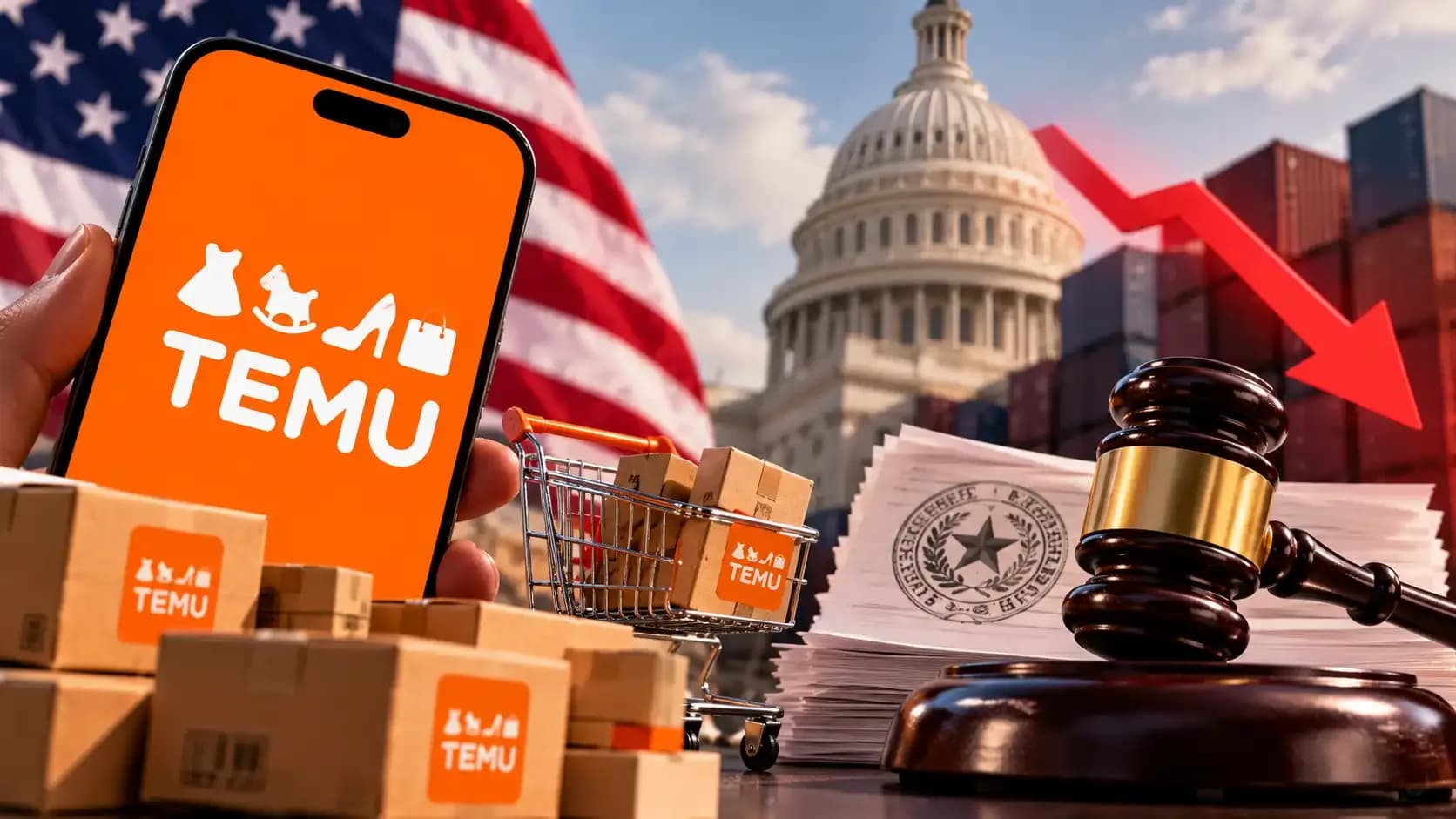
Temu’s low-price shopping model has made it a major name in global e-commerce, but its US business is facing growing regulatory and commercial pressure. The latest development comes from Texas, where the Chinese-founded online marketplace has agreed to pay $3 million to settle a lawsuit involving allegations over consumer data privacy and product safety.
Announced on October 16, 2026, the settlement requires Temu to strengthen its data-storage practices, restrict access to certain consumer information, undergo independent cybersecurity reviews and introduce annual product safety testing.
The agreement adds to the challenges facing Temu in the United States, where changes to import rules have already put pressure on the cross-border shipping model that helped the platform offer products at exceptionally low prices.
However, the settlement does not mean Temu is shutting down its US operations. Instead, it introduces significant new compliance obligations for the company, beginning with requirements affecting consumers in Texas.
What Does the $3 Million Settlement Mean for Temu?
Under the agreement with the Texas Attorney General’s office, Temu must pay $3 million to the state and implement changes to its handling of Texans’ personal information.
The settlement follows a lawsuit filed in February 2026 that alleged the platform had misled consumers and unlawfully collected personal data, potentially exposing it to access by the Chinese government.
Temu denied wrongdoing. The settlement resolves Texas’s claims without establishing that the allegations were proven in court.
The agreement introduces several important requirements:
US-based data storage: Texans’ personal information must be stored on servers located in the United States that are owned and controlled by American entities.
Restrictions on data transfers: Access to personal information from China is restricted, subject to permitted essential business functions, including necessary transaction-related information.
Independent cybersecurity audits: A third-party auditor must examine the app’s code and assess security risks.
Annual product safety testing: Independent testing must identify products containing dangerous chemicals or materials.
Consumer protection measures: Products confirmed to contain harmful substances must be removed, offending sellers and affiliated stores terminated, affected consumers notified and full refunds issued.
Financial penalties: Violations of specified data-security provisions could trigger penalties of $8 million for each year in which a violation occurs.
The requirements go beyond a one-time financial settlement. They require Temu to change how it manages aspects of data security, app oversight and product safety.
Why Is Temu Facing Pressure in the US?
The Texas settlement comes as Temu continues to navigate a difficult operating environment in one of its important international markets.
The company built much of its appeal around inexpensive products sourced from Chinese manufacturers and shipped directly to consumers. Its aggressive pricing, frequent promotions and extensive product selection helped it attract shoppers looking for bargains.
But that business model became more complicated when the United States ended the de minimis duty-free exemption for low-value imports in 2025.
Previously, eligible shipments valued at $800 or less could enter the US without ordinary import duties. The removal of that exemption increased costs and administrative requirements for platforms that relied heavily on direct cross-border shipping.
Data from market intelligence firm Sensor Tower, reported in June 2025, showed that Temu’s daily US users fell 48% between March and May that year.
The company subsequently reduced US advertising expenditure and adjusted its order-fulfilment strategy as it responded to the changing trade environment.
The decline was an important warning sign for a platform whose competitive advantage depended heavily on low prices and convenient access to products from overseas suppliers.
However, the 2025 user figures should not be interpreted as a measure of Temu’s current audience in 2026. They demonstrate the impact of an earlier market disruption rather than its present-day performance.
Temu’s Business Model Is Under Pressure From Two Directions
The latest developments highlight two distinct challenges for the retailer.
The first is economic. Higher import costs can make it harder for Temu to maintain the prices that attract bargain-conscious shoppers, particularly when customers can compare its products with those offered by Amazon, Walmart and other marketplaces.
The second is regulatory. Governments and consumer-protection authorities are paying closer attention to how online marketplaces collect personal information, secure their apps and ensure that products sold through their platforms meet safety requirements.
These challenges can reinforce one another.
If compliance requirements increase operating costs while import changes reduce the platform’s ability to offer exceptionally low prices, Temu may have to work harder to maintain its value proposition.
At the same time, stronger safety checks and data protection could help build consumer confidence if implemented effectively.
The commercial outcome will depend on whether Temu can balance affordability, operational efficiency and compliance without undermining the features that made the platform attractive to shoppers.
Why Product Safety Is Becoming a Bigger Issue for Online Marketplaces
Temu’s settlement also reflects a broader challenge facing cross-border e-commerce businesses.
Online marketplaces offer consumers access to a vast range of products, often from sellers located thousands of kilometres away. But the scale of these platforms can make it difficult to ensure that every item meets applicable safety standards.
Under the Texas agreement, Temu must introduce annual independent testing and remove products confirmed to contain dangerous substances.
The measures also require action against offending sellers and refunds for affected consumers.
For online retailers, these obligations have implications beyond the cost of testing individual products. Businesses may need stronger supplier verification, better product traceability, more effective listing controls and clearer procedures for responding to safety concerns.
These requirements are particularly important for categories such as children's products, clothing, household goods and other items that may involve chemical or material safety risks.
The settlement does not establish that all products sold on Temu are unsafe. Rather, it creates specific obligations designed to identify and address products that fail the relevant safety requirements.
Will Temu Leave the US Market?
There is no confirmed nationwide shutdown announced as part of the Texas settlement.
Temu remains an e-commerce platform, but the company must now comply with additional obligations in Texas while continuing to navigate the wider US regulatory and import environment.
One potential response is a greater reliance on products stored in US warehouses and sellers operating domestically. Such a model can support faster delivery and reduce the need for individual orders to be shipped directly from China.
However, domestic fulfilment does not automatically eliminate import duties. Products entering the United States may still be subject to applicable customs requirements.
The more important question is whether Temu can preserve its low-price positioning while adapting its sourcing, logistics, data practices and product-safety systems.
Its future performance will depend on a combination of consumer demand, pricing, operational execution and regulatory developments. The Texas settlement alone is not enough to determine whether the company will regain momentum or lose further ground to established competitors.
What This Means for Amazon and Walmart
Temu’s challenges could create opportunities for established US retailers, but the outcome is not guaranteed.
Amazon and Walmart have extensive domestic fulfilment networks and established customer-service systems. These capabilities may help them compete on delivery reliability, product availability and returns.
Yet Temu continues to target consumers who prioritise low prices, and its efforts to expand domestic fulfilment could help it remain competitive.
The settlement may also increase the importance of consumer trust as a differentiator in online shopping. Retailers that can demonstrate reliable product standards, transparent policies and effective data protection may be better positioned to reassure customers.
For the wider e-commerce industry, the message is clear: attracting shoppers with low prices is only one part of building a sustainable marketplace. Businesses must also demonstrate that they can protect customer information and respond effectively to product-safety concerns.
The Bigger Picture: Temu’s Next Phase in America
Temu’s US expansion story is entering a more demanding phase.
The platform has already had to respond to changes in the economics of cross-border imports. Now, the Texas settlement adds new obligations covering data storage, cybersecurity oversight and product safety.
The $3 million payment is only one part of the agreement. The operational requirements could have longer-term implications for how the company manages its US-facing business.
At the same time, the settlement concerns Texas and should not be mistaken for a nationwide ban or a final resolution of every legal challenge facing the platform. Other US state-level proceedings remain a potential source of further regulatory pressure.
For Temu, the task ahead is to maintain its appeal among price-sensitive consumers while meeting increasingly demanding expectations around privacy, security and product quality.
The bottom line: Temu has not been forced out of America, but the conditions under which it competes are changing. Its ability to adapt will determine whether its low-cost shopping model can remain competitive in a more demanding regulatory and commercial environment.