
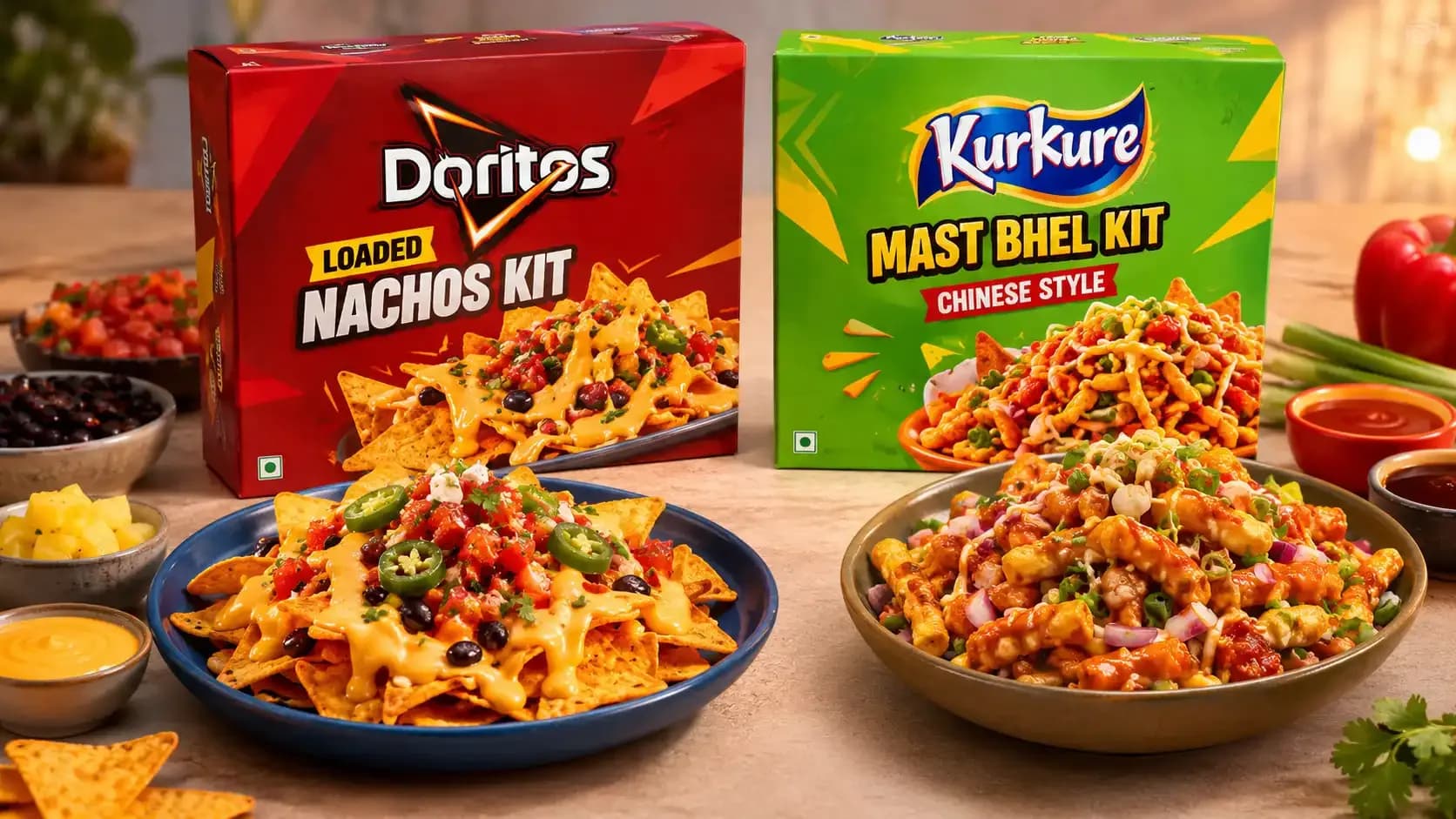
PepsiCo India is taking two of its established snack brands beyond their conventional packaged formats with the launch of ready-to-eat snacking kits under Doritos and Kurkure. The new offerings, Doritos Loaded Nachos Kit and Kurkure Mast Bhel Kit Chinese Style, bring together packaged snacks, sauces and complementary ingredients to create more elaborate food experiences at home.
The launch reflects a broader shift in the packaged food industry, where companies are increasingly looking beyond traditional flavour extensions and experimenting with formats that offer convenience, customisation and a more engaging consumption experience.
The two products are being made available through e-commerce and quick-commerce platforms across India, positioning them for consumers who want to prepare something different without purchasing multiple ingredients separately.
Two products, two distinct snacking experiences
The Doritos Loaded Nachos Kit is positioned around the growing popularity of Mexican-inspired food and restaurant-style nachos. Priced at ₹225 for a 226-gram pack, the kit includes Doritos Nacho Cheese chips, Black Bean and Tomato Salsa, Pineapple Salsa and Cheese Sauce.
Consumers can assemble their own loaded nachos by combining the components and adding toppings such as jalapeños, bell peppers, sweet corn and coriander. The format brings together the familiar crunch of Doritos with multiple accompaniments, allowing consumers to recreate a more elaborate nachos experience at home.
The second offering, Kurkure Mast Bhel Kit Chinese Style, takes a distinctly Indian approach. Priced at ₹110 for a 150-gram pack, it combines Kurkure Shots and jowar crisps with Schezwan and Manchurian sauces.
The product reimagines traditional bhel through a Desi-Chinese flavour profile. Consumers can further customise the preparation with chopped onions, capsicum, spring onions and coriander, bringing together elements of Indian street food and Indo-Chinese cuisine.
Unlike conventional snack packs, both products require consumers to combine different components before consumption. This places them somewhere between packaged snacks and convenient, ready-to-assemble food products.
Quick commerce creates an opportunity for experience-led snacking
The availability of these kits through quick-commerce and e-commerce channels is an important part of the launch.
Quick-commerce platforms have changed how urban consumers purchase food, groceries and everyday essentials. The ability to order products at short notice has also created opportunities for brands to target specific consumption occasions, including weekend gatherings, movie nights and house parties.
For PepsiCo, these kits offer an opportunity to participate in occasions where consumers may otherwise purchase ingredients from multiple categories or order prepared food.
The products also address a familiar consumer requirement: the convenience of preparing something interesting at home without spending considerable time on preparation.
While the company has not disclosed platform-wise sales figures or distribution details, the choice of digital-first retail channels provides a natural route to reach consumers looking for convenient food options.
A strategic shift beyond traditional packaged snacks
For established FMCG companies, innovation in the snacks category has traditionally centred on new flavours, pack sizes and product variations. However, the introduction of ready-to-assemble kits suggests a different approach to product development.
Rather than selling only a finished snack, brands are beginning to explore ways to become part of the food preparation process.
Doritos, for instance, has traditionally been associated with flavoured tortilla chips. The Loaded Nachos Kit extends that association into a more complete food experience. Kurkure, meanwhile, is using its established identity in the Indian savoury snacks market to enter a format inspired by street food.
The strategy also allows PepsiCo to build on existing brand recognition while introducing consumers to new ways of using familiar products.
The price difference between the two kits is notable. At ₹225, the Doritos offering occupies a relatively premium position, while the ₹110 Kurkure kit provides a more accessible entry point into the ready-to-assemble format.
Whether consumers consistently purchase these products beyond the initial curiosity surrounding a new launch will depend on factors such as taste, portion size, perceived value and convenience.
PepsiCo's latest move comes at a time when the boundaries between packaged snacks, convenience foods and ready-to-eat products are becoming increasingly fluid.
Indian consumers are familiar with assembling snacks such as bhel, chaat and sandwiches at home. Bringing these experiences into organised packaged formats could create opportunities for FMCG companies to develop products around regional tastes and changing consumption habits.
The approach could also encourage innovation in categories such as instant chaat, street-food kits, party snack boxes and other convenient meal accompaniments.
For the wider food industry, the development raises an interesting question: will the next phase of packaged food innovation be driven not just by what consumers eat, but also by the experiences brands enable them to create?
PepsiCo India's Doritos and Kurkure kits offer an early example of how established snack brands are attempting to answer that question.
For now, the success of the products will depend on whether consumers see enough value in the convenience and experience to make them a regular part of their snacking choices.