

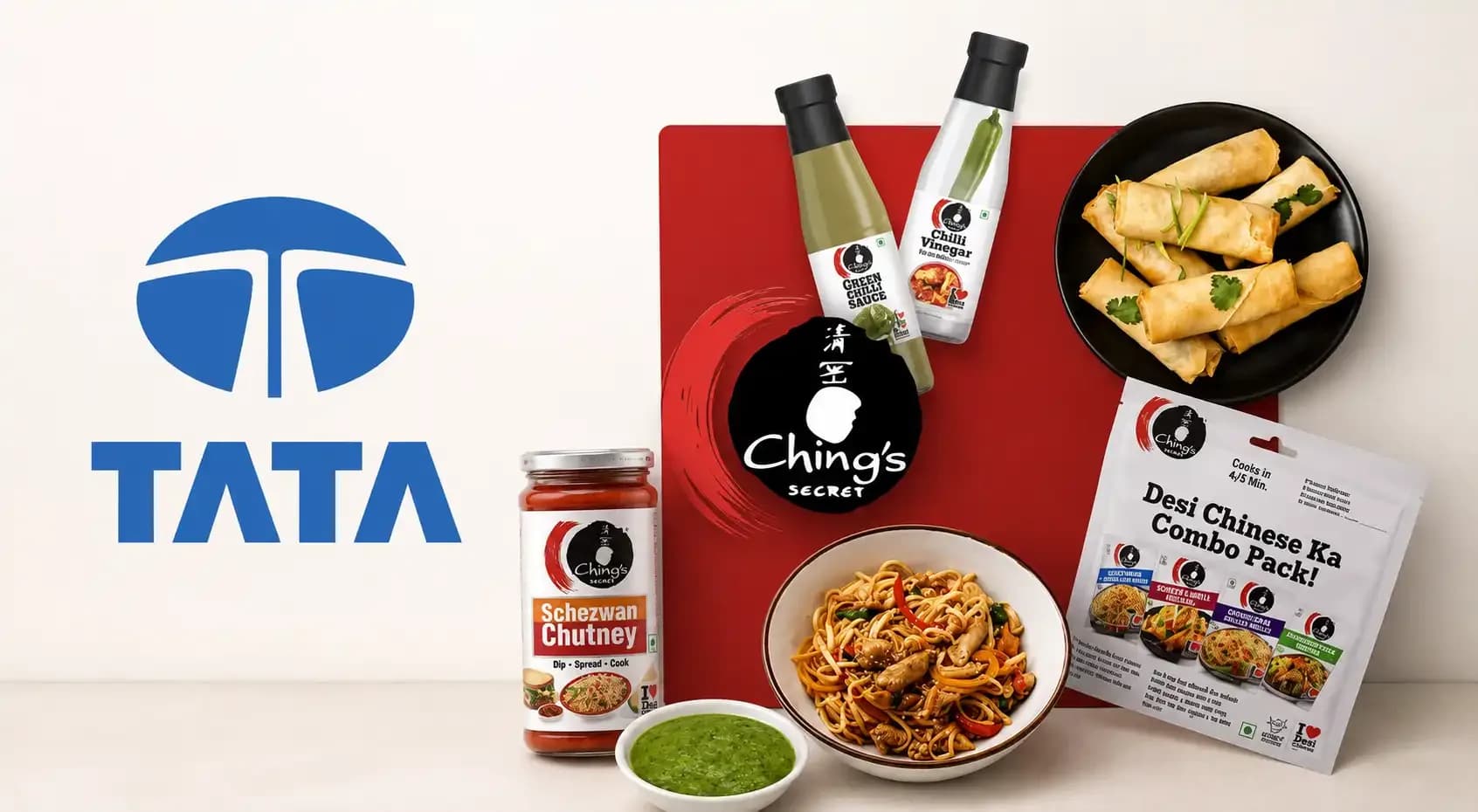
Tata Consumer Products has strengthened its control over packaged-food company Capital Foods by acquiring an additional 5% stake, taking its total ownership in the company to 80%.
The transaction was completed on September 1, 2026, with Tata Consumer acquiring the shares from Wildflower Private Trust. The move takes the Tata Group consumer-products company another step closer to full ownership of the business behind popular food brands Ching’s Secret and Smith & Jones.
Tata Consumer had initially acquired a 75% stake in Capital Foods in 2024, as part of its strategy to expand its presence beyond traditional categories such as tea, salt and beverages and build a larger, more diversified food portfolio.
From 75% to 80%
The latest transaction is part of the original agreement under which Tata Consumer planned to acquire the remaining shareholding in Capital Foods over a period of time.
Following the latest acquisition, Tata Consumer now owns 80% of Capital Foods, leaving approximately 20% with other shareholders.
The company now holds 27,95,533 equity shares in Capital Foods, each carrying a face value of ₹10.
The financial consideration for the latest 5% transaction has not been disclosed.
When Tata Consumer announced its original Capital Foods acquisition in January 2024, the company valued the business at an enterprise value of approximately ₹5,100 crore on a no-cash, no-debt basis.
A bigger play in packaged foods
Capital Foods gives Tata Consumer access to two well-established consumer brands — Ching’s Secret and Smith & Jones — and a growing portfolio of convenience-oriented packaged foods.
Ching’s Secret has built a strong presence in the Desi Chinese category, with products spanning sauces, chutneys, masalas, soups and other convenient meal solutions.
Smith & Jones, meanwhile, operates across Italian and other Western cuisine-inspired products designed for at-home consumption.
The acquisition gives Tata Consumer a stronger foothold in categories benefiting from changing consumer habits, including convenience foods, ready-to-cook products, sauces, seasonings and international cuisines.
At the time of the original acquisition, Tata Consumer estimated that the categories in which Capital Foods operated represented an overall market opportunity of around ₹21,400 crore.
Why Capital Foods matters to Tata Consumer
The Capital Foods investment fits into a broader transformation underway at Tata Consumer.
The company has been steadily expanding its food and beverage portfolio through both organic growth and acquisitions. Its traditional strengths in tea and salt are now complemented by businesses spanning beverages, ready-to-cook foods, spices, pulses, snacks, wellness products and other packaged-food categories.
Capital Foods adds another important piece to that strategy.
Rather than building brands from scratch, Tata Consumer gets access to established products with existing consumer recognition and distribution. At the same time, Capital Foods can potentially benefit from Tata Consumer's wider distribution network, supply-chain capabilities and geographic reach.
Following the initial acquisition in 2024, Tata Consumer said it had completed the front-end and back-end integration of Capital Foods within 60 days and had begun leveraging its existing go-to-market and distribution infrastructure.
The road to full ownership
The latest 5% acquisition also raises the possibility of further changes in Tata Consumer's ownership of Capital Foods.
The company had originally agreed to acquire the remaining stake in Capital Foods within three years of the initial transaction. With ownership now at 80%, the latest deal represents a further step towards that objective.
For Tata Consumer, the significance extends beyond simply increasing its equity holding.
Capital Foods has become an important part of the company's push into high-growth packaged-food and convenience categories, where competition among India's major FMCG companies is intensifying.
As Indian consumers increasingly look for convenient meal solutions, new flavours and restaurant-style food at home, categories such as sauces, noodles, soups, seasonings and ready-to-cook products are becoming increasingly important battlegrounds for FMCG companies.
What it means for the FMCG sector
Tata Consumer's move highlights a broader trend in India's FMCG industry: large consumer companies are increasingly looking beyond their traditional categories for growth.
For Tata Consumer, the Capital Foods investment provides exposure to a portfolio that is closely aligned with these changing consumption patterns.
The company now owns 80% of a business with two recognised packaged-food brands, while retaining the option of moving closer to full ownership.
The latest transaction may therefore be only a small increase in percentage terms, but strategically it represents another step in Tata Consumer's ambition to build a larger presence across India's rapidly evolving food market.
For the FMCG industry, the message is clear: packaged food remains a key growth battleground, and Tata Consumer is putting more weight behind its bet.