

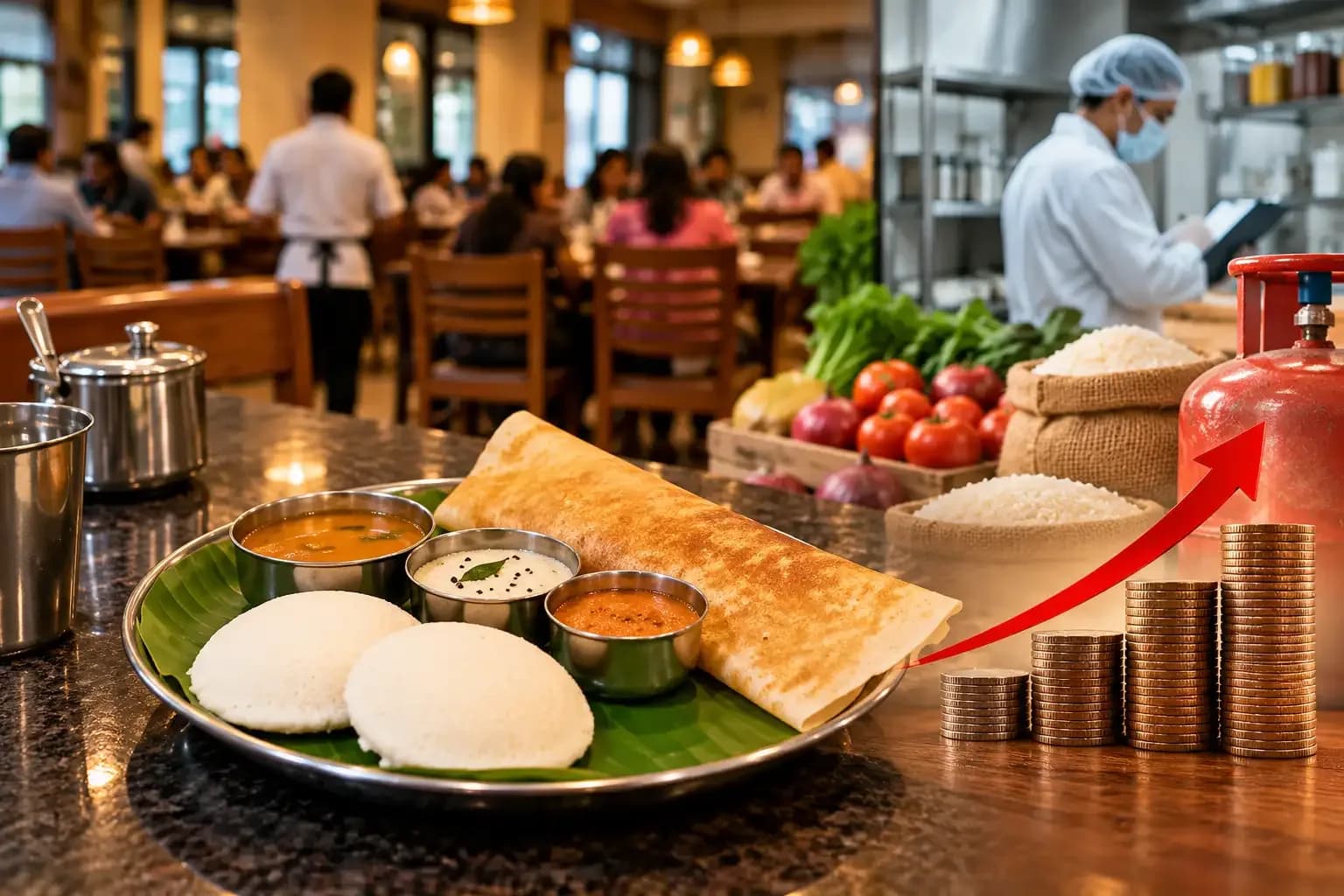
Dining out in Mumbai could become more expensive from next week, with restaurants considering a 10–15% increase in menu prices as rising operating expenses and additional spending on hygiene put pressure on the hospitality industry.
The Indian Hotel and Restaurant Association (AHAR) has indicated that restaurants may revise prices to offset increasing raw-material costs, staff expenses and investments in cleanliness and food-safety practices. However, the increase is not expected to be uniform across the city, as individual establishments will determine their own pricing based on operating costs and business requirements.
The proposed revision comes amid heightened scrutiny by Maharashtra's Food and Drug Administration (FDA), which has recently taken enforcement action against several food establishments over alleged hygiene and food-safety violations.
Rising Operating Costs Put Pressure on Restaurants
Restaurant operators say the pressure on their businesses extends beyond ingredient prices. Increasing expenditure on commercial cooking gas, rentals, salaries, transportation and other operational requirements has made it more difficult to maintain existing menu prices.
According to AHAR president Vijay K. Shetty, restaurants have absorbed rising costs for a considerable period but are now facing the additional expense of upgrading hygiene practices, training employees and improving cleaning infrastructure.
The association has maintained that the proposed price revision is intended to help establishments sustain food quality, service standards and employment rather than simply increase profits.
For restaurants operating on relatively thin margins, even small increases across several expense categories can significantly affect profitability. The actual impact, however, varies depending on the restaurant's format, location, menu, customer base and procurement arrangements.
Hygiene Upgrades Add to Restaurant Expenses
Increased attention to food safety has added another layer of expenditure for restaurant operators. Businesses may need to invest in dedicated cleaning personnel, improved cleaning equipment, pest-control services, staff training and better food-handling procedures.
Kaustubh Tambe, owner of Mumbai's Aram Vada Pav, told Mid-Day that he was considering engaging an external agency to provide dedicated cleaning staff for restaurant shifts.
According to the report, the agency had quoted ₹30,000 per month for one person. Deploying one cleaner for each of two shifts could therefore cost the establishment approximately ₹60,000 per month.
Tambe also pointed to the additional cost of switching to food-grade wrapping paper instead of cheaper alternatives, alongside the rising cost of raw materials.
Such expenses can have a proportionately greater effect on small eateries and quick-service outlets, where customers expect affordable prices and operators often have limited room to absorb higher overheads.
FDA Action Brings Food Safety Into Focus
The proposed price increase comes at a time when food-safety compliance has attracted greater attention in Mumbai.
On October 14, 2026, the Maharashtra FDA suspended the licences or registrations of 17 food establishments in the city over alleged violations, including pest infestations and other hygiene deficiencies, according to reports by The Times of India.
The establishments included three Domino's Pizza outlets. Reported deficiencies at inspected premises included problems with refrigeration and temperature records, missing food-testing documentation, pest-control shortcomings and unhygienic conditions.
The action followed other recent enforcement measures against food establishments in Mumbai, reinforcing the importance of proper food storage, sanitation, pest control, employee hygiene and documentation.
For restaurant operators, meeting food-safety requirements involves maintaining systems and processes consistently rather than making occasional improvements. However, the FDA's enforcement actions should not be interpreted as a directive requiring restaurants to raise menu prices.
The proposed increase is an industry pricing decision, and there is no indication that every restaurant faces identical compliance costs.
Restaurant Owners Raise Concerns Over Penalties
Restaurant owners have also cited financial penalties as an additional burden.
Naresh Nayak, owner of Cafe Mysore, told Mid-Day that FDA fines could place considerable pressure on businesses. He questioned whether a single menu-price revision would be sufficient to cover the cumulative increase in operating expenses.
Such concerns highlight the financial challenges facing establishments that must balance compliance expenditure with affordability. At the same time, food businesses remain responsible for meeting applicable food-safety requirements and protecting consumers.
Customers Question Whether Hygiene Should Cost Extra
The proposed price revision has also raised questions about whether customers should bear the cost of maintaining basic hygiene standards.
Mumbai residents quoted by Mid-Day questioned the idea of paying more for cleanliness, arguing that safe food and hygienic premises are fundamental expectations from any food business.
For consumers, the concern is not necessarily with restaurants investing in better sanitation, but with whether higher prices will lead to measurable improvements in food safety and service.
The debate places the industry in a difficult position: operators say additional expenditure is necessary to maintain standards, while customers expect those standards to be met regardless of the price of a meal.
Greater transparency about hygiene practices, consistent compliance and visible improvements could help restaurants demonstrate the value of their investments.
Idli, Dosa and Everyday Meals Could Become Costlier
The proposed 10–15% increase could affect everyday meals served by neighbourhood restaurants, including idli, dosa and dal-rice combinations.
For example, a dish currently priced at ₹100 would cost ₹110 following a 10% increase or ₹115 following a 15% increase. A ₹200 meal would rise to ₹220–₹230 if the same percentage were applied.
These are illustrative calculations rather than confirmed revised menu prices. The actual increase will depend on each establishment's decision, and some restaurants may make smaller adjustments or leave prices unchanged.
The impact could be particularly noticeable for office-goers, students, families and other consumers who rely on affordable restaurants for regular meals.
Will Higher Menu Prices Improve Restaurant Profitability?
Although higher menu prices could help restaurants recover part of their additional expenditure, the effect on profitability will depend on customer response and the extent of the cost increases.
Some customers may continue dining out at the revised prices, while others could reduce the frequency of restaurant visits, choose less expensive dishes or prepare more meals at home.
Restaurants may also look at ways to manage expenses without relying entirely on price increases. These could include reducing food waste, improving inventory planning, optimising procurement, standardising portions and reviewing menu offerings.
For businesses serving price-sensitive customers, the challenge will be to maintain food quality and hygiene while keeping everyday meals accessible.
AHAR's reported plan points to a possible 10–15% menu-price revision from next week, but the final impact on diners will depend on decisions made by individual establishments.
The coming weeks should provide a clearer picture of how many restaurants implement increases, how much prices change and whether customers accept the revisions.
For Mumbai's restaurant industry, the issue extends beyond menu pricing. Businesses must manage rising operating costs while meeting food-safety expectations, and consumers will be looking for evidence that higher spending translates into reliable quality, better hygiene and value for money.
As restaurants weigh their options, the central question remains whether they can recover rising costs without placing too much pressure on the customers who keep the city's food economy moving.