

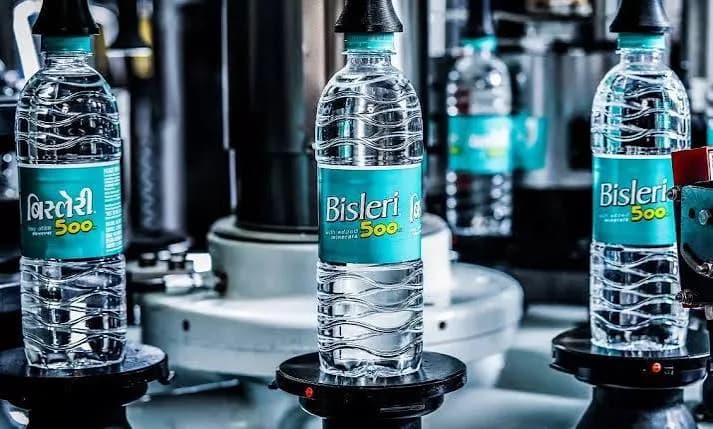
On Sunday, 22 November, the Food Safety and Standards Authority of India said it had sanctioned prosecution against Bisleri International Pvt Ltd over "unsafe packaged drinking water". The announcement, made in a social media post and carried by PTI, concerns one regulatory sample collected from the company's premises.
Two things need saying at once. This is a finding about a tested sample, not about every bottle the company sells. And a sanction to prosecute is permission to start a case. It is not a trial, and it is not a conviction. At the time of writing, no court outcome has been reported.
What FSSAI actually found
As reported, the sequence has four steps.
First, a regulatory sample of "Packaged Drinking Water (other than Mineral Water)" was drawn from Bisleri International's premises. Second, FSSAI said the sample "was found non-compliant with the prescribed bromate limits and declared unsafe under the FSS Act, 2006". Third, the company appealed, and the sample went to a referral food laboratory. Fourth, that laboratory also declared it unsafe, this time after detecting polynuclear aromatic hydrocarbons, or PAHs. FSSAI said the findings "established violations relating to unsafe food under the law".
What the public record does not yet show is as important. No report we saw gives the measured bromate level, the PAH compounds or their concentrations, the batch or product size, the sampling date, the name of either laboratory, or the dates of the appeal and the referral report. It is also not clear from the reports whether the referral laboratory retested for bromate or examined only PAHs. Those are different findings and should not be merged into one.
What are bromates?
Bromate is a chemical by-product, not an ingredient. According to the World Health Organization, the main route is ozonation of water that naturally contains bromide. Ozone, a common disinfectant, can oxidise that bromide to bromate. How much forms depends on the bromide level, the ozone dose, pH, temperature, alkalinity and organic matter. Some strong hypochlorite solutions can also contribute.
India's standard for packaged drinking water sets a maximum of 0.01 mg/L, or 10 micrograms per litre, for bromate. That matches the provisional WHO guideline value of 10 micrograms per litre. WHO explains that the figure was set partly on analytical and treatment feasibility; the purely health-based value for a one-in-100,000 lifetime cancer risk was about 2 micrograms per litre.
The health evidence needs careful wording. The International Agency for Research on Cancer classes potassium bromate as "possibly carcinogenic to humans" (Group 2B): sufficient animal evidence, inadequate human evidence. High-dose poisonings, mostly from swallowing hair-treatment solutions, caused serious kidney and nerve effects. Those are not comparable with drinking water at the regulatory limit.
Laboratories usually measure bromate by ion chromatography or related methods, with practical quantification levels of roughly 1 to 5 micrograms per litre. WHO notes that bromate is hard to remove once formed, so producers control it by managing the treatment, for example ozone contact time and pH.
Three numbers must stay separate: the legal limit, the concentration found, and a person's actual exposure. We know only the first. Without the second, nobody can say how far above the limit the sample was, and without a drinking pattern, nobody can estimate exposure.
What are PAHs?
Polycyclic aromatic hydrocarbons are a large family of organic compounds made of fused carbon rings. They form when organic material burns incompletely, in vehicle exhaust, industrial processes and wildfires. In drinking water, Australia's national guidelines say they can arrive through atmospheric deposition or by leaching from bituminous linings in pipes. The same guidelines say food is the main route of human intake, with water contributing no more than about 1 per cent.
The family is not uniform. Benzo[a]pyrene is classed by IARC as carcinogenic to humans (Group 1), while many other PAHs are far less studied. Laboratories typically use gas chromatography with mass spectrometry, or liquid chromatography with fluorescence detection.
The Indian standard for packaged drinking water lists polynuclear aromatic hydrocarbons as "not detectable", with no numerical value. That wording matters. It means that finding PAHs above the method's detection ability is a compliance failure, without needing a health-based threshold to be crossed. Detection in a sample is therefore a regulatory breach. It is not, by itself, evidence that anyone was harmed. Which PAHs were found, and at what level, is the question the public record has not answered.
What does "unsafe" mean under Indian food law?
The Food Safety and Standards Act separates food that is merely sub-standard from food that is "unsafe". Section 3(1)(zz) defines unsafe food as an article whose nature, substance or quality is so affected as to render it injurious to health, and then lists circumstances such as contamination. FSSAI has said the findings establish unsafe food. The legal test, and whether a bromate exceedance or PAH detection meets it, will be argued in court if the case proceeds. We have not seen FSSAI's reasoning.
The process, as the Act sets it out, runs like this. A Food Analyst's report can be appealed to the Designated Officer under Section 46(4), who may refer the matter to a notified referral food laboratory. Under Section 42, the Designated Officer recommends action, and the Commissioner of Food Safety decides whether to sanction prosecution and before which court. The reports do not say which authority signed this sanction.
Penalties for unsafe food are set by Section 59 and depend on the outcome: up to six months' imprisonment and a fine of up to ₹1 lakh where no injury results, with heavier terms where injury or death follows. The reports do not say which provisions are being invoked, and no injury has been reported. Readers should not assume a penalty from the sanction alone.
How packaged drinking water is regulated
Packaged drinking water, other than mineral water, has its own standard in Regulation 2.10.8 of the Food Products Standards Regulations, added in 2016. It sets limits on dozens of parameters, including bromate at 0.01 mg/L, and lists permitted treatments such as filtration, reverse osmosis and disinfection.
There is a recent change that readers may confuse with this case. According to FSSAI's order of 17 December 2025, the mandatory BIS certification mark was omitted for packaged drinking water and mineral water by a notification of 17 October 2024, and a new Scheme of Testing applies from 1 January 2026. It requires every producer to test through an FSSAI-notified NABL-accredited laboratory: microbiological parameters monthly, a set of chemical parameters every three months, and pesticide residues every six months. After a non-compliance, testing for that parameter becomes monthly until three consecutive batches pass, and repeated failures trigger risk-based inspection.
Two points follow. First, the scheme text we read does not list bromate or PAHs, so we cannot say how often producers must test for them under it, although the product standard still applies. Second, nothing on the public record links this sample to the removal of BIS certification, and no one should suggest it. BIS certification was a separate quality mark; FSSAI's food-safety law applies to packaged water regardless. A report in Siasat dated 2 December 2024 said FSSAI had moved packaged water into its high-risk category, bringing mandatory inspections and annual third-party audits.
What should consumers know?
Nothing in the public record justifies avoiding packaged water, or any one brand, on the strength of this announcement. The finding concerns one sample.
It helps to know the categories. "Packaged drinking water" is treated water, and "natural mineral water" is water from a protected underground source, with its own standard. The two are not interchangeable, and this case concerns the first category. A bottle should carry the product name, an FSSAI licence number, batch and date details, and the manufacturer's address. Since October 2024 the BIS mark is no longer mandatory, so its absence on a bottle is not a warning sign in itself.
Consumers who suspect a problem with a bottle, such as an unusual smell, a broken seal or missing licence details, can keep the bottle and batch number and report it to FSSAI or the state food-safety officer. [VERIFY: the current FSSAI complaint channel before publishing] Consumers do not need to test bottles themselves.
Does this reveal a bigger problem?
One case cannot answer that. The same FSSAI announcement covered prosecution sanctions against four other companies, licence suspensions against two more, and a product recall, so the regulator is clearly active. But we did not find national or state counts of packaged-water samples taken, found unsafe or sub-standard, or taken to prosecution. Those figures would show whether this is an outlier or a pattern, and their absence is itself a transparency gap. We could not locate a published conviction count for packaged water either.
The case also raises a procedural question the regulator could answer: how long did the journey from sampling to sanction take, and what is the typical timeline for others?
What happens next
The sanction allows a complaint to be filed in court. Bisleri has options, including contesting the findings in the proceedings. We have not found a company statement in the reports reviewed. IFT has not yet put questions to Bisleri; the right-of-reply questions are in the working notes below, and this section should be updated only with what the company actually says, and with the time it was contacted.
What a laboratory finding can and cannot tell consumers
A laboratory finding can show that one sample did not meet a legal standard on a particular day. It cannot, without the report, show how far it missed, where the substances came from, how many bottles were involved, or whether any consumer was harmed. FSSAI's statement settles the first of those questions only for the regulator. For the rest, the useful step is disclosure: the concentrations, the compounds, the laboratories and the dates. Until they are public, the fair reading is a serious regulatory finding about one sample, contested or not, and an unfinished legal process.