
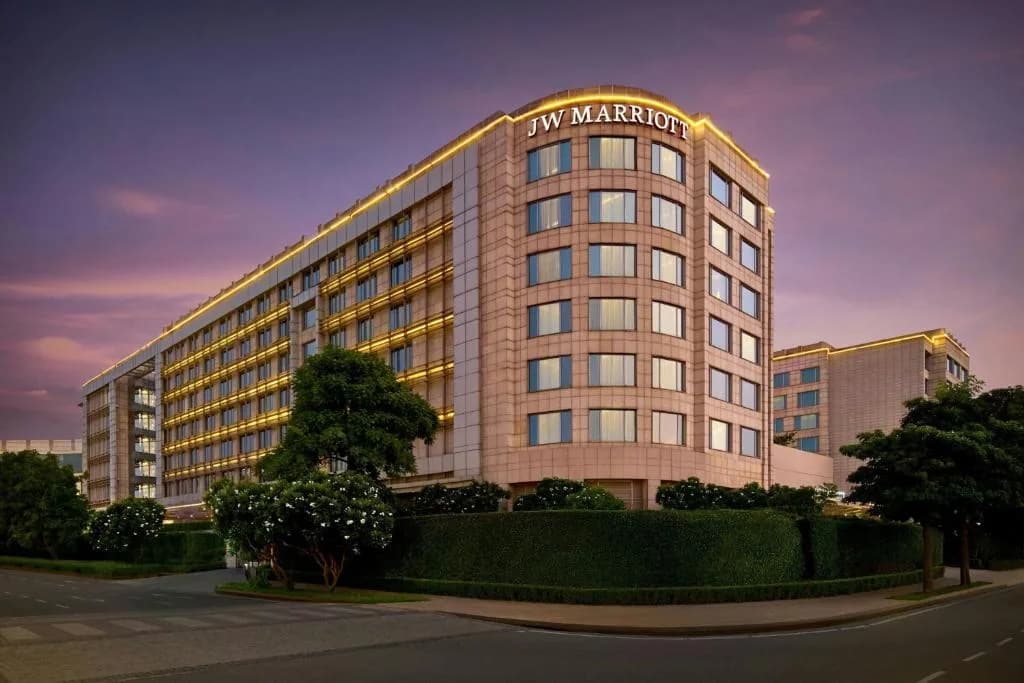
The Food Safety and Standards Authority of India (FSSAI) has issued notices to two prominent five-star hotels in Delhi’s Aerocity — JW Marriott New Delhi Aerocity and Andaz Delhi — after inspections uncovered a range of food-safety, hygiene, storage, labelling and licensing deficiencies.
The inspections found expired food, pest activity, spoiled and fungus-affected produce, poor sanitation, improper food storage, inadequate segregation of vegetarian and non-vegetarian food and weaknesses in temperature control and supplier verification.
At Andaz Delhi, officials found approximately 87 kg of expired sweets, while the inspection at JW Marriott reportedly recorded 59 deficiencies. FSSAI has also collected food and water samples from both establishments for laboratory analysis.
87 kg of expired sweets found at Andaz Delhi
The inspection at Andaz Delhi, operated by Juniper Hotels Pvt Ltd, uncovered several food-safety and hygiene concerns.
The most significant finding was approximately 87 kg of expired sweets in the hotel's confectionery area. The expired sweets were discarded on the spot, according to reports based on the inspection findings.
Officials also found expired cake bases and bread packets. In the case of the bread, reports said inspectors observed duplicate date marking on expired packaging, raising concerns over the hotel's handling and monitoring of product shelf life.
The inspection also identified problems with the segregation of vegetarian and non-vegetarian food.
At the Anayama Kitchen, vegetarian and non-vegetarian cutting boards were reportedly found immersed together in the same water container. In the Room Dining Kitchen, vegetarian burners were reportedly being used to prepare non-vegetarian food.
Cockroaches, flies and other hygiene concerns
Pest activity was another major concern at Andaz.
FSSAI inspectors reportedly found active cockroaches near freezers, houseflies, mosquitoes in the grinding room and spider webs.
A gutka packet was also reportedly found inside the bottling plant area.
Other deficiencies included poor sanitation, inadequate food-handler hygiene, improper food storage, poor waste management, inadequate temperature monitoring and insufficient allergen segregation.
The inspection also flagged weaknesses in the hotel's supplier verification and receiving practices, including inadequate verification of suppliers' FSSAI licences and insufficient tracking of incoming raw materials and their shelf life.
JW Marriott inspection records 59 deficiencies
The inspection at JW Marriott, operated by Aria Hotels and Consultancy Services Pvt Ltd, revealed an equally broad set of concerns.
Officials reportedly recorded 59 deficiencies during the inspection, covering food safety, hygiene, storage, licensing and labelling practices.
The inspection found licensing-related issues, including retail and relabeller activities that were reportedly not covered by the hotel's existing FSSAI licence.
Inspectors also found packaged food products carrying misprinted FSSAI licence numbers or incomplete manufacturer addresses, while the hotel's licence was reportedly not displayed prominently.
Food products including paneer, khoya, chana masala and chilli were also found without the required licence or endorsement being available for verification, according to reports on the inspection findings.
Spoiled produce and pest infestation at JW Marriott
The hygiene findings at JW Marriott extended across several food-preparation and storage areas.
Inspectors reportedly found fungal growth on apples and rotten tomatoes, along with improperly stored cut vegetables and other food products.
The inspection also identified cockroaches and fruit flies, unclean utensils and food-contact surfaces, inadequate pest-control measures and improper storage practices.
FSSAI also flagged inadequate segregation between vegetarian and non-vegetarian food and concerns relating to cross-contamination.
Several kitchen areas, including the Chinese, Indian, Italian and bakery sections, were reportedly found with various deficiencies involving sanitation, storage, pest control and equipment maintenance.
Drinking-water and storage concerns
The inspection at JW Marriott also extended to its water-bottling and storage facilities.
Reports based on the inspection findings said officials observed visible particulate matter in drinking water and a rusting drinking-water storage tank.
The inspection additionally identified deficiencies in refrigeration, storage and kitchen infrastructure, including malfunctioning equipment and non-operational exhaust systems.
These findings are significant because food-safety compliance at a large hospitality establishment extends beyond food preparation to include potable water, equipment, storage, pest control and the broader hygiene environment.
FSSAI collects samples for laboratory analysis
FSSAI has collected regulatory and surveillance samples from both hotels.
At Andaz Delhi, samples reportedly included cow ghee, vegetable mayonnaise, coconut milk powder, yellow masoor dal, tomato sauce, orange marmalade and coconut cookies.
Samples were also collected from JW Marriott, including food and drinking-water samples.
The laboratory results could become important in determining whether additional regulatory action is required.
At this stage, the inspection findings themselves should not be interpreted as proof that any contaminated or expired product was served to hotel guests. The notices relate to deficiencies observed at the establishments, while the laboratory analysis of collected samples is a separate part of the regulatory process.
Hotels asked to take corrective action
Following the inspections, FSSAI issued notices to the concerned food business operators and sought corrective action on the deficiencies identified during the inspections.
Further action is expected to depend on the hotels' compliance responses as well as the results of laboratory testing of the collected samples.
The regulatory action comes amid a wider push by food-safety authorities to strengthen compliance across the food-service and hospitality sector.
BRICS Summit adds significance to the inspections
The development comes just weeks before the BRICS Summit scheduled in New Delhi on September 12–13, 2026.
Several major hotels in Aerocity are expected to accommodate foreign delegates and visitors during the summit, making food safety and hygiene standards at high-end hospitality establishments particularly significant.
However, there is currently no basis to state that the inspections were conducted specifically because of the BRICS Summit unless the regulator officially establishes such a link.
The immediate focus will be on the hotels' corrective measures and the laboratory results of the samples collected by FSSAI.
If laboratory analysis identifies violations of food-safety standards, or if the hotels fail to adequately address the deficiencies cited in the notices, the regulator could pursue further action under the applicable food-safety regulations.
For now, the inspections highlight a broader issue facing the hospitality industry: premium pricing and five-star status do not exempt food businesses from rigorous food-safety compliance.
The findings at JW Marriott and Andaz Delhi show that regulators are examining not just the food served to customers, but the entire food-safety chain — from supplier verification and licensing to storage, labelling, pest control, kitchen hygiene, segregation, temperature management and potable water.
The next significant development will be the hotels' corrective-action submissions and the laboratory results of the samples collected during the inspections.