

Bhiwandi food poisoning: the legal gap between an illegal stall and unsafe food
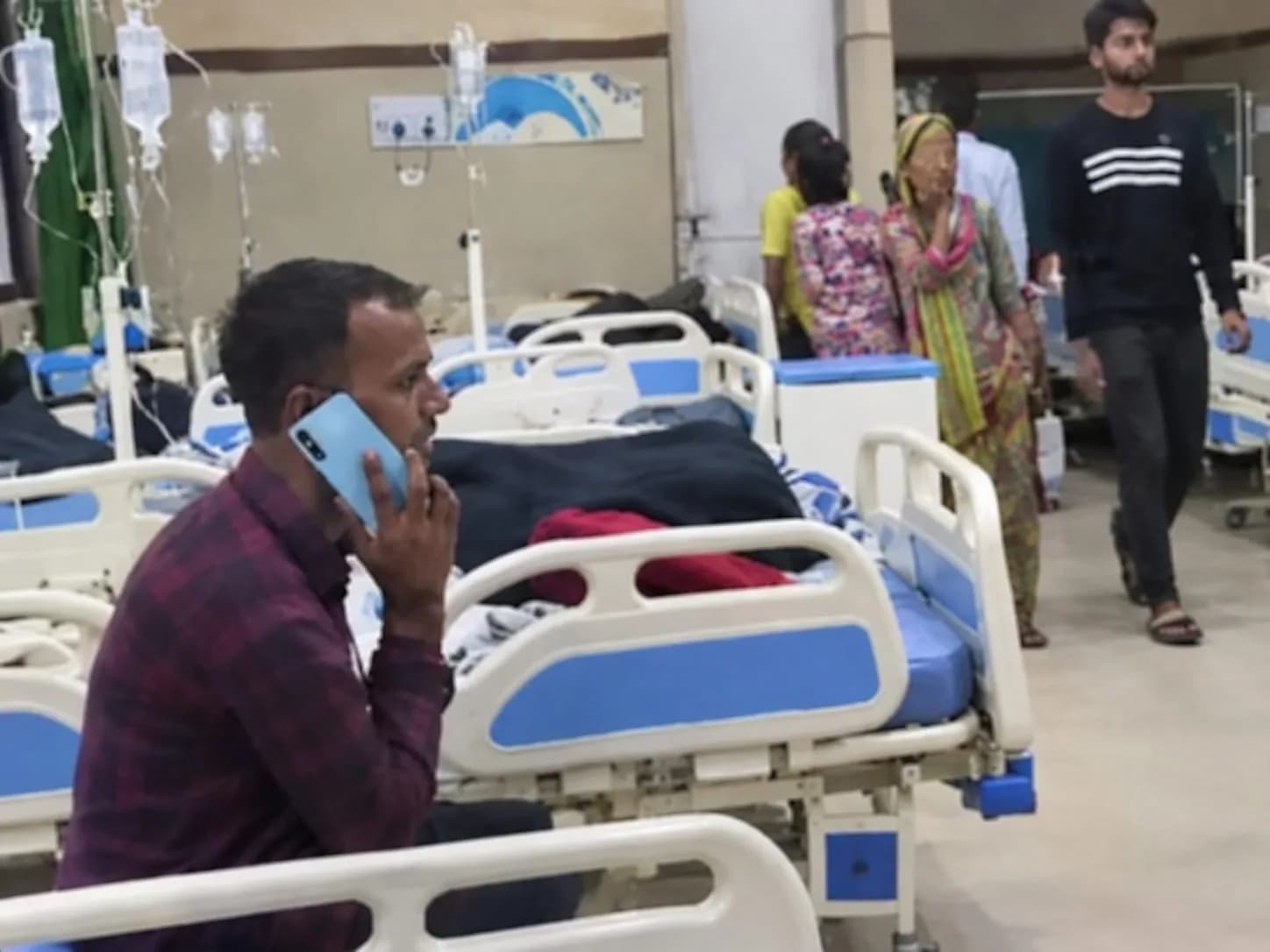
On Monday night, 23 November, families in Bhiwandi's Vanjarpatti Naka area bought shawarma from a roadside stall. By Wednesday, 53 people, including 17 children and 25 women, were in hospital with suspected food poisoning. The cause has not been established.
What is confirmed
The patients are being treated at the state-run Indira Gandhi Memorial (IGM) Hospital. The Bhiwandi-Nizampur City Municipal Corporation's health officer said they were stable and had developed vomiting and loose motions after eating at the eatery on Monday night. On Tuesday the number hospitalised was reported as 11. By Wednesday it had risen to 53.
The hospital's medical superintendent told ANI that members of 23 families said they had eaten shawarma from a single shop, with similar symptoms: vomiting, loose motions and abdominal pain. Patients range from a two-year-old to adults up to 40. One patient is two months pregnant. The stall was AK Shawarma, near Vanjarpatti Naka; reports spell the locality several ways.
The breakdown of patients is not consistent across reports. The hospital's own count of 48 patients listed men, women, boys and girls in numbers that do not map neatly onto the 17-children, 25-women figure. Readers should treat category splits as provisional.
What authorities have done
The hospital says it alerted police on Tuesday so the stall could be shut before anyone else fell ill. The civic body then demolished the unauthorised stall and dismantled its shawarma machine with a JCB, with municipal, police and FDA officials at the spot.
Police registered a case at Nizampura police station against the owner under the Bharatiya Nyaya Sanhita and food-safety provisions. The reports reviewed do not name the specific sections. The municipal health officer said the owner is absconding.
On the science, vomit and stool samples have gone for chemical analysis, and to the microbiology department at Parvara Medical College to identify any organism. The FDA began collecting food samples on Tuesday afternoon. No laboratory result had been published at the time of writing.
One official has urged caution. FDA Assistant Commissioner Santosh Shisodia noted that drinking water in the town appeared yellow, and said only laboratory tests could show whether the illness came from the food or another factor. That is a reason to wait for the lab, not evidence that water was the cause.
Why shawarma needs careful handling
Nothing here says what happened in Bhiwandi. It explains why the dish, when handled poorly, is a known food-safety challenge.
Shawarma is built from stacked, seasoned meat cooked on a vertical spit. Only the outer layer is exposed to heat at any moment. If the stack is thick, the heat is uneven or the spit is loaded poorly, the interior can stay undercooked while the outside looks done. Chicken can carry Salmonella and Campylobacter naturally, and pathogenic E. coli is a risk in meat handling generally. Cooking chicken through to a safe core temperature, around 70–74°C, is the main control.
Holding is the second control. Cooked meat shaved off the spit and left sitting warm-but-not-hot, or stored for hours at room temperature, passes through the 5–60°C range in which bacteria multiply fastest. Food-safety guidance counts the time spent in that range, not just the final temperature.
Cross-contamination is the third. Raw chicken, a knife, a chopping board and a hand that then touches salad, pickles or sauce can transfer bacteria to food that will never be cooked again. Garlic sauce and mayonnaise matter because they are ready-to-eat, often made in batches, and can be a problem when made with raw egg or kept warm for long periods. Hand hygiene, safe water for washing and cleanliness of surfaces underlie all of this.
Symptoms and timing do not identify a culprit. Illness within about a day is consistent with several agents, including bacteria and bacterial toxins. Only laboratory results can say whether the cause was a pathogen, a toxin, a contaminated ingredient or something else.
What the rules require
Food businesses in India fall under the Food Safety and Standards Act, 2006. Small operators register; larger ones need a licence. FSSAI's reforms, effective 1 April 2026, raised the registration ceiling from ₹12 lakh to ₹1.5 crore of turnover and placed State licensing up to ₹50 crore. The same reform package treats street food vendors registered with municipal corporations or town vending committees under the Street Vendors Act, 2014 as deemed registered under FSSAI, and moves to risk-based inspections that take account of a business's past compliance.
Hygiene requirements sit in Schedule 4 of the 2011 licensing and registration regulations. Inspections are conducted against the sanitary and hygienic requirements in Schedule 4, and an operator aggrieved by an improvement notice can appeal to the Commissioner of Food Safety under Section 32 of the Act.
The law separates several situations that news coverage often merges:
An unauthorised stall is mainly a municipal and vending-law issue: whether the vendor had permission to occupy that spot.
A food-safety violation is a failure to meet registration, licensing or hygiene conditions under the FSS Act.
Unsafe food is a higher bar. The Act defines it as food whose nature, substance or quality is affected so that it is injurious to health. Section 59 punishments rise with the harm caused, and the 2023 Jan Vishwas amendment changed the lowest tier.
Proven negligence or criminal liability requires evidence connecting the food to the harm.
There is a further wrinkle. The Supreme Court has held that simultaneous prosecution under IPC Sections 272 and 273 and Section 59 of the FSS Act could not continue. How that reasoning applies to the corresponding BNS provisions is a legal question for the court and police in this case.
Running a business without a required licence is punishable under Section 63 with up to six months' imprisonment and a fine of up to ₹5 lakh. Unhygienic processing carries a monetary penalty under Section 56. Section 65 provides for compensation in cases of injury or death. None of this has been applied to this stall yet; no charge has been tested in court.
The accountability question
The honest answer to whether enforcement failed is that the public record cannot yet say. Reports do not show whether AK Shawarma was ever inspected, registered, complained about or allowed to operate at that spot. Those records exist somewhere, and they are the first thing an inquiry should disclose.
What the record does show is context. In June, a larger outbreak hit another Bhiwandi outlet. Reports put the toll at 122 by 20 June and later more than 145. After it, the Thane FDA collected samples from nine establishments, issued suspension notices to four, and announced it was preparing an SOP with the civic body to address unlicensed roadside vendors, along with extra surveillance of late-night outlets. I found no public report of the June lab results or of the SOP being finalised.
On Wednesday, the FDA assistant commissioner said his department had asked the civic body to set aside fixed zones for street vendors, because vendors spread across Bhiwandi make regular checks difficult. Residents have asked whether the civic body and the FDA inspect roadside eateries regularly. The medical superintendent also noted that this outbreak involved a different shop from the earlier one.
None of this proves a system failure. Two outbreaks at different outlets do not show that inspections were skipped. They do raise a fair question: what do follow-up measures announced in June look like by November? Authorities can answer that with documents.
Demolition also deserves clear language. It removes an unauthorised structure and a hazard. It does not test the food, and it does not establish what made people ill. Evidence from the stall matters, and so does the order of enforcement steps.
How to lower your risk
No single sign makes street food safe. Appearance, smell and taste cannot reliably tell you whether it is. Raw or undercooked meat can look normal, and some contaminants have no smell. These habits reduce risk:
Choose places with steady turnover, where meat is cooked and served quickly rather than held.
Watch the spit: meat should be thoroughly cooked and carved from hot, well-browned outer layers, and shaved portions should not sit around.
Look for separate handling of raw and cooked items and clean utensils, boards and hands.
Prefer freshly prepared sauces from clean, covered containers, and avoid ones left in the open on a warm day.
Check for visible FSSAI registration or licence details, and for safe drinking water.
Take food home and eat it soon. Refrigerate leftovers promptly, and do not keep shawarma for hours.
Seek medical care promptly for vomiting that will not stop, blood in stool, high fever, signs of dehydration (very little urine, dry mouth, unusual drowsiness), or any symptoms in infants, pregnant women, older adults or people with weak immunity. Do not self-medicate with antibiotics or anti-diarrhoeal drugs; ask a doctor how to rehydrate. If you suspect an unhygienic outlet, report it to the state food-safety authority or FSSAI.
What to watch next
The lab results come first. If they identify a pathogen or toxin and trace it to the stall's food, the question becomes how it got there. If they point elsewhere, such as water or another source, the story changes. Either way, three things should be public: the stall's registration and inspection history, the legal sections applied, and what happened to the measures announced after June.
Most street vendors serve millions of meals without incident, and a handful of failures should not tar them all. But 53 hospitalised people, including 17 children, are a reminder that enforcement is only convincing if it happens before the hospital admissions.
Also read: Hospital patient found lizard in their food at Shardaben Hospital