

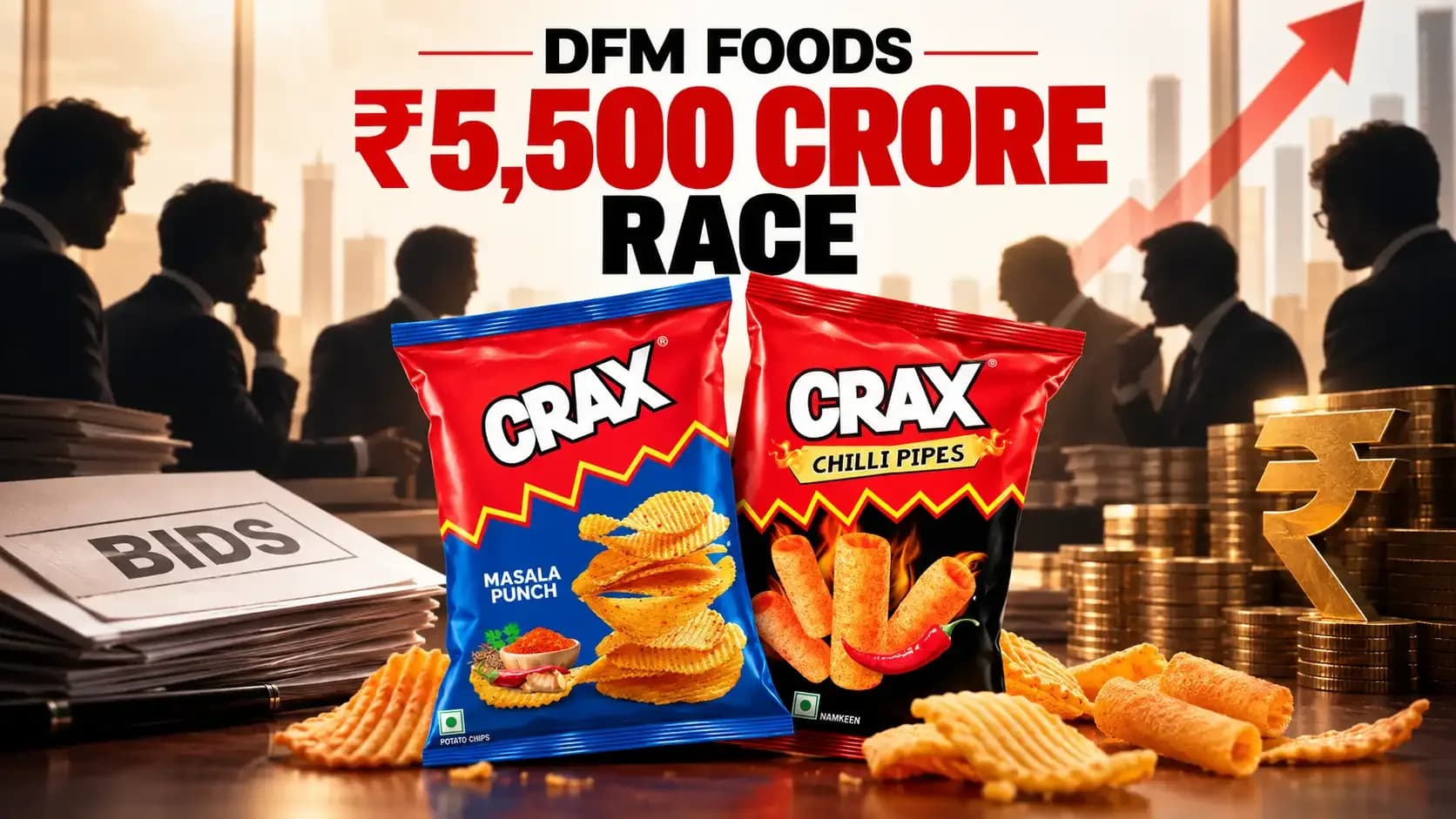
The race to acquire DFM Foods, the company behind popular snack brands such as Crax, Curls, Fritts and Natkhat, is getting increasingly crowded, with Swedish private equity firm EQT Partners, Emami and Balaji Wafers joining the list of potential bidders.
They will compete with established names including ITC, TPG and ChrysCapital for control of the Noida-based packaged-snacks company, in what could become one of the more closely watched consumer-sector transactions in India this year.
The potential transaction could value DFM Foods at around ₹5,000–5,500 crore, according to people familiar with the development. Advent International, which owns a 96.63% stake in DFM Foods, is looking to exit the investment after acquiring control of the company in 2019.
Non-binding bids are expected by the end of October, while the sale process could be completed by December.
Why are so many players chasing DFM Foods?
The growing list of bidders points to one larger trend: India's packaged-snacks market is becoming too attractive for major FMCG companies and private equity investors to ignore.
DFM Foods has a portfolio that includes Crax, a brand with strong recognition among Indian consumers, particularly in the children's and youth snacking segment. The company manufactures potato chips, namkeens and millet-based snacks across multiple brands.
For strategic buyers, DFM Foods offers an opportunity to acquire an established distribution network and consumer-facing brands rather than building a snack business from scratch.
For private equity investors, the company provides exposure to India's broader consumption story and the continued formalisation of the country's highly fragmented snacks market.
ITC, Emami and Balaji Wafers: Different buyers, similar opportunity
The interest from strategic players is particularly significant.
ITC, already one of India's largest packaged-food companies, has an established presence in snacks through brands including Bingo and other food businesses. Acquiring DFM Foods could strengthen its position in categories where regional and challenger brands are gaining traction.
Emami, meanwhile, has been expanding beyond its traditional strongholds. Its entry into packaged snacking through Emami Agrotech's WeMe brand makes DFM Foods a potentially interesting strategic fit as the group looks to build a larger presence in the food and consumer-products market.
For Balaji Wafers, the potential acquisition could represent a significant expansion opportunity. The Gujarat-based snack maker has built a strong regional franchise and has increasingly attracted investor attention. In January, General Atlantic acquired a 7% stake in Balaji Wafers for ₹2,500 crore, valuing the company at approximately ₹35,000 crore.
The possibility of Balaji bidding for DFM Foods therefore adds another interesting dimension to the transaction: a major regional snack player potentially looking to accelerate its national ambitions through acquisition.
Advent International looks to cash out
Advent International began the process of selling its stake in DFM Foods in July.
The private equity firm acquired a majority stake in the company from WestBridge Capital in 2019 for $118.8 million and subsequently took the company private, with DFM Foods being delisted in January 2023.
Advent has now appointed Avendus Capital and EY to advise on the sale process.
The potential ₹5,000–5,500 crore valuation represents a substantial increase in the company's value since Advent's acquisition, underscoring the private equity firm's potential return from the investment.
DFM Foods' business has been growing
DFM Foods reported net sales of ₹916 crore in FY2025-26, compared with ₹705.8 crore in the previous financial year, according to regulatory filings.
That growth comes as India's snacks market undergoes a significant transformation.
Traditional national players such as PepsiCo, Parle and ITC are increasingly facing competition from regional brands, digital-first companies, hyperlocal manufacturers and emerging better-for-you snack brands.
Consumers are also experimenting with a wider range of products, from traditional namkeens and extruded snacks to millet-based products, protein snacks and other health-oriented alternatives.
This has created an attractive environment for companies with established brands and distribution networks.
The bigger battle is for India's snacking consumer
The DFM Foods deal is therefore about much more than Crax.
India's snacking market is becoming a battleground where FMCG giants, regional manufacturers and private equity investors are all competing for the same consumer.
For large FMCG companies, acquiring an established snack brand can provide immediate access to distribution, manufacturing capabilities and consumer loyalty.
For regional companies such as Balaji Wafers, acquisitions could potentially provide a faster route to national expansion.
And for PE investors such as EQT, TPG and ChrysCapital, branded food companies offer exposure to India's long-term consumption growth without having to build an entire consumer business organically.
A crowded bidding process could push up the price
With at least six serious names reportedly circling DFM Foods, the biggest question now could be how high the bidding goes.
If multiple strategic and financial investors remain interested through the next stages of the process, competition could potentially support a valuation toward the upper end of the ₹5,000–5,500 crore range.
However, the talks remain at an early stage and the eventual transaction value, buyer and structure could change as due diligence progresses.
Non-binding bids expected by the end of October should provide the first major indication of how investors value the Crax maker.
The DFM Foods sale comes at an important time for India's consumer sector.
While overall consumer deal activity has become more selective, investors continue to show interest in businesses operating in categories linked to India's long-term consumption growth.
The interest in DFM Foods reinforces that food and snacking remain among the most attractive segments within India's broader FMCG opportunity.
And with companies such as ITC, Emami and Balaji Wafers competing alongside global private equity investors, the eventual winner could gain more than just the Crax brand.
It could gain a stronger position in one of India's most fiercely contested consumer markets.
For now, the snack war is still wide open. But with ₹5,500 crore potentially on the table, DFM Foods has become one of the biggest prizes in India's packaged-food market.