
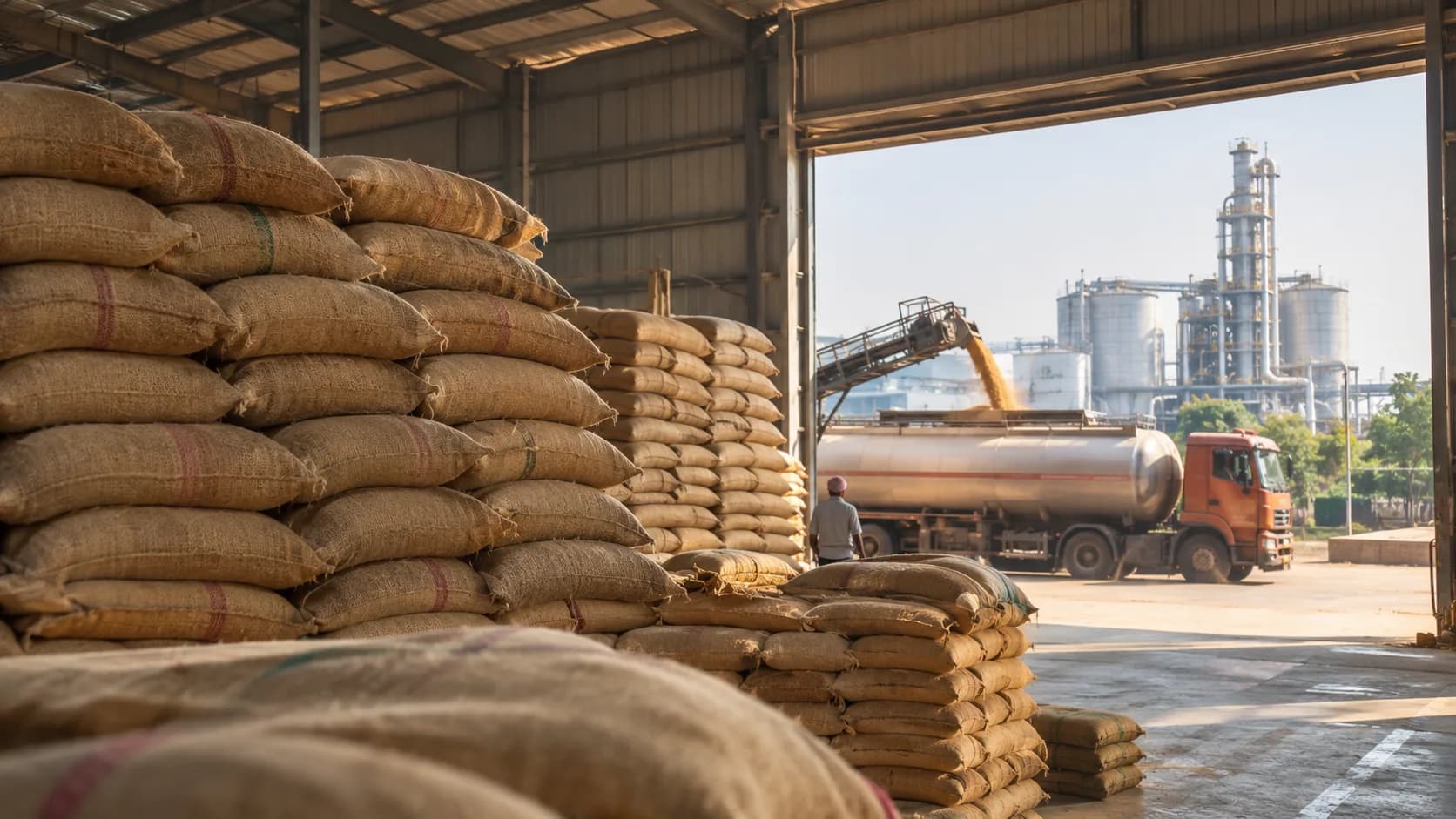
Ottawa wants to know how much public grain is going to distilleries and whether India's food-security commitments are protected.
Canada has asked India to explain how much government-held rice is being supplied to ethanol makers, at what price, and whether public food stocks remain protected, in questions raised at the World Trade Organization (WTO).
Canada has asked India to share details on how much public rice is being supplied for ethanol, how it is priced, and what safeguards exist to make sure food-security commitments are not weakened.
What Canada wants to know
According to a report on the questions, Canada wants the quantity of rice taken from public stocks and supplied to ethanol distilleries since 2020-21, including the 2026-27 supply year. It also asked at what prices the Food Corporation of India (FCI) has sold rice to distilleries, and whether India's procurement targets account for expected demand from ethanol makers.
The FCI is the state agency that buys, stores and distributes foodgrains for welfare schemes and price stability.
The WTO's Committee on Agriculture is expected to take up the questions later in November 2026.
Why rice is going into ethanol
India has been pushing to raise the share of ethanol blended into petrol, and grain has become one way to meet that target. Surplus rice from public stocks can be an attractive raw material. Blending ethanol with petrol is meant to reduce oil imports and support farmers.
The scrutiny is about how public stocks are used. Public rice stocks exist to keep prices stable, support welfare programmes and cushion supply shocks, so governments must show that domestic supplies are protected when grain goes to ethanol. WTO rules on public stockholding for food security also require transparency about how such grain is bought and released.
Not the first time
Concerns about ethanol diversion have been raised before. The US and Canada earlier questioned India's rice policies at the WTO, with the US noting that the FCI procures nearly half of the country's rice crop and that rising support prices and diversion of public stocks for ethanol raised further concerns. Canada also has a long record of questioning India's farm support and food stocks at the WTO. One report counted 65 Canadian questions on India's agricultural policies at the committee over four years.
Why it matters for trade
India's rice policy affects more than its own consumers. India accounts for around 40% of global rice exports, according to industry representatives and experts at the Bharat International Rice Conference 2026. Changes in how India manages its stocks can influence global supply and prices.
What happens next
India's reply at the committee will show how much rice is going to distilleries and how the government accounts for it. The matter could stay a technical exchange or grow into a wider debate on farm stocks and energy policy. The government's response was not available in the sources reviewed.