

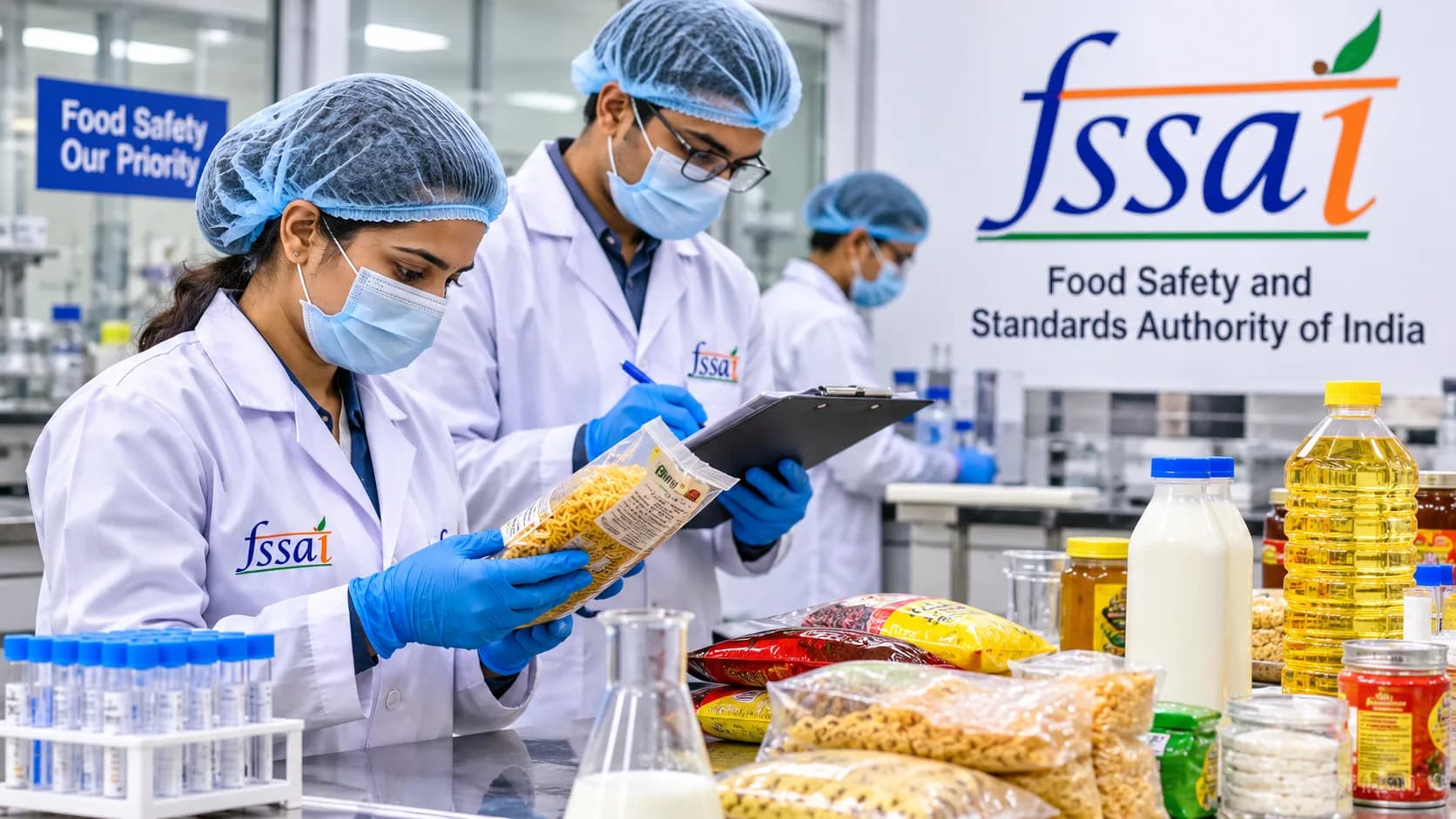
FSSAI Inspects Over 56,000 Food Establishments, Suspends 1,133 Licences in India
India's food safety regulator, the Food Safety and Standards Authority of India (FSSAI), has intensified its nationwide efforts to control food adulteration and ensure better food quality. During a special enforcement drive conducted between September 1 and November 5, 2026, authorities inspected 56,431 food establishments across different states and Union Territories.
The inspection campaign focused on identifying food safety violations, checking product quality and preventing the sale of adulterated or non-compliant food items.
More Than 3,279 Tonnes of Food Products Seized
According to the regulator, authorities seized 3,279.57 metric tonnes of substandard or prohibited food products during the campaign. The estimated market value of these products was approximately ₹81.80 crore.
The seized products included milk and milk-based items such as paneer, khoya and ghee, along with cooking oils, sweets, bakery products, chocolates, ice creams, namkeen and packaged food items.
These inspections were conducted in collaboration with State Food Safety Authorities to strengthen monitoring across food markets, commercial establishments and production facilities.
Over 1,100 Food Licences Suspended
The enforcement drive also resulted in significant action against food businesses that failed to meet prescribed standards.
FSSAI issued 10,047 improvement notices to establishments requiring corrective action. Additionally, 1,133 food licences were suspended, while 52 licences were cancelled. Authorities also sealed 314 establishments and initiated 410 prosecutions in connection with food safety violations.
These measures demonstrate the regulator's increased focus on enforcing food safety requirements and holding businesses accountable for violations.
Food Sample Testing Reveals Violations
During the nationwide campaign, food safety officials collected 43,939 samples for quality testing. Of these, 23,648 samples underwent laboratory analysis, and 2,273 were found to be non-compliant with applicable food safety standards.
The findings underline the importance of regular food testing, proper storage practices and compliance with food safety regulations throughout the supply chain.
What This Means for Consumers and Food Businesses
Food safety plays an important role in protecting public health and maintaining consumer confidence. The latest enforcement figures highlight the need for food manufacturers, retailers, restaurants and other food businesses to follow established hygiene and quality standards.
Consumers can also contribute by checking food labels, expiry dates, packaging conditions and FSSAI licence details when purchasing packaged products.
The nationwide inspection drive reflects India's continuing efforts to strengthen food safety monitoring and improve accountability across the food industry.