
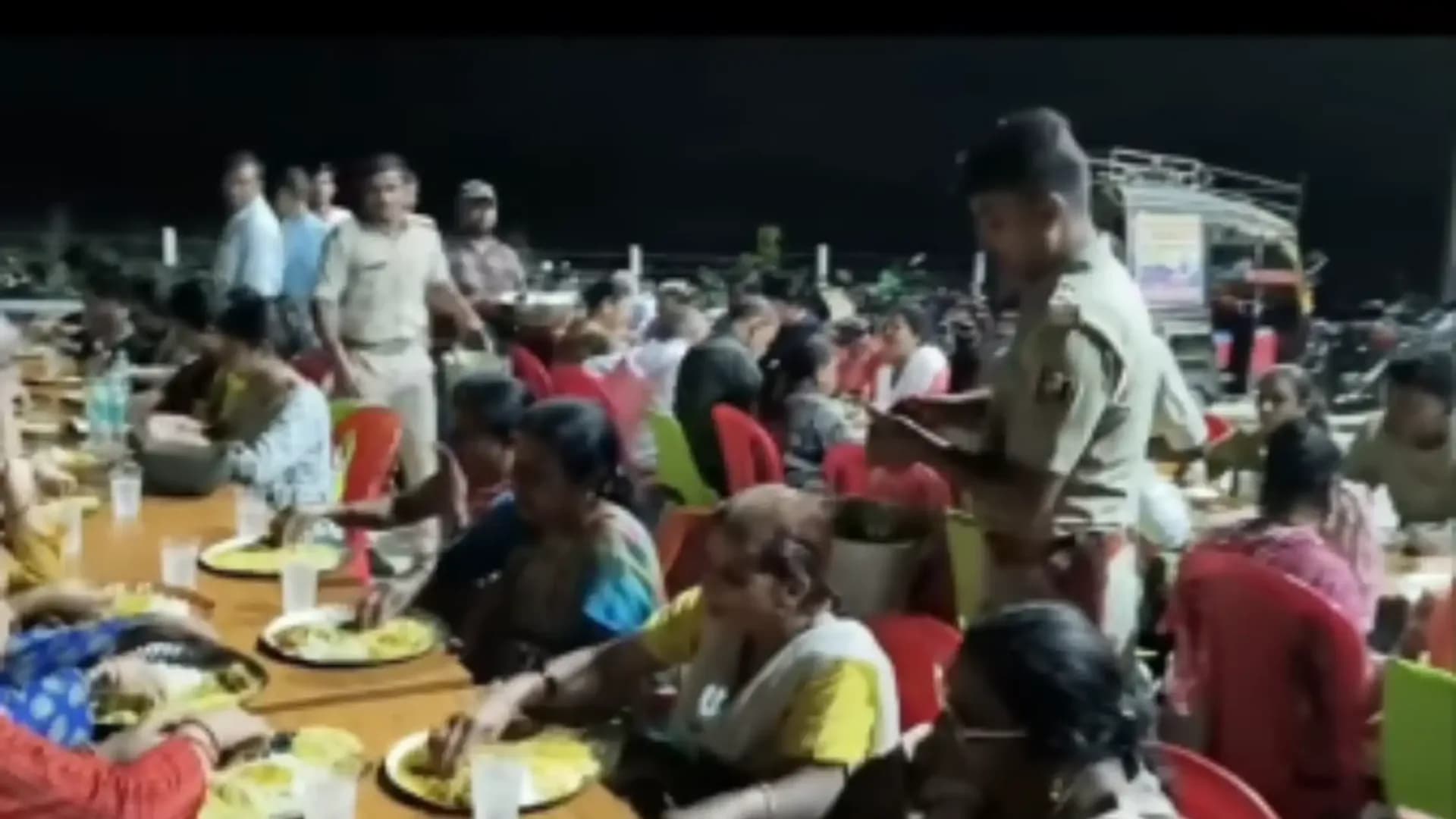
In a heartening example of inter-state coordination and humanitarian support, 106 pilgrims from Maharashtra who were stranded in Nepal following severe flash floods were brought safely back to India, with Bihar’s Sitamarhi administration playing a key role in their safe transit and immediate relief.
The pilgrims, who had travelled to Nepal for a religious journey, became stranded in Kathmandu after flash floods and landslides disrupted roads and transportation across the region. With their return journey severely affected, Maharashtra authorities coordinated with the Bihar government to facilitate their movement back to India.
Sitamarhi Becomes a Relief Point
After crossing the India-Nepal border at Bhittamore, the group was received and escorted by the Sitamarhi district administration.
The authorities arranged food, drinking water, medical assistance and other essential facilities for the travellers as they reached Bihar. Reports said the group was received at the Bhittamore police station area before arrangements were made for their onward journey.
For travellers who had spent days facing disrupted roads and uncertainty in Nepal, reaching Indian soil brought a major sense of relief.
The rescue effort was not limited to bringing the pilgrims across the border. The administration also coordinated their stay in Patna, food and medical check-ups, before arranging their onward journey to Maharashtra.
From Sitamarhi to Maharashtra
The pilgrims were subsequently taken to Patna, where arrangements were made for their accommodation and further travel.
Railway authorities were also coordinated with to facilitate their return. According to reports, additional coaches were attached to a train from Patna to accommodate the stranded passengers, allowing them to continue their journey towards Maharashtra.
The successful evacuation was the result of coordination between Maharashtra and Bihar authorities, the district administration, railway officials and authorities involved in facilitating the pilgrims' movement from Nepal.
The rescue also took an emotional turn during Raksha Bandhan, when women among the rescued pilgrims reportedly tied rakhis to officials involved in the relief effort as a gesture of gratitude for the assistance they received during a difficult time.
For the pilgrims, the journey had begun as a religious visit to Nepal but quickly turned into an emergency amid devastating floods. Their safe return has now highlighted not only the importance of disaster-response coordination but also the human connection between people from different parts of the country.
The episode serves as a reminder that when citizens are in distress, administrative boundaries take a back seat to humanity and collective action.