

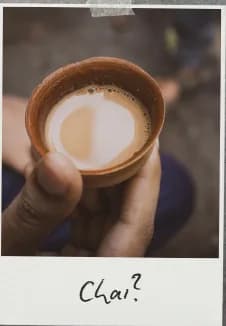
In India, chai is far more than a beverage served in a cup. It is a morning ritual, a reason to pause during a busy day and, often, the beginning of a conversation.
From a steaming glass of cutting chai at a roadside stall to a carefully brewed masala chai made at home, tea has found its way into almost every corner of Indian life. The simple question, “Chai lenge?”, often means much more than asking someone if they want tea. It can be an invitation to sit down, talk for a while, share a moment or simply take a break from a hectic day.
For millions of Indians, chai is not just a drink. It is an emotion, a habit and a social ritual.
India’s Love for Tea, by the Numbers
The scale of India's tea habit is enormous.
According to the Tea Board India’s latest domestic consumption study, India consumed an estimated 1,197 million kg of tea in 2023. That works out to an average per-capita consumption of around 840 grams a year.
Interestingly, the numbers also show a difference between urban and rural India. Average annual per-capita consumption was estimated at approximately 925 grams in urban India, compared with 797 grams in rural India.
The Western region accounted for about 30% of India's tea consumption, while the Northern region accounted for approximately 33%. Eastern and North-Eastern states contributed around 20%, while the South accounted for about 17%.
The numbers underline something Indians already know instinctively: tea isn't simply popular in India — it is deeply embedded in everyday life.
Chai Is About Comfort
Ask someone why they drink chai and the answer may not always be about caffeine.
For many people, chai represents comfort.
A hot cup of adrak wali chai on a rainy afternoon, a glass of tea after returning home from work or a cup of masala chai shared with family can carry memories that have little to do with the beverage itself.
The aroma of ginger, cardamom or freshly brewed tea can instantly remind someone of home. The warmth of the cup, the sweetness and the familiar taste create a small moment of comfort during an otherwise stressful day.
That emotional connection is one of the reasons chai has survived changing lifestyles and generations.
Every Part of India Has Its Own Chai Story
There is no single definition of Indian chai.
The country's enormous cultural and geographical diversity has created countless variations in how tea is prepared and consumed.
In Mumbai, cutting chai has become part of the city's fast-paced culture — a smaller serving designed for a quick break between work, travel and conversations.
In Kashmir, noon chai offers a very different experience, while masala chai in many parts of North and Central India is traditionally prepared with milk, sugar and spices.
Then there are India's famous tea-growing regions. Darjeeling tea is globally recognised for its distinctive character, while Nilgiri tea is known for its fragrant and brisk profile. Tea Board India notes that Darjeeling produces around 10 million kg of tea annually across 87 gardens, with the region's unique geographical characteristics contributing to its identity.
The beauty of Indian chai lies precisely in this adaptability. The proportions of milk, sugar, spices and tea can change from one household to another, yet the beverage remains instantly recognisable.
The Chai Break: India's Favourite Pause
Few workplace traditions are as universally Indian as the chai break.
At offices, construction sites, factories, colleges, shops and roadside businesses, tea provides an excuse to step away from work for a few minutes.
But the chai break is rarely just about drinking tea.
It is where colleagues discuss the day's work, friends catch up, business ideas are exchanged and strangers sometimes become acquaintances.
A small tea stall can become a meeting point for an entire neighbourhood.
This social aspect of tea is also reflected in Tea Board India's research. Its consumption study separately examined institutions such as hotels, restaurants, cafés, canteens and hot tea stalls, highlighting how deeply tea is integrated into India's out-of-home consumption ecosystem.
From Chai Stalls to Chai Cafés
India's love for chai has also created an evolving business opportunity.
For decades, tea stalls and chaiwalas dominated the out-of-home tea experience. Today, they are increasingly joined by organised tea cafés and modern beverage chains.
Brands such as Chai Sutta Bar, Chaayos and Chai Point have taken a familiar Indian habit and built organised businesses around it, offering multiple varieties of tea, snacks and spaces where customers can sit and socialise.
The rise of these brands demonstrates an interesting shift: consumers are not necessarily abandoning traditional chai culture. Instead, the culture is being repackaged for modern lifestyles.
Chai can now be consumed from a roadside glass, a clay kulhad, an office delivery cup or a modern café.
The format is changing. The habit isn't.
The organised tea café segment itself has grown into a notable urban food-and-beverage category. A 2024 industry study cited by The India Watch estimated India's branded tea café market at around ₹873 crore, with 1,238 branded tea café outlets and a reported 25.1% CAGR between FY21 and FY24.
Why Chai Became So Deeply Indian
One reason is accessibility.
Tea is relatively affordable and can be prepared almost anywhere — from a household kitchen to a tiny roadside stall. Tea Board India has described tea as a highly penetrated and traditional beverage in India, while also noting that domestic consumption accounts for the overwhelming majority of India's tea market.
But affordability alone doesn't explain the emotional attachment.
Chai has become part of India's social language.
Someone offers chai when a guest arrives.
A colleague asks, “Chai peene chale?”
A family member prepares tea when someone comes home tired.
Friends meet over chai.
Important conversations often begin with chai.
Even difficult conversations sometimes become easier after someone says, “Pehle chai peete hain.”
That is perhaps the real secret behind India's love affair with tea.
More Than a Beverage
Ultimately, India's love for chai is not entirely about what is inside the cup. It is about what happens around it.
It is about the conversation that lasts longer than expected, the roadside stall that becomes a familiar meeting point, the grandmother's recipe, the office tea break, the rainy-day cup of ginger tea and the childhood memories attached to its aroma.
India's tea culture has changed with time, but its fundamental role has remained remarkably consistent.
Whether it is served in a glass at a roadside stall, a kulhad at a tea café or a cup at home, chai continues to bring people together — one cup at a time.
Because in India, sometimes “Chai lenge?” isn't really a question about tea. It's an invitation to stay a little longer.