
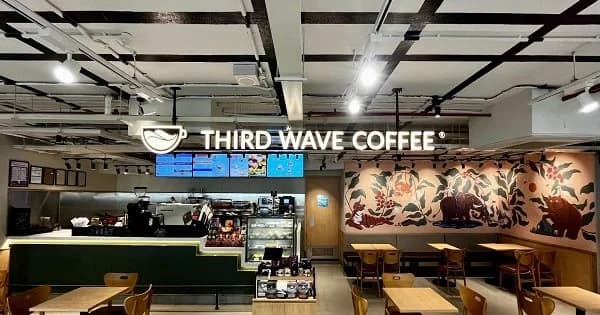
Indian specialty coffee and food QSR brand Third Wave Coffee has raised ₹408 crore ($43 million) in a Series D funding round led by existing investor WestBridge Capital, as the Bengaluru-based company prepares for its next phase of expansion across India.
The round includes a mix of primary and secondary capital, with existing investor Creaegis and other angel investors also participating. While the company has not disclosed the exact split between primary and secondary proceeds, the fresh capital is expected to support café expansion, increase store density in high-potential markets and accelerate the development of newer food and beverage categories.
The fundraise comes at a pivotal point for Third Wave. After years of rapid store expansion accompanied by mounting losses, the company has been working to improve store-level economics under CEO Rajat Luthra. It is now attempting to combine that profitability push with an aggressive national expansion strategy.
From ₹6 million Series A to ₹408 crore Series D
Third Wave's latest fundraise marks another major milestone in a funding journey that began with WestBridge.
The company raised $6 million in Series A funding in 2021, followed by a $21 million Series B round in 2022, also led by WestBridge Capital. In September 2023, Third Wave raised another $35 million in Series C funding, led by Creaegis, with WestBridge and other investors participating.
The latest ₹408 crore round therefore brings the company back to WestBridge for another substantial capital infusion, reinforcing the investment firm's long-term conviction in the coffee chain.
For Third Wave, however, the new round comes with a considerably different operating playbook from its earlier expansion phase.
A new phase after aggressive expansion
Third Wave's rapid expansion had come at a significant cost.
The company had been opening stores at a fast pace, but profitability remained a challenge. By FY24, the business had reported revenue of around ₹240 crore while its net loss had climbed to approximately ₹110 crore.
The company subsequently shifted its focus toward store-level profitability and tighter operating discipline.
By FY25, revenue had increased to around ₹285 crore, while losses narrowed to approximately ₹94 crore. Third Wave has also said that more than 95% of its cafés had become unit-economics positive, signalling a significant change in the way the company is approaching expansion.
That shift is particularly important for the latest funding round.
Rather than simply using fresh capital to add stores at any cost, Third Wave is looking to expand while improving the economics of individual outlets.
Rajat Luthra's profitability-led strategy
The company's strategic reset accelerated after Rajat Luthra, the former KFC India and Nepal CEO, took over as Third Wave's CEO in 2024.
Luthra's mandate has been closely associated with improving unit economics and ensuring that new stores are supported by the right operational infrastructure before being opened.
The company has since increasingly focused on a city-by-city expansion strategy, smaller-format stores and additional revenue streams beyond the traditional café model.
The latest funding suggests that Third Wave believes it has reached a point where it can combine those operational improvements with another major expansion cycle.
240-plus cafés today, 320 by FY27
Third Wave currently operates more than 240 cafés across India and plans to increase that network to approximately 320 cafés by the end of FY27.
The company is also planning to enter eight new markets in the coming month, while increasing its presence in existing markets and building higher store density in cities where it sees strong demand.
Its longer-term ambition is even more aggressive, with the company targeting a network of around 400–500 cafés over the next few years.
This expansion is taking Third Wave beyond the metros that traditionally formed the core of India's premium café market.
The company has been expanding into newer markets while strengthening its presence in existing cities, reflecting a broader industry shift towards taking specialty coffee and café formats deeper into India's urban and emerging consumer markets.
Third Wave wants to sell more than coffee
Perhaps the most significant part of the new strategy is that Third Wave is no longer looking at itself purely as a coffee chain.
The company is expanding its food and beverage portfolio and scaling Third Rush Desserts, a dessert-focused offering launched earlier this year.
The latest funding will support this business alongside the café network, with Third Wave also looking at new food categories, all-day menus, breakfast and savoury offerings, and non-coffee beverages.
The strategy could help the company increase revenue per store by capturing more consumption occasions rather than relying predominantly on coffee sales.
In other words, the next phase of Third Wave's growth is increasingly about what happens inside each café, not just how many cafés the company operates.
Why WestBridge's return matters
WestBridge's role in the latest round is noteworthy because this is not a first-time investment.
The investment firm backed Third Wave's Series A in 2021 and led its Series B in 2022. It has now returned to lead the Series D round.
That makes the ₹408 crore investment a significant vote of confidence from an investor that has followed the company through both its rapid expansion phase and subsequent operational reset.
The investment also comes as India's premium café market becomes increasingly competitive, with established international chains, Indian specialty coffee brands and newer café formats all competing for the same increasingly urban, experience-driven consumer.
The bigger battle brewing in India's café market
Third Wave's expansion comes against the backdrop of a rapidly evolving Indian coffee market.
Coffee consumption is becoming increasingly mainstream among younger urban consumers, while cafés are also becoming social, work and lifestyle destinations rather than simply places to buy a beverage.
That creates an opportunity for brands that can combine strong coffee credentials with food, desserts, convenience and an appealing physical experience.
Third Wave's latest strategy appears designed around precisely that opportunity.
But the challenge is equally clear: rapid expansion can magnify both growth and losses. The company's ability to maintain positive store-level economics while adding potentially hundreds of cafés will therefore be closely watched.
Third Wave Coffee's funding journey
Year | Round | Funding | Lead investor |
|---|---|---|---|
2021 | Series A | $6 million | WestBridge Capital |
2022 | Series B | $21 million | WestBridge Capital |
2023 | Series C | $35 million | Creaegis |
2026 | Series D | ₹408 crore ($43 million) | WestBridge Capital |
With its latest ₹408 crore fundraise, Third Wave Coffee is entering its next chapter with considerably more capital—and a more demanding growth equation.
The question is no longer simply whether the company can open more cafés.
It is whether Third Wave can turn store-level profitability, a broader food portfolio and aggressive geographic expansion into a scalable national café business.
For India's increasingly crowded coffee and QSR market, that could make the next few years particularly interesting.