


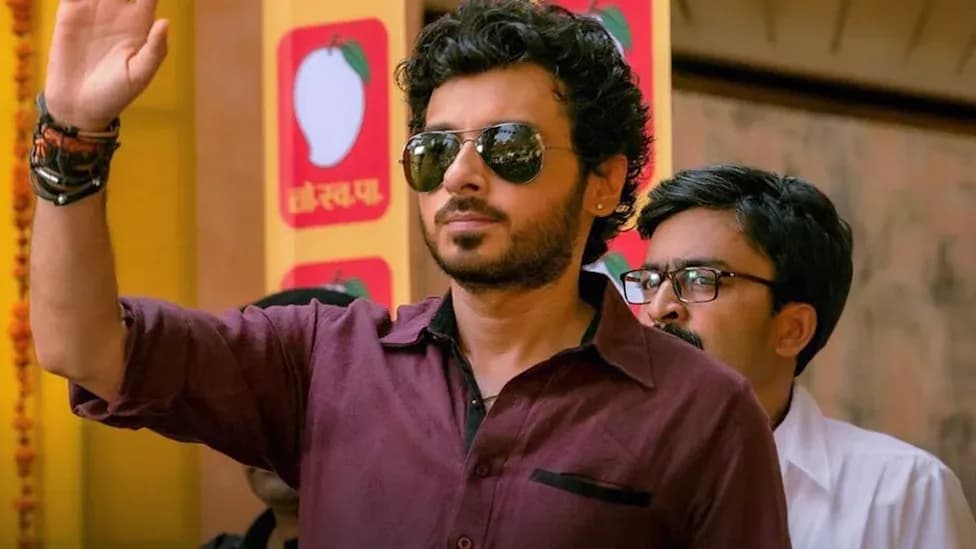
Divyenndu Mirzapur's Munna Bhaiya, off-screen and off-duty — says boiling is where most home versions of this winter street food go wrong. Here's what roasting actually does differently, and how to get close to it without a tandoor.
Munna Bhaiya doesn't usually give cooking advice. But actor Divyenndu who's spent the better part of a decade being recognised as Mirzapur's most feared gangster's son recently made a small, pretty accurate observation about his own kitchen. Talking to Mashable India on its series "The Bombay Journey," he pointed out that most home attempts at shakarkandi fail for a specific reason: people boil it, and boiling waters down the sweet potato's natural sweetness instead of concentrating it. Street vendors, he noted, get around this by slow-roasting over an open flame or in a tandoor equipment most home kitchens simply don't have.
He's not wrong. It's also a more useful observation than it first sounds, because the actual difference between boiled and roasted shakarkandi is one of the more explainable gaps between street food and home cooking in Indian kitchens and worth walking through properly, rather than as a one-line tip from a man best known for playing someone far scarier than a home cook.
What Munna Bhaiya Actually Said
To be precise about it, since the quote has already started circulating in a shortened form: Divyenndu's stated problem was that boiling "waters down" the sweet potato's flavour rather than enhancing it, and that street vendors solve this with dry, direct heat a flame or a tandoor that most people cooking at home can't replicate. He then offered a home workaround built around using a heavy-bottomed tawa on the stovetop instead of a pot of water. The finer details of his exact method beyond that point aren't fully available in current reporting, so this piece doesn't put words in his mouth about them. What follows the boiling-versus-roasting explanation is Indian Food Times' own independently developed method clearly a separate thing from his comment, not a transcription of it.
Why Boiling and Roasting Actually Produce Different Results
This isn't just texture preference. Boiling sweet potato submerges it in water that's cooler than a dry pan or open flame, and some of the potato's natural sugars and flavour compounds migrate out into that water rather than staying concentrated in the flesh which is the "watering down" Divyenndu was describing in plainer terms. Dry-heat methods a tandoor, an open flame, a hot pan, an oven do the opposite: as moisture evaporates from the surface, sugars concentrate and the skin browns and chars in places, producing the smokier, slightly caramelised flavour associated with street-cart shakarkandi. This browning-and-caramelisation effect is a well-established feature of dry-heat cooking generally; it's why a roasted vegetable tastes different from a boiled one across far more than just sweet potato.
Street vendors have an advantage home cooks don't: consistent, very high, direct heat from coals or a tandoor, applied over time with the potato turned regularly so it cooks through without burning. Reproducing that exactly at home isn't really possible without matching equipment but getting meaningfully closer than a pot of boiling water is entirely doable.
How to Make Street-Style Roasted Shakarkandi at Home
(Independently developed by Indian Food Times not Divyenndu's method, and offered as general cooking guidance with a reasonable time range rather than an exact verified figure.)
Choosing the sweet potato: Look for firm, unblemished sweet potatoes without soft spots or cracks these cook more evenly. Medium-sized ones roast more predictably than very large ones, which tend to char outside before the centre is done.
Stovetop tawa method (closest to Divyenndu's described approach, without a tandoor):
Wash the sweet potatoes well and pat them dry. Don't peel them the skin protects the flesh during direct heat.
Prick each one a few times with a fork so steam can escape and they don't split.
Heat a heavy-bottomed tawa or griddle on medium-low flame. A cast-iron one holds and distributes heat more evenly than a thin one.
Place the sweet potatoes directly on the dry tawa no oil or water and cover with a lid or upturned steel plate to trap heat around them.
Turn every 5–7 minutes so all sides get direct contact with the hot surface. Total time is generally in the range of 25–40 minutes depending on size, and this is a guideline rather than a fixed figure check by pressing gently; a cooked one should feel soft all the way through with no firm centre.
Once done, the skin should look slightly charred in patches that's the roasting doing its job, not a mistake.
Oven alternative: Roast whole, unpeeled sweet potatoes at around 200°C (400°F) for 35–45 minutes, turning once, until a knife slides in easily. Less hands-on than the tawa method, with a similar result.
Air-fryer alternative: Around 190–200°C for 25–30 minutes, turning halfway, works well for one or two potatoes and gets closer to a roasted texture than boiling, though slightly less smoky than a tawa or open flame.
A safety note on open-flame roasting: If you do want to try roasting directly over a stovetop gas flame (a common home approach), do it only over a low flame, with the potato held on tongs or a wire rack, in a well-ventilated kitchen, and never leave it unattended the skin can catch and char faster than expected. Skip this method entirely on an induction stove, and the tawa or oven methods above are safer, more consistent options for most home kitchens.
Serving, street-style: Once cooked, peel while still warm (the skin comes off easily), cut into bite-sized pieces, and toss with fresh lemon juice, a pinch of black salt (kala namak), and chaat masala. Roasted cumin powder and a little chopped coriander are common additions in many parts of India. Serve warm shakarkandi loses its appeal quickly once it cools and firms up.
The Masala Genuinely Matters, Not Just the Roasting
Part of what makes street shakarkandi memorable isn't only the roasting it's the immediate seasoning while the pieces are still hot, so the lemon juice and salt partially soak in rather than sitting on the surface. Black salt in particular carries a distinct sulphurous, savoury note that plain table salt doesn't replicate; it's worth sourcing if you're trying to get close to the cart version. This combination sweet, sour, salty, with a faint smokiness from the roast is a familiar profile across several other Indian chaat preparations, not unique to shakarkandi, which is part of why it works so reliably.
A Quick, Honest Word on Nutrition
Sweet potato is a genuinely nutrient-dense vegetable per USDA nutritional data, a 100g raw serving runs to roughly 80–86 kilocalories and is a strong source of vitamin A, largely from beta-carotene. That's worth mentioning plainly, without dressing it up: it isn't a "superfood," a weight-loss food, or something with specific diabetes-management properties established for this preparation, and this piece isn't going to claim otherwise. It's a tasty, reasonably nutritious root vegetable that happens to taste considerably better roasted than boiled which was really Divyenndu's whole point to begin with.
Why This Simple Street Food Keeps Coming Back
Shakarkandi carts are a familiar sight in many parts of India once the weather turns a bit of seasonal punctuation that shows up alongside the first properly cool evenings. Munna Bhaiya's comment, brief as it was, lands on something true about why the home version usually falls short: it's not the recipe that's the problem, it's the method. Boiling was never going to get you there. Roasting, done properly, actually can. Not the advice you'd expect from him but he's right.