

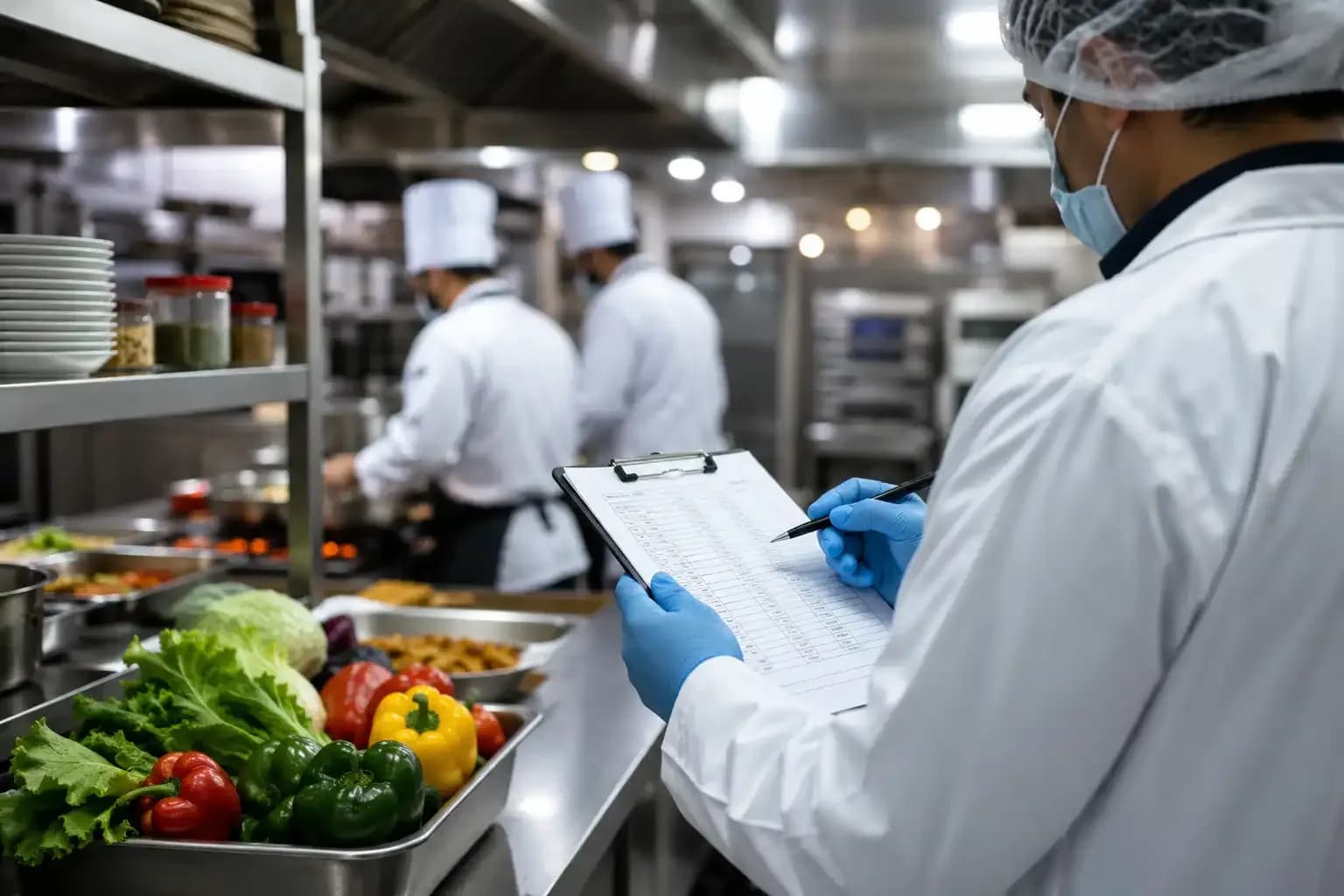
With the national capital preparing to host the 18th BRICS Summit, the Food Safety and Standards Authority of India (FSSAI) has tightened the screws on food-safety compliance at Delhi’s five-star hotels.
The food regulator has directed leading luxury hotels to follow a “zero-tolerance” approach towards food-safety violations, underlining the need for strict hygiene, safe food handling and regulatory compliance ahead of the high-profile summit scheduled to be held in New Delhi on September 12 and 13.
The move follows a series of inspections at five-star properties in the capital, where officials reported several food-safety and hygiene deficiencies, including expired food products, pest infestations, poor storage practices and problems with food segregation.
More than 100 kg of expired food found
According to details shared during a meeting between FSSAI officials and representatives of leading five-star hotels, inspections across Delhi uncovered more than 100 kg of expired food products.
The findings have raised concerns because these establishments cater to a large number of domestic and international guests and are expected to maintain stringent food-safety standards.
Officials also flagged instances of cooking oil recording Total Polar Compounds (TPC) above the permissible limit of 25%. Excessive TPC levels can indicate repeated or prolonged heating of cooking oil and are an important food-safety concern.
Other shortcomings identified during inspections included inadequate cold-chain management, poor sanitation, improper segregation of vegetarian and non-vegetarian food, and deficiencies in the storage and handling of food products.
Andaz Delhi inspection reveals expired sweets, pest issues
One of the more serious cases emerged at Andaz Delhi in Aerocity, where food-safety officials reportedly found approximately 87 kg of expired sweets in the hotel's confectionery section.
The expired sweets were destroyed at the premises.
The inspection also reportedly found expired bread packets and an expired cake base, along with flies and cockroaches in parts of the food-production area.
Officials observed pest activity in areas including the pastry section and grinding room. Spider webs and sanitation deficiencies were also reported.
The inspection further highlighted concerns about the segregation of vegetarian and non-vegetarian food. Cutting boards meant for different categories of food were reportedly stored together in the same water container.
The findings resulted in a notice being issued to the hotel.
JW Marriott Aerocity faces 59 observations
Another major inspection took place at JW Marriott Aerocity, where officials reportedly recorded 59 deficiencies during an inspection that continued for around two days.
The inspection reportedly identified pest-related issues, including cockroaches and fruit flies, along with concerns over food storage and kitchen hygiene.
Officials also found food products such as fungal-affected apples and rotten tomatoes, while certain cut vegetables were reportedly stored improperly.
The inspection raised concerns about damaged storage containers, inadequate temperature control and the handling of food-contact surfaces.
In another observation, officials reportedly found visible particulate matter in drinking water.
Licensing and labelling issues also flagged
The concerns were not limited to kitchen hygiene.
FSSAI officials also flagged licensing and labelling issues at the JW Marriott property.
Certain pre-packaged food products, including paneer, khoya and chana masala, were reportedly found without required manufacturer details or with incorrectly printed FSSAI licence numbers.
Officials also noted that the primary FSSAI licence was not prominently displayed at the premises.
These observations are significant because food-safety compliance extends beyond the physical cleanliness of a kitchen. Hotels and other food businesses are required to maintain proper licensing, traceability, labelling and documentation throughout their operations.
Food samples sent for testing
During the inspections, FSSAI officials collected a number of regulatory and surveillance samples for laboratory analysis.
The samples reportedly included products such as honey, skimmed milk dairy whitener, drinking water, red velvet sponge, angoori rasmalai, khoya, paneer and chutney.
The laboratory results will help determine whether further regulatory action is required in relation to the sampled products.
It is important to distinguish between inspection violations and laboratory-confirmed food adulteration or contamination. The presence of a regulatory deficiency does not, by itself, establish that every food product served by a hotel was unsafe.
Hotels asked to fix deficiencies
Following the inspections, hotels have been directed to rectify the deficiencies identified by food-safety officials.
A follow-up inspection is expected to assess whether the corrective measures have been implemented effectively.
The latest meeting between FSSAI and representatives of major five-star hotels has reinforced the regulator's message that food-safety compliance will be closely monitored during the period surrounding the BRICS Summit.
The Municipal Corporation of Delhi (MCD) has also directed its health officials to inspect hotel kitchen operations, with particular attention to issues such as pest infestation, stale or expired food, cold-chain management and overall hygiene.
Why the BRICS Summit matters
The timing of the crackdown is significant.
The 18th BRICS Summit will bring senior political leaders and international delegations to New Delhi, putting the capital's hospitality and food-service infrastructure under an unusually high level of scrutiny.
Five-star hotels are expected to play a key role in accommodating delegates, business representatives and other visitors during the summit.
For FSSAI, the priority is therefore not simply to ensure that hotels look presentable, but that their kitchens, storage areas, food-handling systems and documentation meet the country's food-safety requirements.
The regulator's zero-tolerance message also sends a broader signal to the hospitality industry: premium positioning and international clientele cannot come at the expense of basic food-safety compliance.
A warning for the wider hospitality industry
The inspections highlight an uncomfortable reality for the food and hospitality sector.
Food-safety risks are not restricted to roadside vendors, small restaurants or informal food businesses. Even large luxury hotels with sophisticated kitchens and international brands can face problems involving expired ingredients, pest control, storage, cross-contamination and regulatory compliance.
The latest action by FSSAI is therefore likely to put other high-end hotels and food-service establishments in Delhi on alert.
With the BRICS Summit only days away, the message from the regulator is clear: there will be little room for food-safety lapses when India's capital is in the international spotlight.