

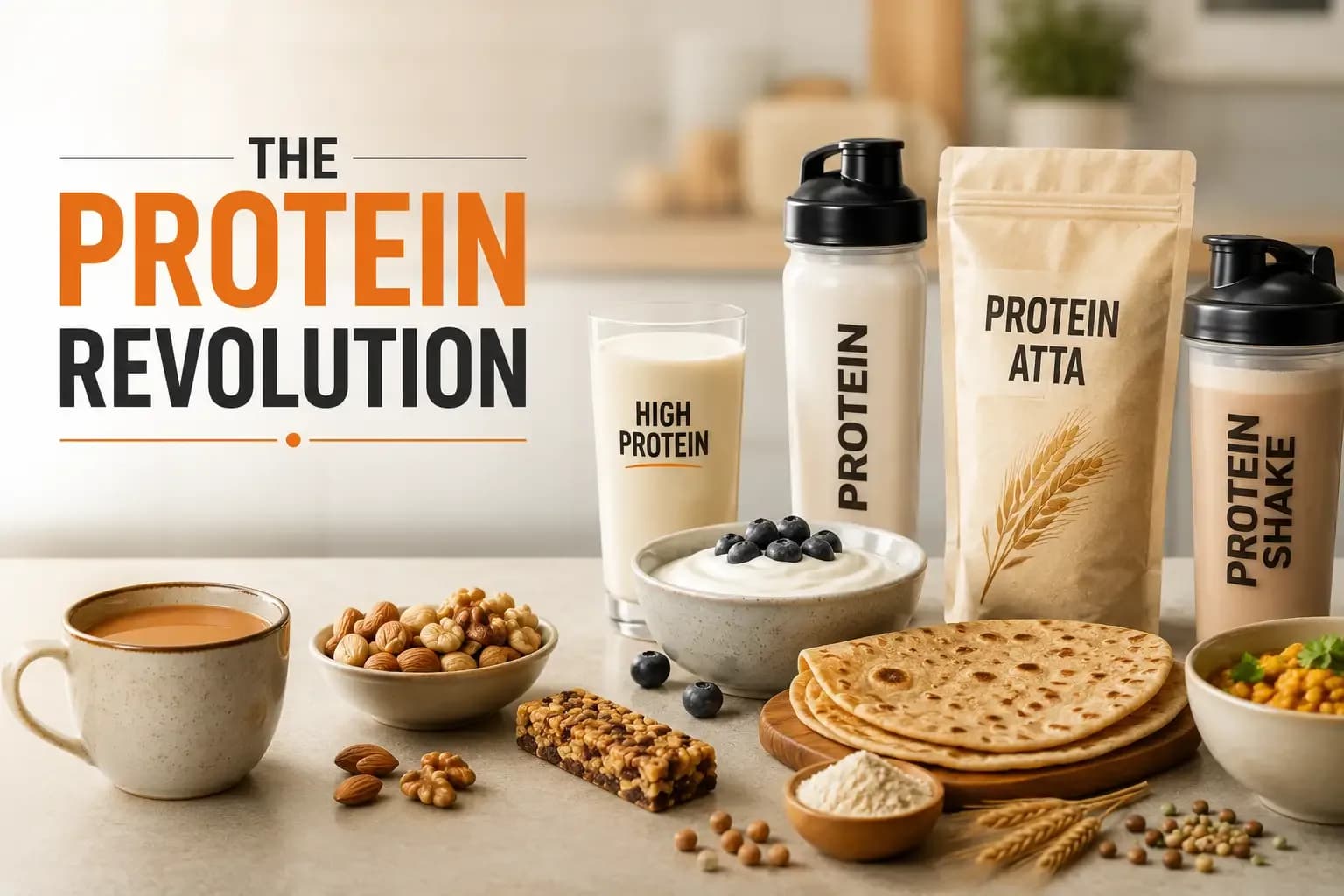
There was a time when protein belonged almost exclusively to gyms.
Walk into any fitness center a decade ago, and you'd find rows of oversized tubs filled with whey protein powders, marketed to bodybuilders and athletes chasing muscle gains. In many Indian households, these supplements were viewed with suspicion—often dismissed as "artificial powders" meant only for serious fitness enthusiasts.
Fast forward to 2026, and that perception has changed dramatically.
Today, protein has quietly moved from the gym bag to the kitchen shelf.
Whether it's high-protein milk in morning tea, protein-rich curd with lunch, fortified atta for daily rotis, protein oats for breakfast, or ready-to-drink lassi after work, protein is becoming an everyday household ingredient rather than a niche sports supplement.
What began as a wellness trend has evolved into one of India's biggest food industry transformations—one that is reshaping product innovation, retail shelves, consumer preferences, and the strategies of major FMCG companies.
India's Silent Protein Deficiency
The growing popularity of protein-rich foods isn't just another health fad.
It is rooted in one of India's biggest nutritional challenges.
According to studies by the Indian Council of Medical Research (ICMR) and the National Institute of Nutrition (NIN), nearly 73% of Indians are protein deficient, while more than 90% are unaware of their daily protein requirements.
Although India has one of the world's richest culinary traditions, its everyday diet remains heavily dependent on carbohydrates.
A typical meal consists largely of:
Rice
Wheat rotis
Potatoes
Refined grains
While these foods provide energy, they often fail to supply adequate high-quality protein needed for muscle maintenance, immunity, metabolic health, and healthy ageing.
Nutrition experts estimate that the average Indian adult consumes around 37–47 grams of protein daily, significantly below recommended levels for many adults depending on age, weight, and activity level.
An equally important concern is protein quality.
Nearly 60% of protein consumed in India comes from cereals, which have lower biological value than dairy, eggs, meat, fish, soy, and pulses.
As awareness around preventive healthcare continues to grow, consumers are increasingly asking a different question—not "How many calories?" but "How much protein?"
From Fitness Supplement to Daily Essential
One of the biggest shifts in recent years is that protein is no longer being marketed solely as a muscle-building nutrient.
Instead, brands are positioning it as essential for:
Better energy
Healthy ageing
Weight management
Women's health
Children's growth
Active lifestyles
Everyday nutrition
This broader messaging has significantly expanded the consumer base beyond gym enthusiasts.
Today's protein buyers include:
Young professionals
Working women
Parents
Senior citizens
College students
Health-conscious families
The Rise of "Habit Stacking"
Rather than asking Indians to change lifelong eating habits, food companies have adopted a smarter strategy known as habit stacking.
Instead of replacing traditional foods, they are enriching them.
Consumers don't need to abandon chai.
They simply add high-protein milk.
They don't replace rotis.
They buy protein-fortified atta.
They don't stop eating curd.
They switch to protein-rich yogurt.
This approach minimizes behavioural change while improving nutritional intake—a strategy that has fueled rapid adoption across urban India.
India's Pantry Is Getting a Protein Upgrade
The protein revolution is now visible across supermarket shelves and quick-commerce platforms.
Today's product innovations include:
Dairy
High-protein milk
Protein lassi
Protein buttermilk
Greek yogurt
Protein curd
High-protein paneer
Breakfast
Protein oats
High-protein muesli
Protein dosa batter
Protein idli mix
Staples
Protein atta
Protein flour blends
Fortified khichdi mixes
Snacks
Protein chips
Protein biscuits
Protein cookies
Protein bars
Beverages
Ready-to-drink protein shakes
Protein coffee
Functional dairy drinks
For many consumers, protein is no longer an occasional purchase—it's becoming part of the weekly grocery basket.
How Amul Changed the Economics of Protein
While D2C nutrition startups introduced protein to urban millennials, Amul helped bring it into the mainstream.
By leveraging its extensive dairy infrastructure, the cooperative launched affordable high-protein products, including milk, lassi, buttermilk, paneer, and other dairy offerings.
The biggest breakthrough wasn't just product innovation—it was affordability.
Historically, imported whey protein cost several rupees per gram of protein, making it inaccessible to many households.
Mass-market dairy products have significantly reduced the cost of consuming protein, making functional nutrition accessible to a much larger audience.
Industry experts believe this democratization of protein could play a pivotal role in addressing India's long-standing nutritional gap.
FMCG Giants and Startups Race to Capture the Opportunity
Protein is rapidly becoming one of the most competitive categories in the Indian food industry.
Alongside established players, a growing number of startups are introducing clean-label, protein-rich products with minimal ingredients and no unnecessary additives.
Brands are increasingly focusing on:
Transparent ingredient lists
Lower sugar
Higher protein density
Better taste
Everyday affordability
The shift reflects changing consumer expectations, where nutritional value is becoming as important as taste and convenience.
Quick Commerce Is Accelerating Adoption
The rise of platforms like Blinkit, Zepto, Swiggy Instamart, and BigBasket has dramatically increased the visibility and accessibility of protein-rich foods.
Consumers who once needed to visit specialty nutrition stores can now receive high-protein milk, yogurt, protein bars, and ready-to-drink beverages at their doorstep within minutes.
This convenience has helped transform protein from a planned purchase into an impulse grocery item.
Food Scientists Face a New Challenge
Developing protein-rich everyday foods is far more complex than adding whey powder to a recipe.
Food scientists must overcome challenges related to:
Heat stability
Texture
Taste
Shelf life
Solubility
Cooking performance
Advanced processing technologies such as microfiltration, enzymatic hydrolysis, and protein encapsulation are enabling manufacturers to improve both nutrition and sensory quality without compromising traditional cooking methods.
Challenges That Could Slow the Protein Boom
Despite its momentum, the category faces several hurdles.
Rising Whey Prices
Global whey shortages have increased raw material costs, putting pressure on manufacturers.
Premium Pricing
Many protein-enriched products remain significantly more expensive than conventional alternatives.
Consumer Education
Many Indians still struggle to distinguish between calories, carbohydrates, and protein, highlighting the need for continued nutrition awareness.
Taste Expectations
Consumers expect healthier foods to taste just as good as traditional products. Brands that fail on taste are unlikely to succeed, regardless of nutritional claims.
What's Next?
Industry experts expect the next wave of innovation to focus on:
Protein tea
Protein coffee
Protein ice cream
Protein frozen desserts
Protein bakery products
High-protein Indian snacks
Plant-based protein foods
Functional beverages for everyday consumption
Protein is also expected to become a key driver of premiumisation in the FMCG sector, as brands compete on nutritional value rather than just flavor or price.
Indian Food Times Analysis
India's protein revolution is about much more than gym nutrition.
It represents a fundamental shift in how consumers think about food.
The conversation has evolved from calories to nutrition, from indulgence to functionality, and from supplements to everyday staples.
For the food industry, this creates opportunities across dairy, bakery, beverages, packaged foods, quick commerce, and food technology.
For consumers, it means healthier choices can increasingly become part of everyday routines without dramatically changing eating habits.
The future of India's pantry is unlikely to be defined by exotic superfoods or imported supplements. Instead, it will be shaped by familiar foods—milk, curd, atta, snacks, and beverages—made smarter through better nutrition.
The gym shaker may have started India's protein journey, but it is the humble morning chai that could ultimately make protein a part of every Indian household.
FAQs
Why are high-protein foods becoming popular in India?
Growing health awareness, rising fitness consciousness, increasing protein deficiency awareness, and innovation by FMCG companies have driven demand for protein-rich everyday foods.
Is India protein deficient?
Several studies by ICMR and NIN indicate that a large proportion of Indians consume less protein than recommended, with awareness of protein requirements also remaining low.
Which high-protein foods are becoming popular?
High-protein milk, curd, paneer, atta, oats, yogurt, protein bars, snacks, ready-to-drink beverages, and protein-rich breakfast products are among the fastest-growing categories.
Which companies are leading India's protein revolution?
Major dairy cooperatives, FMCG companies, and nutrition-focused startups are expanding their portfolios with protein-enriched foods, making the category more accessible to mainstream consumers.
Why is protein important in daily diets?
Protein supports muscle health, immunity, metabolism, tissue repair, and healthy ageing, making it an essential nutrient across all age groups.