

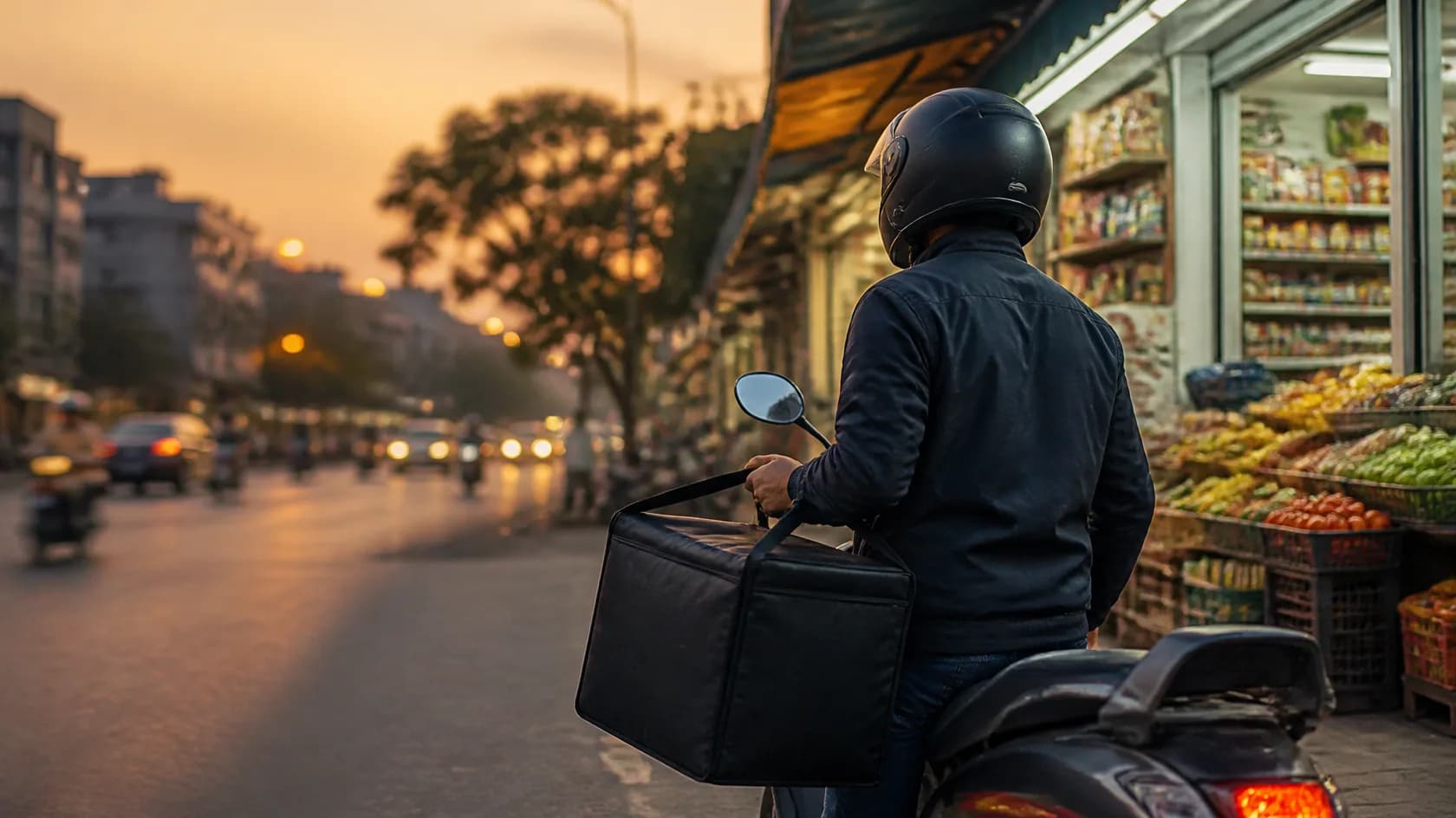
Instant grocery delivery now claims 22 per cent of India's online retail market, up from 14 per cent a year earlier, according to Redseer Strategy Consultants. The category brought in about $9 billion in the first half of 2026 and has nearly doubled for three years running. The surge is altering shopping habits, FMCG sales plans and the scrutiny of warehouse hygiene.
The rise in numbers
The consultancy projects that India's online retail market will pass $90 billion in 2026, expanding 22-24 per cent, the quickest pace in five years. Groceries are pulling much of the weight. They are set to overtake mobile phones as the second-largest online category, at about 19 per cent of sales against roughly 16 per cent.
Festivals are adding speed. The forecast for the festive window is growth of 110-120 per cent for the delivery apps, which would lift their slice of festive online spending from 11 per cent to 18 per cent.
"This year, India's online retail is growing fastest where demand is steadiest."
Kushal Bhatnagar, Partner, Redseer Strategy Consultants
Who leads, and how they deliver
Three platforms dominate. Figures reported by Business Standard put Blinkit at about 45 per cent, ahead of Swiggy Instamart and Zepto, with the trio holding roughly 90 per cent between them. Other trackers differ. Entrackr's analysis has Instamart's portion of orders among the top three falling below 21 per cent in FY26, even as its order count rose.
Speed rests on dark stores, neighbourhood warehouses that fulfil only online orders.
Blinkit (June 2026) | Swiggy Instamart (June 2026) | Zepto (March 2026)
|
|---|---|---|
2,443 dark stores | 1,171 dark stores | 1,139 dark stores |
300 cities | 131 cities | 66 cities |
Blinkit's network is more than twice the size of its nearest rival's.
What Indians are ordering, and when
The bigger change lies in behaviour rather than products. Shoppers are swapping the large planned purchase for small, frequent top-ups. Impulse categories gain the most, particularly late at night.
Food category | What Redseer estimates | Figure |
|---|---|---|
Chocolates | Share of online sales made after 9 PM | About 20% |
Frozen ready-to-cook | Size on quick commerce | About $375 million |
Ready-to-eat and ready-to-heat food is also widening its audience, from about 50 million consumers to an estimated 70-80 million.
Why food companies are paying attention
For big packaged-food makers, ten-minute delivery has become the leading online route to buyers. The Economic Times reported in May that Dabur and Britannia, among others, draw as much as 75 per cent of their digital sales from it.
Yet in the overall food FMCG market the channel was only about 4 per cent in 2025, and roughly 3 per cent of Marico's India business in FY25. That modest base explains the focus on forecasts. The firm expects the channel's food sales to climb from about $4 billion to $27-29 billion.
Kirana stores feel the squeeze
Some of this growth is being taken from neighbourhood shops. The firm's analysis suggests the apps are generating fresh demand, with a rising proportion of users and spending coming from offline retail. Industry executives told the Economic Times that the model is also eating into e-commerce marketplaces, modern trade chains and kiranas.
Food safety checks catch up
Rapid expansion has drawn regulators to storage conditions. On September 30, Telangana's food safety authority suspended the FSSAI licences of four dark stores in Hyderabad after inspections turned up multiple violations.
"These audits are being done to ensure quality control at all dark stores."
An FSSAI official, to the Economic Times
Oversight is still taking shape. FSSAI lays down national standards, but state departments conduct the inspections, and warehouses of this kind have no dedicated rulebook or fixed inspection calendar, experts note. The gap between how fast the network is growing and how often it is checked is the sector's biggest regulatory test.
Outlook
Next, the apps are heading into fresh produce, dairy and frozen food, where cold-chain reliability decides whether a delivery arrives fit to eat. How regulators scale up, and how brands divide their bets between apps, kiranas and supermarkets, will define the next stage of India's grocery market.