

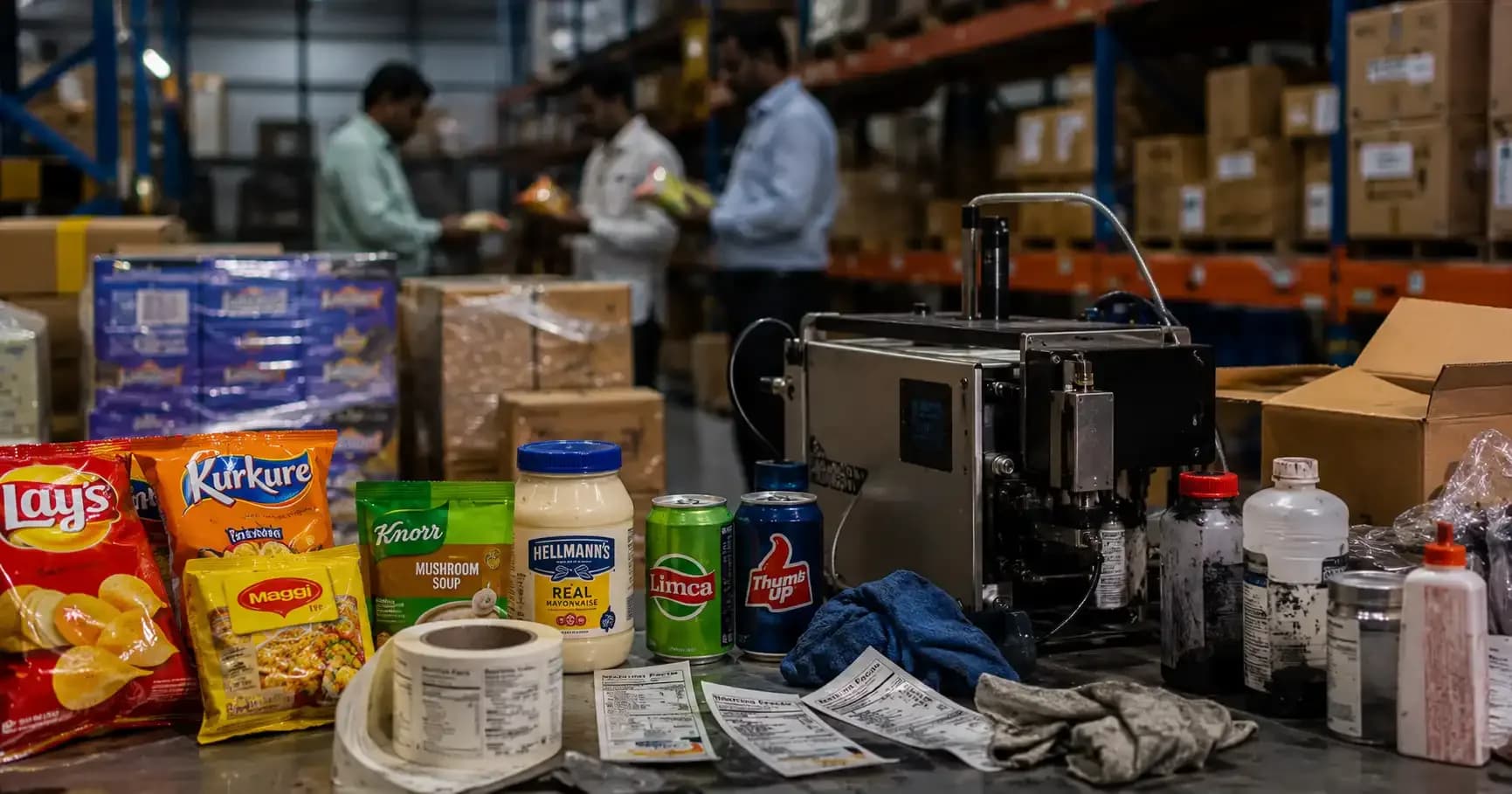
A joint operation by the Maharashtra Food and Drug Administration (FDA) and the Navi Mumbai Police Crime Branch has uncovered an alleged food relabelling racket in the Turbhe industrial area, where authorities say manufacturing and expiry dates on packaged food products were being erased and replaced with fresh dates.
The six-day operation, conducted between August 24 and August 29 at Sadhana Enterprises in the TTC Industrial Area, Turbhe, resulted in the seizure of food stock and expired and unlabelled products worth more than ₹76 lakh, according to the FDA.
The products found at the facility included popular packaged food and beverage brands such as Lay’s, Kurkure, Bingo, Fun Flips, Maggi, Knorr, Rasoi, Hellmann’s, Thums Up and Limca, among others.
How the alleged racket operated
According to investigators, the operation involved more than simply storing expired food.
The original date of manufacture and expiry/use-by date printed on food packages were allegedly removed using chemical thinners or solvents. New dates were then printed using an inkjet printing machine and placed over the original information.
Officials also found specially prepared stickers that were allegedly being used to cover existing ingredient and nutritional-information labels.
Reuters, which was given access to the warehouse during the investigation, reported that officials found chemicals used to remove original dates as well as equipment used to print replacement labels. Investigators said some products appeared to have been given altered or extended dates to make them appear suitable for sale.
In one particularly striking finding, Maharashtra Food Commissioner Tukaram Mundhe told Reuters that some products had allegedly been assigned a future manufacturing date, including October 2, 2026, even though the raid took place in August.
Maggi, Lay’s, Kurkure and other products found
The seized stock included a wide range of products.
Among the items reported by investigators were several variants of Lay’s, Kurkure, Bingo and Fun Flips, along with Maggi Masala and Atta Noodles, Knorr Mushroom Soup, Rasoi ready-to-eat products, Hellmann’s Mayonnaise, and cans of Thums Up and Limca.
Officials also reported finding products carrying altered ingredient and nutritional labels, including Wagh Bakri Tea and MDH spices.
Reuters separately reported that investigators found a Maggi carton carrying what appeared to be a replacement nutrition label. A Kurkure packet was also found with a bilingual English-French nutritional label in which some nutritional and ingredient details appeared to have been modified.
₹75.21 lakh stock seized
The FDA said it seized 4,942 cartons of food products valued at ₹75,21,269 during the operation.
Authorities also seized unlabelled and expired food products valued at ₹1,30,600, taking the total value of the confiscated material to more than ₹76 lakh.
Some products were also sampled for further examination after the authorities found that the concerned parties could not produce required FSSAI licences and purchase documents for them.
The FDA subsequently suspended the food licence of Sadhana Enterprises.
Export supply chain under investigation
The investigation has also opened questions about the wider supply chain.
According to the FDA, the Turbhe facility was handling products connected with multiple exporter companies based in Mumbai, New Delhi and Noida. The agency said it was investigating the role of these entities and tracing the source and intended movement of the products.
There is some variation in initial reports over the number of exporter entities linked to the facility. The FDA's release cited 10 prominent exporter companies, while the Indian Express reported action involving 13 exporter entities.
The investigation is expected to establish whether the allegedly relabelled products were intended for the domestic market, export markets, or both. Reuters reported that officials said the stock at the warehouse was intended for export, although the final destination countries were not immediately clear.
Global brands not accused of wrongdoing
The presence of products bearing major international brands at the warehouse does not mean those companies were involved in the alleged operation.
The police case does not accuse Nestlé, PepsiCo, Coca-Cola or Unilever of wrongdoing. Reuters also reported that the investigation is focused on the warehouse operation and the companies handling the products rather than alleging that the global manufacturers themselves altered the labels.
This distinction is important because the products appear to have entered the facility through an intermediary/export supply chain.
The investigation will now determine who supplied the products, who authorised the relabelling, where the altered products were supposed to go and whether any of them entered the domestic market.
FIR registered, investigation continues
An FIR has been registered at Turbhe Police Station against the partners of Sadhana Enterprises and associated exporters under provisions of the Food Safety and Standards Act, 2006, as well as relevant sections of the Bharatiya Nyaya Sanhita (BNS).
The establishment's partners have been identified in reports as Jayprakash Sanchetiram Singh and Jaya Navrang Bahadur Singh.
Authorities are now examining the broader network to establish the extent of the alleged operation and identify any other people or companies involved.
Why the case raises serious food-safety concerns
The case goes beyond the question of expired food.
An expiry or use-by date is one of the key pieces of information consumers rely on when deciding whether a packaged food product is safe to consume. Deliberately replacing that information can make it difficult for consumers, retailers and regulators to determine the actual age and shelf life of a product.
The alleged replacement of ingredient and nutritional information adds another layer of concern because consumers could potentially receive information that does not accurately represent the contents of the product.
For the food industry, the case also highlights a less visible risk: what happens to products after they leave the manufacturer's facility and move through exporters, distributors, warehouses and other intermediaries.
Maharashtra FDA Commissioner Tukaram Mundhe described the operation as appearing systematic and organised, and stressed the need for stronger accountability across the food supply chain.
The investigation is ongoing, and the allegations against the individuals and entities involved are yet to be established in court.
For consumers, however, the Navi Mumbai raid serves as a stark reminder that checking the integrity of packaging, manufacturing dates, expiry dates and labels remains critical—particularly when buying packaged food through unfamiliar channels.