

Korean culture is finding its way into more corners of the global food and entertainment industry, and quick-service restaurant chains are increasingly looking to translate that interest into new menu offerings. McDonald’s is the latest to explore this space, bringing a Korean-inspired sauce to its Indian menu through a collaboration with South Korean artist G-Dragon.
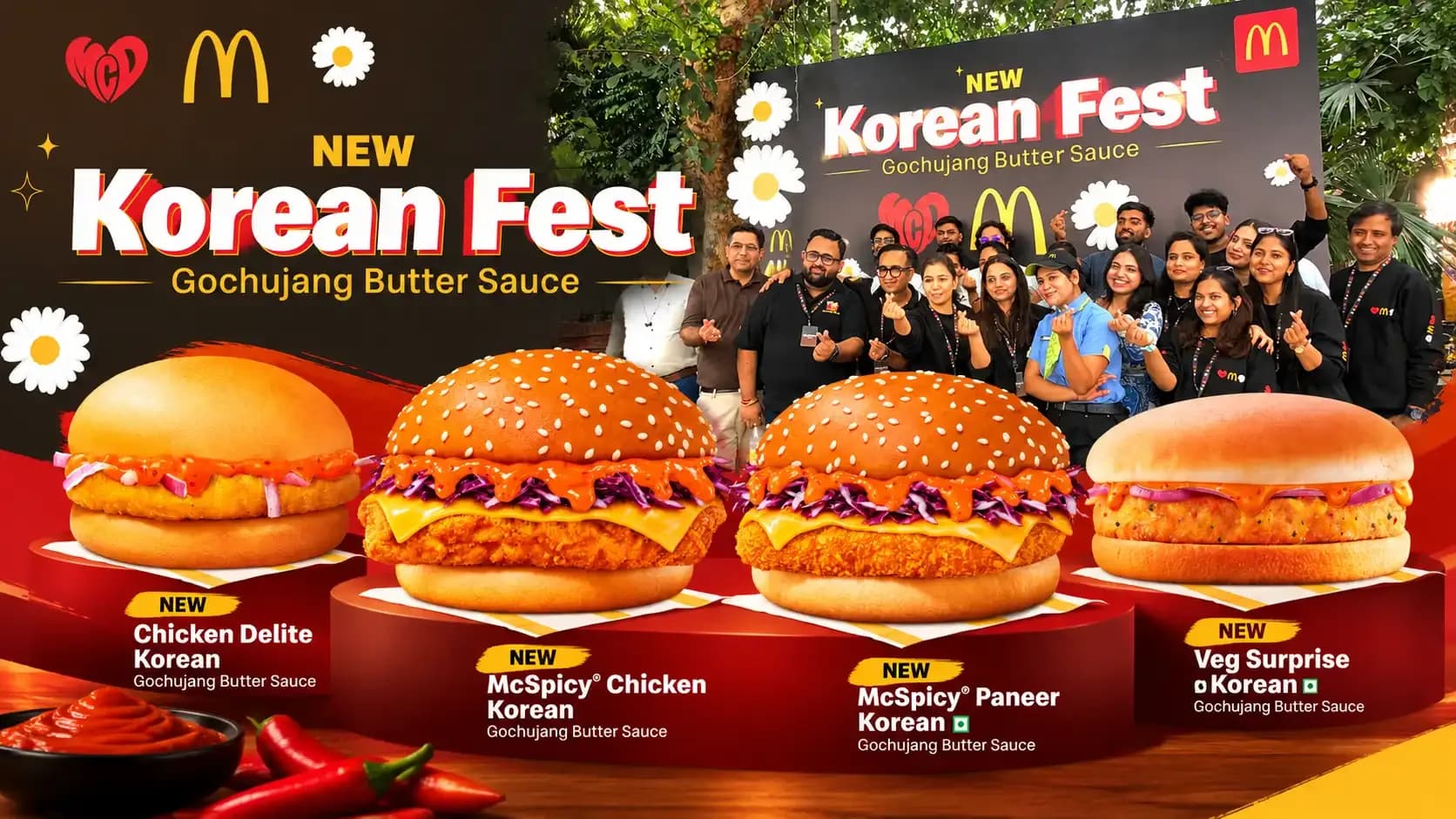
McDonald’s India North and East has launched four burgers featuring Korean Gochujang Butter Sauce as part of its Asia Chicken Campaign. The campaign spans 13 Asian markets and is available for a limited period across North and East India.
Indian Food Times attended the launch at ECE House in Connaught Place, New Delhi, to try the new offerings and assess how the Korean-inspired flavour works with familiar McDonald’s burgers.
While the association with G-Dragon gives the campaign a strong connection to Korean popular culture, the food itself is the central attraction. The new sauce combines the characteristic heat and savoury depth of gochujang with the richness of butter, introducing a different flavour profile to established burger options.
What Is Gochujang Butter Sauce?
Gochujang is a traditional Korean fermented chilli paste known for its distinctive combination of spice, sweetness and umami. It is widely used in Korean cooking, where it adds depth and intensity to a range of dishes.
For this campaign, McDonald’s Korea developed a sauce that combines gochujang with butter. According to the company's press release, the result is intended to balance gentle heat, subtle sweetness and savoury richness.
The idea is not to introduce an entirely unfamiliar food format, but to bring a Korean-inspired flavour into burgers that customers already recognise. It is a familiar approach for a global restaurant brand: introducing a new taste experience while keeping the core product accessible to existing customers.
How successfully that combination works, however, depends on the balance of flavours and how the sauce complements the other ingredients in each burger.
Four Burgers Feature in the Korean Fest Campaign
McDonald’s India North and East has introduced the Gochujang Butter Sauce across four burger options, covering both vegetarian and non-vegetarian preferences.
The new offerings are:
McSpicy Chicken Korean Gochujang Butter Sauce
McSpicy Paneer Korean Gochujang Butter Sauce
Chicken Delite Korean Gochujang Butter Sauce
Veg Surprise Korean Gochujang Butter Sauce
The range brings the same Korean-inspired sauce to different burger formats, from the McSpicy options to the Chicken Delite and Veg Surprise.
For Indian consumers, the inclusion of paneer alongside chicken and vegetarian options gives the campaign a broader menu appeal. Customers can explore the new flavour without moving away from familiar choices.
According to McDonald’s campaign creative, the Korean Fest range starts at ₹89. Prices may vary by product and outlet, so customers should check their local restaurant for the applicable menu prices and availability.
Indian Food Times Review: How Did the New Burgers Taste?
To get a first-hand sense of the new menu, Indian Food Times sampled vegetarian and non-vegetarian burgers featuring the Gochujang Butter Sauce at the New Delhi launch.
The team came away with a positive overall impression, although the two members had different preferences.
Harshita preferred the vegetarian burger over the non-vegetarian option. Another member of the Indian Food Times team enjoyed both versions, finding merit in the vegetarian as well as the chicken offering.
The differing verdicts underline an important aspect of any new menu launch: flavour remains a matter of individual preference. While the vegetarian burger stood out for Harshita, the other team member did not find it necessary to choose one clear favourite.
The experience also gave the team an opportunity to assess the new menu beyond the campaign's promotional messaging. Both vegetarian and non-vegetarian options received a favourable response, making the new sauce an interesting addition to McDonald’s existing burger range.
The team's experience should not be taken as a universal verdict on the menu, but it offers a useful first-hand perspective for customers curious about trying the Korean-inspired flavour.
Why G-Dragon Is Part of the Campaign
The food launch is backed by a collaboration with G-Dragon, the South Korean artist whose influence extends across music, fashion and popular culture.
McDonald’s describes the partnership as an “ICON × ICON” collaboration, bringing together two globally recognised names in a campaign inspired by the growing influence of Korean culture across Asia.
As part of the initiative, a launch film featuring G-Dragon is being released across McDonald’s India North and East social media channels. G-Dragon cards are also available with McSpicy Chicken and McSpicy Paneer meals for a limited period.
The partnership adds a cultural dimension to the menu launch. For fans of Korean entertainment, the campaign offers a connection to a prominent figure in the industry, while the new sauce gives customers a food-led reason to engage with the promotion.
For McDonald’s, it is an opportunity to connect a limited-time menu with a cultural movement that has gained international recognition.
What the Launch Signals About McDonald’s Menu Strategy
Global food chains regularly adapt flavours and products from different markets, but introducing an international flavour to a local audience requires more than simply replicating a recipe.
The product needs to work within the brand's existing menu and appeal to customers who may have little familiarity with the ingredient itself.
McDonald’s latest campaign follows that approach. Rather than introducing an entirely new dish, it incorporates a Korean-inspired sauce into established burger formats. The result is a product that draws on another food culture while retaining a familiar base.
The campaign's presence across 13 Asian markets also reflects the regional nature of the initiative. While the Gochujang Butter Sauce provides a common flavour theme, participating markets have adapted their menu offerings to local preferences.
In India, the inclusion of paneer, chicken and vegetarian burger options provides different ways for customers to try the sauce.
The longer-term appeal of the range will depend on customer response to the food itself. A prominent collaboration may attract initial attention, but the flavour, price and overall eating experience will ultimately shape whether customers return to the product.
Availability in India
McDonald’s India North and East has confirmed that the Korean Fest campaign is available for a limited period at select restaurants across the region.
Restaurants in North and East India are operated by Connaught Plaza Restaurants Pvt. Ltd. The campaign should not be assumed to be available at every McDonald’s outlet across the country.
Customers can check the official McDonald’s India website or their nearest participating restaurant for current availability, prices and applicable offers.
The Indian Food Times Verdict
McDonald’s Korean Fest brings together a familiar fast-food format, a sauce inspired by Korean cuisine and a collaboration with a prominent name in Korean popular culture.
From the Indian Food Times team's first-hand tasting, the vegetarian and non-vegetarian offerings both received a positive response, although individual preferences differed. Harshita favoured the vegetarian burger, while another team member enjoyed both options.
The launch is an example of how international food influences are finding their way into mainstream restaurant menus. For customers curious about Korean-inspired flavours, the Gochujang Butter Sauce offers a way to explore that influence through a familiar burger.
Ultimately, the success of the range will depend on whether customers enjoy the combination enough to choose it beyond the initial excitement surrounding the campaign.
Indian Food Times attended the McDonald’s Korean Fest launch in Connaught Place, New Delhi, and sampled the new vegetarian and non-vegetarian burger offerings. Campaign information is based on the company's press release and promotional material.