

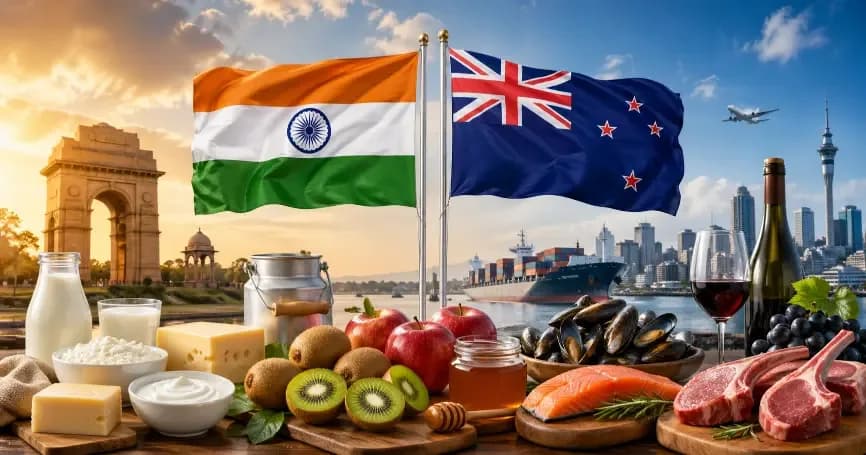
In a major economic development, India and New Zealand signed a landmark Free Trade Agreement (FTA) on April 27, 2026, in New Delhi. The agreement aims to double bilateral trade to $5 billion within five years while unlocking $20 billion in long-term investments.The deal carefully balances domestic protection—especially for India’s dairy sector—with new opportunities in premium food imports, agri-tech collaboration, and global FMCG supply chains.Dairy Sector Remains India’s StrongholdStrict Protection for Domestic ProducersIndia has drawn a clear line when it comes to dairy. Key products such as milk, cheese, yogurt, whey, and cream are completely excluded from tariff concessions.This move ensures stability for India’s massive dairy ecosystem, which supports millions of rural livelihoods and major cooperative brands.Limited Openings for Processing IngredientsOnly niche categories like infant formula and milk proteins have been granted restricted access under controlled quotas. These concessions will be introduced gradually over seven years, minimizing any immediate market disruption.Premium Food Imports Set to RiseFruits and Honey Enter Under Controlled AccessNew Zealand has secured market entry for high-value products like kiwifruit, apples, and Mānuka honey. However, these imports will follow a quota-based system, ensuring that domestic farmers are not undercut.Meat and Seafood Gain MomentumTariffs on lamb have been removed immediately, while duties on seafood—including mussels and salmon—will be phased out over time. This is expected to diversify India’s premium food offerings, especially in urban markets.Staples Remain ProtectedTo safeguard local agriculture, India has excluded essential commodities such as onions, pulses, corn, sugar, edible oils, and almonds from the agreement.Wine Industry Sees Major ShiftTariffs Slashed for Premium WinesOne of the biggest highlights of the FTA is the reduction of wine import duties—from 150% to as low as 25–50% over a decade.This is likely to:
Increase availability of premium international wine brands
Expand wine consumption among urban consumers
Drive growth in hospitality and fine dining sectors
For digital food media platforms, this opens a new content vertical around wine education, reviews, and pairing trends.FMCG Sector and Export OpportunitiesBoost for Food Processing and Re-ExportsThe agreement allows duty-free import of specific food ingredients intended for re-export. This is a strategic advantage for Indian FMCG companies looking to manufacture premium products for global markets.This could strengthen India’s position as a food processing hub while encouraging innovation in packaged foods and beverages.Agri-Tech Collaboration to Improve Indian FarmingKnowledge Sharing and Technology TransferA dedicated Agri-Technology Action Plan will see New Zealand supporting Indian farmers in:
Orchard management
Post-harvest handling
Food safety standards
The goal is to enhance quality, reduce wastage, and improve export competitiveness for Indian produce.Opportunities in Services and Food Industry MobilityIndian Chefs Gain Global ExposureThe FTA includes a quota within 5,000 annual skilled-worker visas for Indian chefs to work in New Zealand for up to three years.
This move is expected to:
Promote Indian cuisine globally
Enhance skill development in the hospitality sector
Strengthen culinary exchange between the two nations
The India–New Zealand FTA is a carefully structured agreement that protects India’s core agricultural sectors while opening doors to premium imports and global collaboration. While dairy remains shielded, segments like wine, seafood, and high-value fruits are set for growth.
For the food industry and digital media platforms, this marks the beginning of a new phase—where global flavors meet local markets, and content strategies evolve alongside consumption trends.
FAQs1. What is the main goal of the India–New Zealand FTA 2026?The agreement aims to double bilateral trade to $5 billion within five years and boost long-term investment and sectoral cooperation.2. Why is the dairy sector excluded from the FTA?India excluded dairy to protect millions of farmers and maintain stability in its domestic dairy industry.3. Which food products will see increased imports?Premium items like kiwifruit, apples, Mānuka honey, lamb, and seafood will see increased access under controlled conditions.4. How will wine prices change in India?Wine tariffs will gradually reduce from 150% to 25–50%, making premium imported wines more affordable over time.