

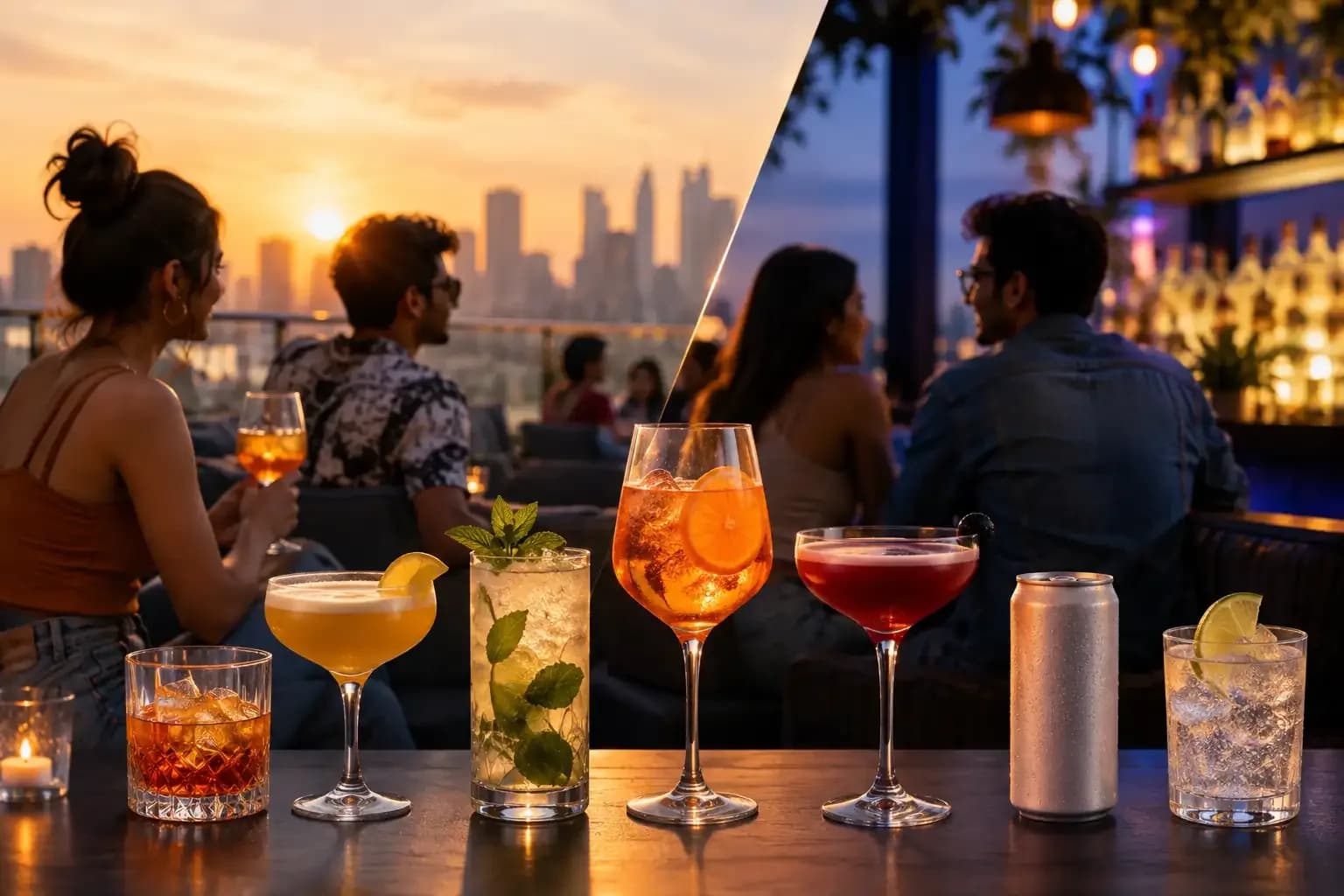
For years, Gen Z has been labelled the “sober generation.”
The assumption was simple: young people were abandoning alcohol in favour of fitness, wellness, mocktails and healthier lifestyles.
But the latest data tells a much more complicated story.
Gen Z hasn't quit alcohol. It has changed the way alcohol fits into its life.
New 2026 research from IWSR shows that 74% of legal-drinking-age Gen Z consumers across 15 major markets consumed alcohol in the previous six months, up from 66% three years earlier.
The global story is therefore no longer simply about Gen Z abandoning alcohol.
It is about drinking differently.
“Gen Z is not necessarily against alcohol”
For many young consumers, the issue isn't whether alcohol exists in their lives. It is about how, when and why they choose to consume it.
Nilam Hazarika, a Gen Z consumer, puts it this way:
“I don’t think Gen Z is necessarily against alcohol. We’re just more conscious about how and why we drink. For me, it’s less about drinking a lot and more about having something I actually enjoy, whether that’s a good cocktail, a premium drink, or even a zero-alcohol option. I think we’re moving towards drinking on our own terms rather than giving it up completely.”
She adds:
“I think the idea that Gen Z is becoming a completely sober generation is a little outdated. We still enjoy going out and having a drink, but we’re more selective about it. A night out doesn’t have to mean getting drunk anymore. It can be about trying a new cocktail, enjoying good food, or simply socialising with friends. It’s more about the experience than the alcohol itself.”
That distinction may be at the heart of the changing drinking culture.
India is at the centre of the change
India is particularly interesting.
Among higher-income urban Indian consumers surveyed by IWSR, alcohol participation reached 77% in 2026, compared with 67% three years earlier.
Among Gen Z adults aged 21 and above in the same demographic, participation jumped from 60% to 80%.
That does not mean 80% of India's entire Gen Z population drinks alcohol. IWSR's sample focuses on higher-income urban consumers.
But it does reveal a strong shift among India's young, affluent urban consumers.
And their drinking habits are changing.
From drinking more to drinking better
The new Gen Z drinking culture is less about getting drunk and more about the experience.
Instead of several inexpensive drinks, a young consumer may prefer one or two premium cocktails.
Instead of alcohol being the main event, it becomes part of a dinner, celebration, concert, weekend outing or social gathering.
Indian hospitality trends increasingly point towards interest in:
Cocktails
Tequila
Gin
Wine
Premium spirits
Ready-to-drink beverages
Craft and experience-led drinks
The philosophy is increasingly simple:
Better drink. Better experience. Less excess.
“I’ll drink when it’s worth it”
Market data can show what consumers are doing, but understanding why they are doing it provides another layer to the story.
Jaiti Bardia describes the emerging attitude among young consumers:
“Market data tells us what Gen Z is doing. But the more interesting question is: what does Gen Z actually think about drinking?”
She describes the shift as less “I don’t drink” and more:
“I’ll drink when it’s worth it.”
Bardia adds:
“For many young consumers, alcohol is becoming more intentional. They want the experience without necessarily wanting the excess.”
That intention can also mean having more freedom around the decision to drink.
“They want to socialise without feeling pressured to drink. And increasingly, they want the freedom to switch between alcoholic, low-alcohol and no-alcohol options depending on the occasion. Health, fitness, sleep and productivity don’t necessarily mean giving up alcohol. They influence when, how much and what they choose to drink.”
In that sense, she argues, Gen Z isn't necessarily becoming an anti-alcohol generation.
“It’s becoming a more selective generation of drinkers. The question isn’t simply, ‘Do you drink?’ It’s increasingly: ‘Is this drink worth it?’”
That may be one of the clearest ways to understand the current shift.
Cocktails are winning
One of the strongest global numbers comes from cocktails.
According to IWSR, 84% of Gen Z legal-drinking-age drinkers reported consuming cocktails, the highest share among the generations surveyed.
That matters because cocktails offer something Gen Z values: choice and experience.
Flavours, presentation, customisation and premium ingredients can turn a drink into an experience rather than simply another alcoholic beverage.
But Gen Z is also drinking less per occasion
Here's the biggest contradiction in the global alcohol market.
While Gen Z participation has increased, the average number of drinks consumed per occasion across IWSR's 15 major markets fell from 4.4 in 2024 to 3.9 in 2026.
That's roughly an 11% decline.
Overall beverage alcohol consumption also declined in both 2023 and 2024, reinforcing the fact that the global story is not simply about whether people drink, but about how much and how often they drink.
So more young people may be participating in drinking, while consuming fewer drinks when they do.
Health is changing the drinking equation
Gen Z's relationship with alcohol is also being shaped by health and lifestyle concerns.
Fitness, sleep, productivity, appearance and avoiding hangovers are increasingly influencing drinking decisions.
IWSR found that 49% of Gen Z drinkers said they pay attention to government guidance about alcohol, the highest proportion among the generations surveyed.
This doesn't mean Gen Z has become completely sober.
Instead, moderation is becoming more flexible.
A person may drink on Saturday, skip alcohol during the week, choose a mocktail at lunch and return to cocktails at a celebration.
The key word is choice.
“The ‘sober Gen Z’ label is too simplistic”
There is also another side to the changing consumption conversation.
Sakshi Mishra believes the popular “sober Gen Z” label misses some of the complexity around how young people approach consumption.
“I think the ‘sober Gen Z’ label is too simplistic. While alcohol consumption is becoming more selective, Gen Z is also often associated with experimenting with alternatives such as vaping, cannabis and other forms of consumption. The real shift is less about quitting altogether and more about choice, control and changing attitudes toward consumption — something the industry cannot afford to overlook.”
Her observation points to a broader generational shift.
The important change may not be that Gen Z has rejected one particular product category.
It may be that young consumers increasingly want control over what they consume, how much they consume and when they consume it.
No-alcohol doesn't mean anti-alcohol
The growth of non-alcoholic drinks doesn't necessarily mean consumers are rejecting alcohol completely.
Young consumers can move between alcoholic and non-alcoholic beverages depending on the occasion.
That is creating opportunities for:
Zero-proof cocktails
No-alcohol spirits
Low-ABV drinks
Premium mixers
Functional beverages
RTDs
For restaurants and bars, the future menu may not be divided simply into “alcoholic” and “soft drinks.”
Consumers increasingly want a wider spectrum of choices.
India could become a global alcohol powerhouse
There is another major reason India deserves attention.
While global alcohol consumption is expected to remain under pressure, India's market is forecast to grow strongly.
IWSR expects India's beverage alcohol consumption to increase by around 38% over the next decade, potentially making India the world's second-largest alcohol market by 2032, behind China.
That creates a fascinating contrast.
Globally:
Alcohol volumes are under pressure.
In India:
The market is expected to expand.
Among Gen Z:
Participation is recovering, but drinking behaviour is becoming more selective.
This means India's opportunity may not simply be about selling more alcohol.
It may be about selling better experiences.
The bottom line
The idea that “Gen Z doesn't drink” is now too simplistic.
The latest evidence suggests something more nuanced.
Gen Z is:
Returning to alcohol in several major markets
Drinking more cocktails
Exploring premium spirits
Interested in RTDs
More conscious about health
More comfortable with moderation
Open to no/low-alcohol alternatives
Drinking fewer drinks per occasion
And India is emerging as one of the world's most important growth markets.
So the real shift isn't:
Alcohol → No Alcohol
It is:
More choice → More moderation → Better experiences.
Gen Z didn't necessarily reject drinking.
They rejected the idea that drinking has to mean drinking excessively.
And that could reshape India's bars, restaurants, beverage brands and the wider alcohol market.
Editor’s note: The three comments above are presented as direct quotes provided for this article. Before publication, Indian Food Times should confirm the wording and attribution with each quoted person.