

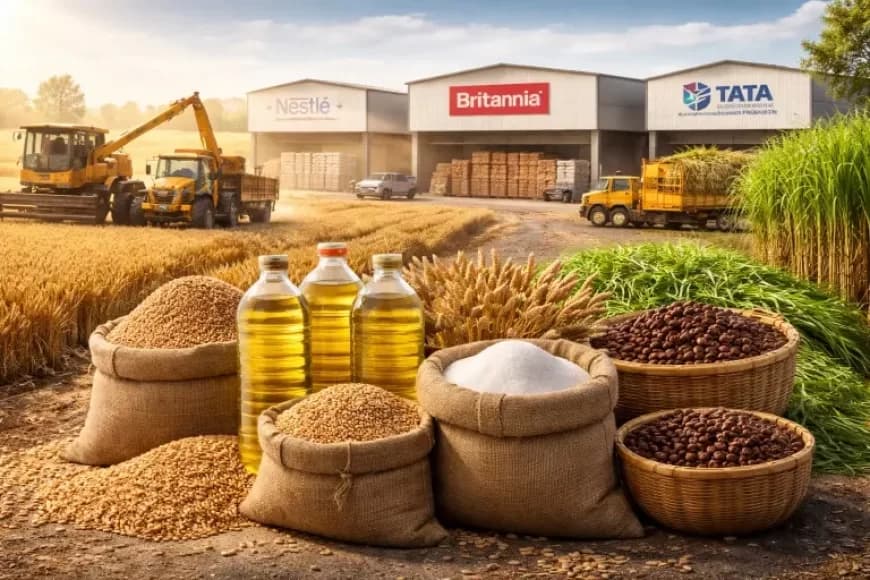
India’s leading FMCG companies are making a decisive shift in how they procure raw materials as food inflation remains a key challenge. With food inflation touching multi-year highs in 2024, companies such as Tata Consumer Products, Nestlé India, and Britannia are increasingly concentrating their purchases during harvest seasons rather than spreading procurement evenly through the year.
This strategic change is aimed at protecting margins, improving cost visibility, and ensuring consistent product quality in an environment of volatile commodity prices.
Why FMCG Firms Are Moving Away from Year-Round Procurement
For decades, FMCG companies followed a steady, year-round sourcing model to maintain predictable cash flows and reduce storage risks. However, persistent volatility in agricultural commodities has made this approach less effective.
Key factors driving the shift include:
Sharp swings in prices of wheat, sugar, edible oil and coffee
Margin pressure during FY25 due to rising input costs
Slower urban consumption following repeated price hikes
As a result, procurement teams are prioritising timing and scale over flexibility.
Harvest Season Concentration: The New FMCG Procurement Strategy
Buying During Peak Supply Windows
Under the new model, FMCG companies deploy large amounts of capital during harvest periods, when supply is abundant and prices are generally lower. This allows them to lock in raw materials before inflationary pressures resurface later in the year.
Front-Loading Inventory to Secure Costs
Management teams have indicated that a significant portion of upcoming quarterly requirements is now being secured well in advance. Tata Consumer Products, for instance, has highlighted early procurement for future quarters while retaining flexibility to recalibrate as new harvest data emerges.
Quality Control and Product Consistency
Bulk procurement during harvest seasons also enables companies to secure better-quality produce early. This is especially critical for branded food products, where consistency in taste and quality is essential for consumer trust.
Role of Direct Sourcing and Technology
To support large-scale harvest-time buying, FMCG companies are strengthening direct sourcing models and investing in technology.
Farmer-to-company linkages are reducing dependency on intermediaries
Digital platforms are improving traceability and pricing transparency
AI-based demand forecasting tools are being used to avoid overbuying or underbuying
These systems help companies balance inventory levels with expected demand, reducing the risk of excess stock.
Risks and Trade-Offs of Bulk Buying
While the strategy offers price stability, it also introduces new challenges.
Area Advantage Risk Input costs Protection from price spikes Losses if prices fall post-purchase Inventory Better availability Higher warehousing and storage costs Capital Lower unit cost Working capital locked in stock Operations Stronger supply control Increased logistical complexity
Investors are closely monitoring how companies manage these trade-offs, particularly during periods of fluctuating demand.
Sector Outlook: January 2026
Commodity trends remain mixed. Wheat and rice prices have stabilised or softened on a year-on-year basis, while sugar and coffee continue to face supply constraints. Against this backdrop, FMCG stocks have seen cautious investor sentiment, with markets evaluating whether aggressive inventory strategies will support margins or create balance-sheet stress.
Companies that combine disciplined procurement with accurate forecasting and efficient storage are expected to gain a long-term advantage.
The move towards harvest-season bulk buying marks a structural change in India’s FMCG supply chains. While the approach helps companies manage inflation and improve cost predictability, success will depend on execution, demand forecasting and capital discipline. In an increasingly volatile commodity environment, procurement strategy is fast becoming a key determinant of profitability.
FAQs
What is harvest season concentration in FMCG procurement?
It is a strategy where companies purchase most of their raw materials during harvest periods, when supply is high and prices are relatively lower.
Why are FMCG companies adopting bulk buying now?
Rising food inflation, volatile commodity prices and margin pressure have made year-round procurement less effective.
Which FMCG companies are using this strategy?
Major players include Tata Consumer Products, Nestlé India and Britannia, among others.
What are the main risks of harvest-time bulk buying?
Key risks include high working capital requirements, storage costs and potential losses if market prices fall after procurement.
How does technology support this strategy?
AI-driven demand forecasting and digital sourcing platforms help companies plan inventory levels accurately and reduce procurement risks.